Skip to content
Winnipeg North Dental
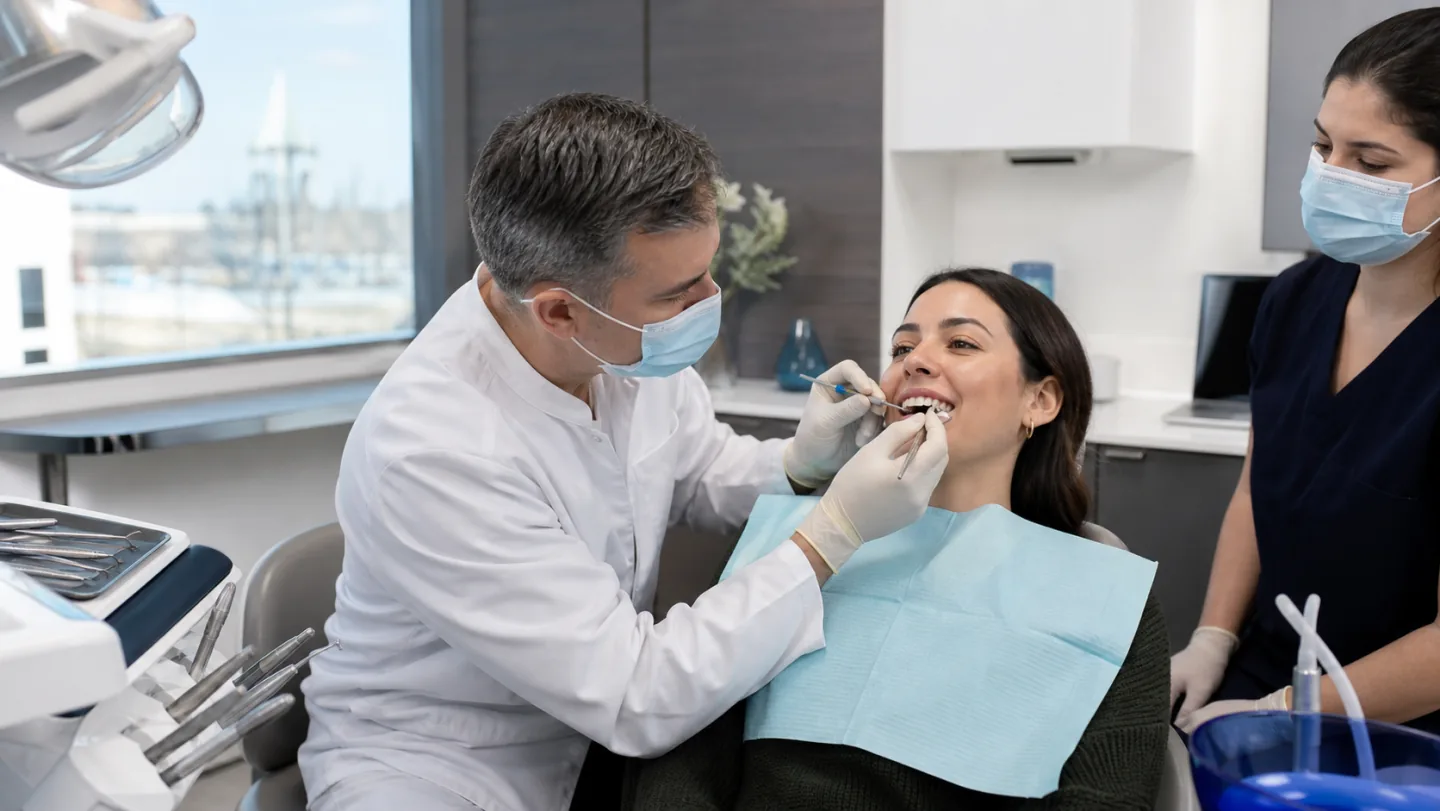
A dentist carefully completing a tooth-coloured bonding treatment
Worn edges and a heavy bite

Dental Bonding for The Maples Residents

If your front teeth look shorter than they used to, or you wake up with a tight jaw, bonding raises an important question: can resin stand up to your bite? Here’s how that gets evaluated.

Let's find a time

Request an appointment

We’ll call to confirm your appointment. For urgent care, please call us directly.

Force matters as much as looks

Bonding Worn Teeth: What The Maples Residents Should Know

Teeth that have flattened along their edges can make a smile look older or more tired, and adding back a little length with resin sounds like an easy answer. It may be. Yet thin additions on biting edges take real force, so anyone in The Maples considering this should expect plenty of attention to how their teeth meet.

Bonding is at its most predictable when the change is limited, the enamel is healthy, and the bite can protect the resin. At our clinic on McPhillips Street in Winnipeg, the dentist looks at wear patterns alongside appearance, and explains whether resin makes sense or a different approach should be weighed.

Explore dental bonding
Reception counter and bright hallway at Winnipeg North Dental
Our front desk on McPhillips Street.

Wear patterns tell a story

Flattened or uneven edges can give the dentist useful information about the way your teeth contact.

Length has to clear the bite

New resin must either avoid heavy contact or share force appropriately, or it’s at risk of chipping.

Protection may be raised

If clenching or grinding is a factor, a guard may become part of the discussion about your teeth.

Reading your bite

Where thin resin runs into trouble.

Composite may rebuild a small worn edge, provided your bite can protect it. These are the things that weigh on the decision.

Signs in your favour

A limited amount of wear on a tooth whose bite leaves room for the addition is the kind of case where direct resin tends to do well.

  • Wear restricted to a small corner or section.
  • Sound enamel beneath and around the worn area.
  • Enough clearance for resin when teeth come together.
  • No heavy contact directly on the new material.

Reasons for caution

Certain bite patterns mean a thin addition could be overloaded quickly, even when its appearance would be excellent to begin with.

  • Edge-to-edge contact between upper and lower teeth.
  • A known habit of clenching or grinding.
  • Wear spread widely across many teeth.
  • Alignment or structural concerns that resin won’t solve.

Resin can rebuild how a worn tooth looks, but it won’t address why that wear happened. The cause deserves its own conversation.

What a bite-focused visit involves

Testing contacts from start to finish.

Your bite isn’t simply checked at the end. It influences what’s planned at the beginning, how the resin is built, and how the final edge is adjusted.

Request your visit
  1. 01

    Study the wear

    The dentist looks at where your teeth have flattened and how they meet, and asks about grinding, clenching, and jaw tightness you’ve noticed.

  2. 02

    Plan the new edge

    If resin seems appropriate, the amount of length and its position are planned around your bite, and shades are selected before the tooth dehydrates.

  3. 03

    Rebuild in layers

    Isolated, conditioned enamel gets adhesive, then composite goes on in controlled increments and sets under a curing light.

  4. 04

    Adjust under real contact

    You’ll bring your teeth together so high spots can be identified and refined. Texture and polish finish the surface once contacts feel comfortable.

Clues to pay attention to

Watch your jaw for a week or two.

Many people who clench have no idea they’re doing it. Noticing how your jaw feels in the morning, or when you’re concentrating at work, can provide useful background.

If a partner or relative has mentioned hearing you grind at night, that’s helpful to pass along too.

Clues worth mentioning

  • Morning jaw tightness, or teeth pressed together during the day.
  • Edges that have changed shape, or teeth that seem shorter.
  • Any guard you already wear, or have worn before (bring it, if you have one).
  • Your health and medication history, plus insurance or CDCP details.
Modern dental operatory at Winnipeg North Dental with a screen and cabinetry
White chairs and a blue bench in the Winnipeg North Dental waiting room

Our treatment and waiting spaces in Winnipeg.

The bite check, demystified

Your feedback counts here.

A bite adjustment works much better when you describe what you feel. Something that seems trivial, such as one tooth touching first, can be just what the dentist needs to hear.

Say if one tooth hits first

When you close your teeth, tell the dentist if anything lands early or feels different from the other side.

Mention a tender jaw

A sore or tired jaw is worth bringing up beforehand, particularly when you’re asked to open or bite repeatedly.

Ask if you’ll need freezing

Worn teeth can be sensitive. Local anaesthetic may be appropriate in some situations, so feel free to ask about it.

Protecting rebuilt edges

Give resin a fair chance.

How long your bonding serves depends on its location, size, your bite, and everyday habits. With thin additions along the biting edge, these points are especially relevant.

01

Take grinding seriously

If you do clench or grind, ask how to protect the new edges. A guard may be discussed as one way of reducing the load.

02

Rethink tough bites

Tearing tape with your teeth, crunching on hard things, or chewing your nails all add force that a thin edge shouldn’t have to absorb.

03

Notice new bite changes

If your teeth stop meeting the way they did after treatment, or an edge feels thinner, have it assessed before it chips.

Bite feeling different since your appointment? Contact the clinic.

Talk with our team
Winnipeg North Dental entrance on McPhillips Street, viewed from the sidewalk

Winnipeg North Dental

Unit-5 2358 Mcphillips Street, Winnipeg, MB R2V 4J6
Get directions (opens in a new tab)
Bite assessments in Winnipeg

Care for The Maples, in One Winnipeg Location

The Maples is in the northwest part of Winnipeg, and residents who choose our clinic are seen at Winnipeg North Dental, Unit 5, 2358 McPhillips Street.

On your request, feel free to mention wear or grinding. It isn’t a confirmed booking until the clinic replies. Or call us directly on (204) 338-3003.

Questions about coverage?

Talk with our team before your visit or learn about CDCP.

A little clarity before your visit

Your questions, answered.

Helpful details about dental bonding in The Maples.

Ask our team
How do I ask about worn teeth from The Maples?

Phone (204) 338-3003 or send the request form here, with a note about the wear you’ve seen. Your visit would be at Unit 5, 2358 McPhillips Street, Winnipeg, once staff have replied to arrange a time.

Can bonding make my worn-down teeth longer again?

A limited amount of length can sometimes be added, as long as proportions and bite allow it. Edges that need significant rebuilding may suit another approach instead.

Can I have bonding if I grind my teeth?

It’s not automatically ruled out, but grinding can overload thin resin. Your dentist would consider the wear and the bite, and a guard could be discussed if bonding goes ahead.

What does edge-to-edge bite mean?

It describes upper and lower front teeth meeting at their tips rather than one set overlapping the other. Added resin in that position takes direct force, which can raise the risk of chipping.

Why does my new bonding feel high when I close?

Added material can change the way your teeth meet. Let the dentist know during the appointment, or contact the clinic afterwards, so contact points can be evaluated.

Will bonding fix the cause of my tooth wear?

No. It only rebuilds the tooth’s shape. Whatever caused the wear, such as a habit or a bite pattern, should be assessed as its own matter so the resin isn’t exposed to the same forces.

Wondering about worn edges?

Have your bite and wear reviewed.

If you’re in The Maples, you’re welcome to request a bonding assessment at our Winnipeg clinic. A reply will follow to arrange a time.

Patient testimonials

Kind words from our patients

★★★★★ 5.0 from 440+ reviews on Google

Close to home

Areas we serve

Convenient dental care on McPhillips Street for families across northwest Winnipeg and nearby communities.

Explore all service areas

A healthier smile is one visit away

Ready for dental care that feels genuinely comfortable?

✓ New patients welcome ✓ Direct insurance billing ✓ Multilingual team

How can we help?

Our dental team is here for you.

Ready to book or have a question? Choose the option that works best for you.

For urgent dental concerns, please call us directly.

Send us a message

Our team will reply during clinic hours.



