Skip to content
Winnipeg North Dental
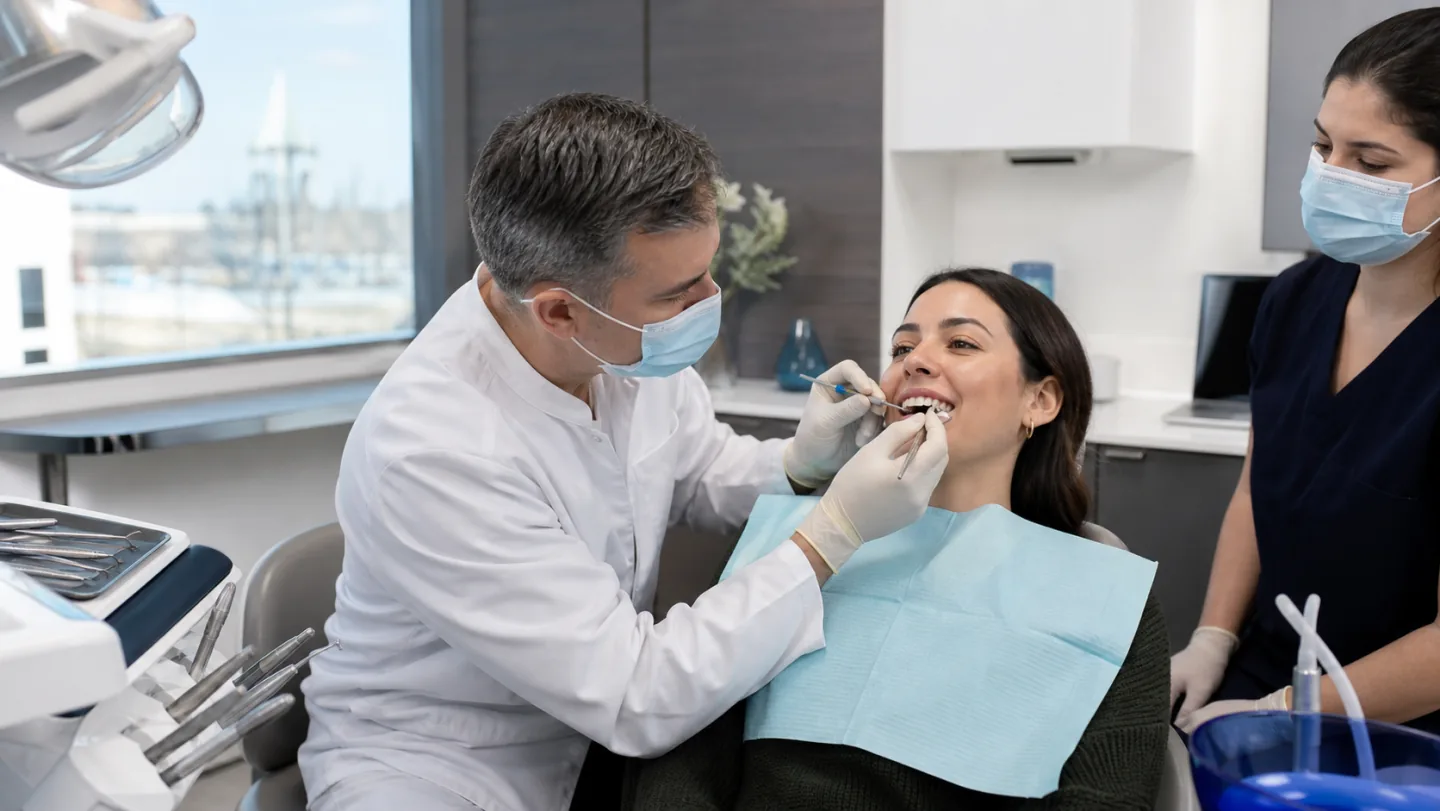
A dentist carefully completing a tooth-coloured bonding treatment
Brush, floss, repeat

Dental Bonding for Sinclair Park Residents

Good news for anyone picturing a fussy new routine: bonded teeth are brushed and flossed in the ordinary way. What changes is where you pay a little more attention.

Let's find a time

Request an appointment

We’ll call to confirm your appointment. For urgent care, please call us directly.

Upkeep before you commit

Looking After Bonded Teeth: Notes for Sinclair Park Residents

Some people want to know what a repair will ask of them before they agree to it. That’s a sensible way to think about composite resin, since the material sits on living enamel and the join between the two needs to stay clean for years to come.

The routine itself is refreshingly normal. Resin doesn’t decay the way enamel can, but the natural tooth surrounding it still can, so the plaque that gathers along that margin matters. At our McPhillips Street clinic, the dentist can look at your present home care and explain how a bonded area would fit into it.

Explore dental bonding
Consultation room with a white desk, black office chairs and a framed landscape print at Winnipeg North Dental
White desk, black chairs and a landscape print in a consultation room.

No special products assumed

Regular brushing and cleaning between your teeth is the starting point for caring for a resin addition.

The margin is what counts

That fine line where composite meets enamel is the place to keep free of plaque.

Polish can be renewed

A surface that has gone dull or rough may respond to professional refinishing, so replacing it isn’t always the first step.

Two jobs at home and in the chair

Who looks after what.

Keeping resin in good shape is a shared effort. Some of it comes down to daily habits at your sink, and some of it calls for a professional’s instruments and eye.

Your part at home

Everyday cleaning protects the enamel next to the composite, which is the part of the tooth still vulnerable to decay.

  • Run your brush along the edge where resin and tooth meet.
  • Clean between bonded teeth as carefully as any others.
  • Notice if floss starts to shred or snag in one place.
  • Mention any tender or puffy gum beside the repair.

The clinic’s part

Examinations give the dentist a chance to catch changes that are difficult to spot in a bathroom mirror.

  • Checking margins for staining, roughness or small gaps.
  • Looking at how the shape affects plaque buildup.
  • Refining the surface when polish has faded.
  • Advising whether repair or replacement makes sense.

Overbuilt contours can trap plaque, which is one reason the amount of resin added gets planned around your gums and neighbouring teeth as well as appearance.

How the appointment runs

Designed with cleanability in mind.

The clinical stages are the usual ones for direct resin. Here they’re described with an eye to how each one affects your upkeep later on.

Request your visit
  1. 01

    Review your routine

    Share how you brush and clean between your teeth. The dentist also examines your gums and enamel, because bonding relies on both being in reasonable health.

  2. 02

    Prepare a clean surface

    After your shade has been chosen, the enamel is conditioned and kept isolated so that adhesive can grip the tooth securely.

  3. 03

    Sculpt a tidy contour

    Thin layers are placed and light-cured one at a time, building a form that aims to look right without leaving a ledge for plaque to collect on.

  4. 04

    Smooth the join

    Finishing and polishing refine the surface and the margins. Your bite gets checked, and this is a good moment to ask how to reach the new area.

Taking stock of your sink routine

Be honest about your flossing.

Nobody needs a perfect record before asking about bonding. It simply helps the dentist to know what you actually do most days, rather than what you think you ought to be doing.

If your gums tend to bleed when you clean, say so. Gum health may need attention before cosmetic work is planned.

Worth bringing up

  • Which tools you use now, such as floss, picks or an electric brush.
  • Spots that feel difficult to reach or that catch food.
  • Medications you take and any health changes.
  • A CDCP or insurance card, supposing you have coverage.
Front desk with plants and orchids, a blue bench and wood flooring at Winnipeg North Dental
Dental chair in light blue beside wood cabinets at Winnipeg North Dental

A front desk with potted plants, then a light blue dental chair beside wood cabinets.

Tender spots and tricky corners

Say what feels awkward.

Cleaning problems are nothing to feel sheepish about, and they’re often easier to solve when described out loud. A clear account of what’s difficult lets the advice you receive suit your own mouth.

Sore gums count

Soreness at the gumline is worth reporting at your exam, even when it seems too minor to matter.

Ask for a demonstration

If you’re unsure how to angle floss around a particular tooth, it’s a perfectly good question to put to the team.

Sensitivity gets a mention

A tooth that twinges with cold air or brushing is useful information when bonding is being considered.

The months that follow

What to keep an eye on.

Composite can pick up stain, roughen or wear with use, and none of that needs to come as a shock. Small signs, picked up early, leave you with more choices.

01

A snag under the floss

When thread catches at one place every time, a tiny edge may have developed. Let the clinic know rather than picking at it.

02

A line of colour

Darkening right along a join can come from surface stain or from something else, so it deserves a professional look.

03

A surface losing its shine

Resin may gradually look flatter than the enamel beside it. Ask whether refinishing would help at your next examination.

Noticed something rough or broken? Phone the clinic and describe what you see.

Talk with our team
Exterior of a dental clinic with grey and white panels and a large Winnipeg North Dental sign

Winnipeg North Dental

Unit-5 2358 Mcphillips Street, Winnipeg, MB R2V 4J6
Get directions (opens in a new tab)
Where the work happens

Bonding Care on McPhillips Street for Sinclair Park Residents

People from Sinclair Park, an area in Winnipeg, receive this care at Winnipeg North Dental, Unit 5, 2358 McPhillips Street, Winnipeg. The directions link can help you sort out your trip.

Send a request through the form below or call (204) 338-3003. Your time isn’t held until a member of the clinic team has replied and settled it with you.

Questions about coverage?

Talk with our team before your visit or learn about CDCP.

A little clarity before your visit

Your questions, answered.

Helpful details about dental bonding in Sinclair Park.

Ask our team
How do I ask about bonding upkeep if I live in Sinclair Park?

Use this page’s form or call (204) 338-3003 and mention that upkeep is your main concern. Any assessment would be held at Unit 5, 2358 McPhillips Street, Winnipeg, after the clinic has sorted out a time with you.

Do I need a special toothpaste for bonded teeth?

Normal brushing is what the clinic’s guidance calls for, and no particular product is required by default. Very abrasive pastes may be something to ask about, since you’d want to keep the polish on the resin.

Can I floss around bonding?

Yes, and you should. Cleaning between teeth helps protect the natural enamel beside the composite. If the floss keeps catching, have the spot examined instead of avoiding it.

Can a tooth still get a cavity under or beside the resin?

The enamel next to a restoration remains natural tooth, so decay can still develop along that edge. That’s why the margins deserve attention at home and during examinations.

What can be done when bonding gets rough?

A rough or dull surface can sometimes be improved by professional refinishing, without having to redo the whole area. The dentist can tell you whether that would be suitable for yours.

Does bonding make my gums more likely to have problems?

A well-contoured addition shouldn’t be hard to clean, though too much bulk can encourage plaque to gather. This is one reason a large gap may not suit resin, and it’s worth talking through at your assessment.

Plan the upkeep too

Ask how bonding would fit your routine.

If you’re in Sinclair Park, send a request for an assessment at our Winnipeg clinic. A team member will write or call back about what happens next.

Patient testimonials

Kind words from our patients

★★★★★ 5.0 from 440+ reviews on Google

Close to home

Areas we serve

Convenient dental care on McPhillips Street for families across northwest Winnipeg and nearby communities.

Explore all service areas

A healthier smile is one visit away

Ready for dental care that feels genuinely comfortable?

✓ New patients welcome ✓ Direct insurance billing ✓ Multilingual team

How can we help?

Our dental team is here for you.

Ready to book or have a question? Choose the option that works best for you.

For urgent dental concerns, please call us directly.

Send us a message

Our team will reply during clinic hours.



