Skip to content
Winnipeg North Dental
A dentist carefully completing a tooth-coloured bonding treatment
Would it even work for me?

Dental Bonding for Scotia Heights Residents

Reading about bonding is one thing, and knowing if it applies to your tooth is another. Three factors tend to decide the matter: the size of the change, the health of the enamel and how your teeth meet.

Let's find a time

Request an appointment

We’ll call to confirm your appointment. For urgent care, please call us directly.

Sorting good fits from poor ones

Is Bonding Suitable? A Guide for Scotia Heights Residents

A treatment that sounds simple can leave you wondering whether there’s a catch. With composite resin, the catch is really one of scope. It does well with limited, well-defined changes, and it becomes less predictable as the demands placed on it grow.

This page can’t tell you whether your tooth qualifies, because only an examination can do that. What it can do is explain the reasoning a dentist will apply, so you arrive at our McPhillips Street clinic in Winnipeg with a clearer sense of the questions involved.

Explore dental bonding
Consultation room with a white desk, black chairs and a tall potted plant by a window at Winnipeg North Dental
A tall potted plant by the window beside a white desk and black chairs.

Scope of the change

Modest additions behave better than ambitious ones, both for how they look and how they hold up.

Condition of the enamel

Adhesive needs sound enamel to grip, so tooth health is part of the decision from the outset.

Forces from your bite

A thin addition has to survive contact with the opposing teeth, day after day and meal after meal.

Two sides of the question

When resin tends to fit, and when it may not.

Take these as general patterns rather than rules. A tooth can sit on either side of the line depending on details that only show up during an exam.

Often a reasonable match

These situations involve a limited, localized change, which is where direct composite performs most predictably.

  • A small corner chip in otherwise healthy enamel.
  • A minor gap where tooth proportions still allow added width.
  • A narrow or short tooth that doesn’t balance its neighbour.
  • A contained mark that resin can cover.

Often a reason to look further

Here the request tends to go beyond what added resin handles well, so other care may enter the discussion.

  • A wide space that would need too much added width.
  • Teeth that sit out of position or a bite that needs correcting.
  • An overall colour change across many teeth.
  • Significant structural damage to a tooth.

Pain, decay and gum problems are health matters, and they’d normally need to be addressed separately from any cosmetic decision.

How suitability gets decided

An exam first, and then a recommendation.

Treatment can’t be planned from a description alone. This is the general order of events when bonding is under consideration.

Request your visit
  1. 01

    Define the request

    You explain what you’d like to change. The dentist examines the tooth, gum tissue and bite, looking at whether the planned addition has a sound foundation.

  2. 02

    Weigh the alternatives

    Bonding gets compared with moving the tooth or covering its surface, focusing on how much structure, bite and future maintenance would be affected.

  3. 03

    Place the composite

    When it’s a suitable choice, shade selection and enamel conditioning come first. Layers then build up the planned form, each one set by a curing light.

  4. 04

    Test the result

    Your teeth are brought together to check how the new resin meets the opposite ones. Final texture and polish come after that.

A quick self-check

Come ready to describe your goal.

It’s easier to judge suitability when the goal is clear. Are you trying to fix one specific flaw, or are you hoping for a broader change? Either answer is fine, and each leads to a different discussion.

A clear goal doesn’t commit you to a treatment. It’s normal for the plan to shift after the dentist has seen your teeth.

Useful things to consider

  • Whether your concern is one tooth or several.
  • Any sign of grinding, such as sore jaw muscles when you wake.
  • Whitening plans, since these can change the shade decision.
  • Medications, health history and any insurance or CDCP information.
Blue bench, tall plant and white reception desk with wood flooring at Winnipeg North Dental
Treatment room with a blue dental chair, sink and wood cabinets at Winnipeg North Dental

A blue bench and tall plant by the desk, then a treatment room with a sink and wood cabinets.

Hearing an honest answer

A no can be useful too.

It can feel disappointing to learn a simple fix won’t suit your situation. Still, it’s better than investing in resin that won’t perform. Ask for the reasoning, as it should make sense to you.

Ask why not

If bonding is ruled out for your tooth, you’re entitled to understand what stands in the way.

Ask what else

Find out what might be done instead, and how each alternative would differ in effort and upkeep.

Report any tenderness

A sore or sensitive tooth may change the assessment and whether freezing is appropriate, so bring it up.

If you were a good candidate

Suitability isn’t fixed for life.

A tooth that suits resin today can change later as your bite, habits or goals shift. Bonded areas are worth monitoring with the rest of your mouth during regular examinations.

01

Habits can shift the odds

New clenching or a return to nail biting raises the load on thin additions, and it’s worth reporting at your next exam.

02

Teeth can change around resin

Wear on opposing teeth or a shifting bite may affect how the bonded area works. The dentist can review this over time.

03

Goals can grow

If you later want a bigger change than composite can provide, that becomes a fresh conversation about other options.

Something changed with your bonded tooth? Give the clinic a call.

Talk with our team
Winnipeg North Dental storefront with its phone number displayed on the sign

Winnipeg North Dental

Unit-5 2358 Mcphillips Street, Winnipeg, MB R2V 4J6
Get directions (opens in a new tab)
Getting a real answer

Suitability Checks on McPhillips Street for Scotia Heights Residents

For Scotia Heights residents, the assessment and any treatment happen at Winnipeg North Dental, Unit 5, 2358 McPhillips Street, Winnipeg. The directions link is there to help with your trip.

Call (204) 338-3003 or use the form below to send your request. The clinic follows up with you, and you’ll have a confirmed appointment only after that.

Questions about coverage?

Talk with our team before your visit or learn about CDCP.

A little clarity before your visit

Your questions, answered.

Helpful details about dental bonding in Scotia Heights.

Ask our team
How does a Scotia Heights resident find out whether bonding suits them?

Request an exam using the form or by calling (204) 338-3003. It would be carried out at Unit 5, 2358 McPhillips Street, Winnipeg, and the dentist can then explain what your particular teeth allow.

Can you tell from a photo whether I’m a candidate?

A picture can show what you’re concerned about, but it doesn’t reveal enamel health or how your teeth meet. Those need to be examined in person before any recommendation is made.

What makes someone a poor candidate for bonding?

Large changes, unsound enamel or a bite that would overload the resin can all make it less predictable. None of these is automatically final, but each one can steer the plan elsewhere.

Can bonding be done on a tooth with decay?

Decay needs to be dealt with properly, not simply covered. Local anaesthetic may be appropriate when it’s being removed, and the restoration is then planned around what remains.

Do I need to whiten first for bonding to work?

It isn’t essential, but if you want lighter teeth overall, whitening generally goes first since cured resin doesn’t lighten. Composite can then be matched to your settled shade.

Can teeth that already have fillings be bonded?

It depends on how much sound tooth remains and where existing work sits. Ask the dentist to look at it, because a larger restoration may need a different solution.

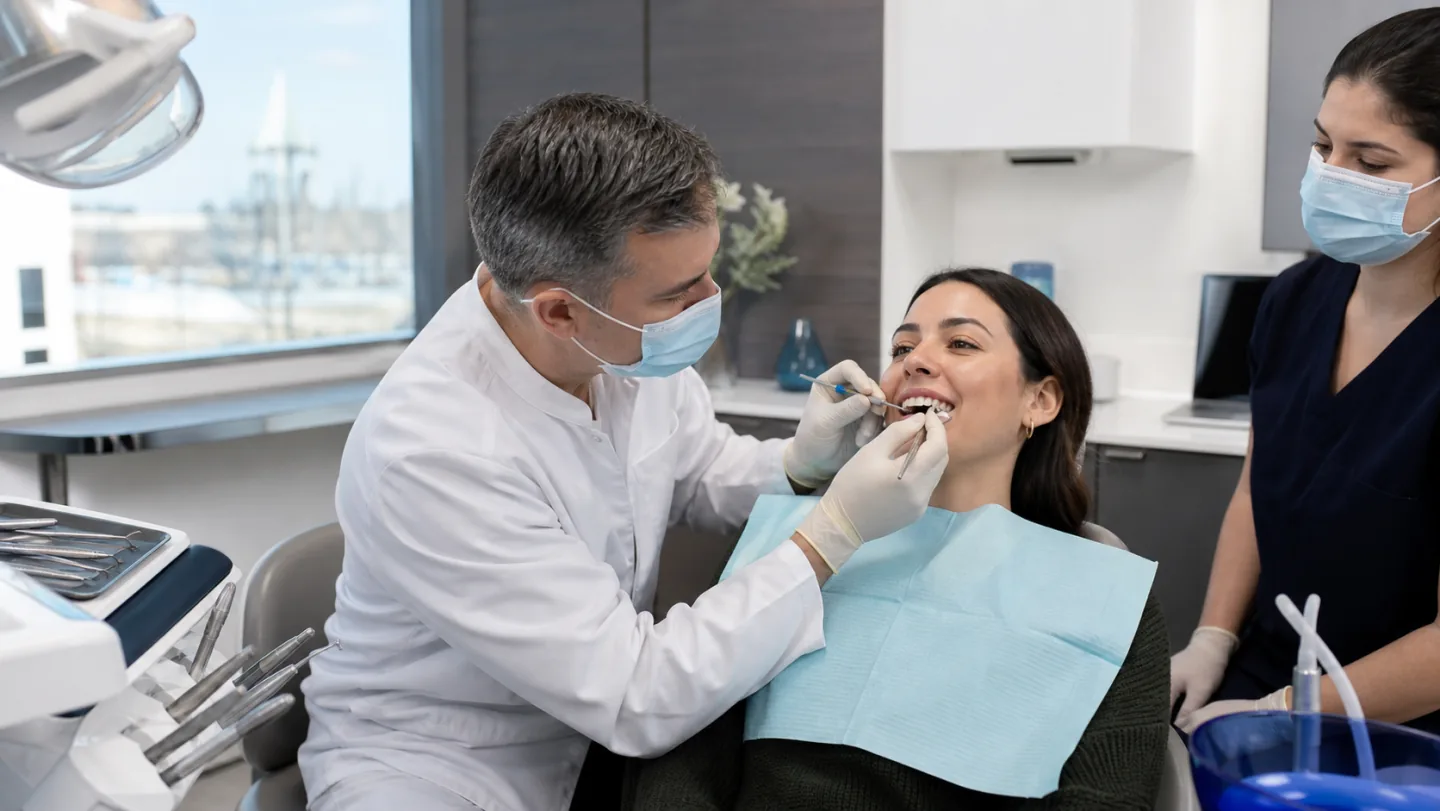
Put the question to the dentist

Find out whether your tooth is suited.

Anyone in Scotia Heights can ask for a bonding assessment at our Winnipeg clinic. The team will be in touch regarding next steps and scheduling.

Patient testimonials

Kind words from our patients

★★★★★ 5.0 from 440+ reviews on Google

Close to home

Areas we serve

Convenient dental care on McPhillips Street for families across northwest Winnipeg and nearby communities.

Explore all service areas

A healthier smile is one visit away

Ready for dental care that feels genuinely comfortable?

✓ New patients welcome ✓ Direct insurance billing ✓ Multilingual team

How can we help?

Our dental team is here for you.

Ready to book or have a question? Choose the option that works best for you.

For urgent dental concerns, please call us directly.

Send us a message

Our team will reply during clinic hours.



