Skip to content
Winnipeg North Dental
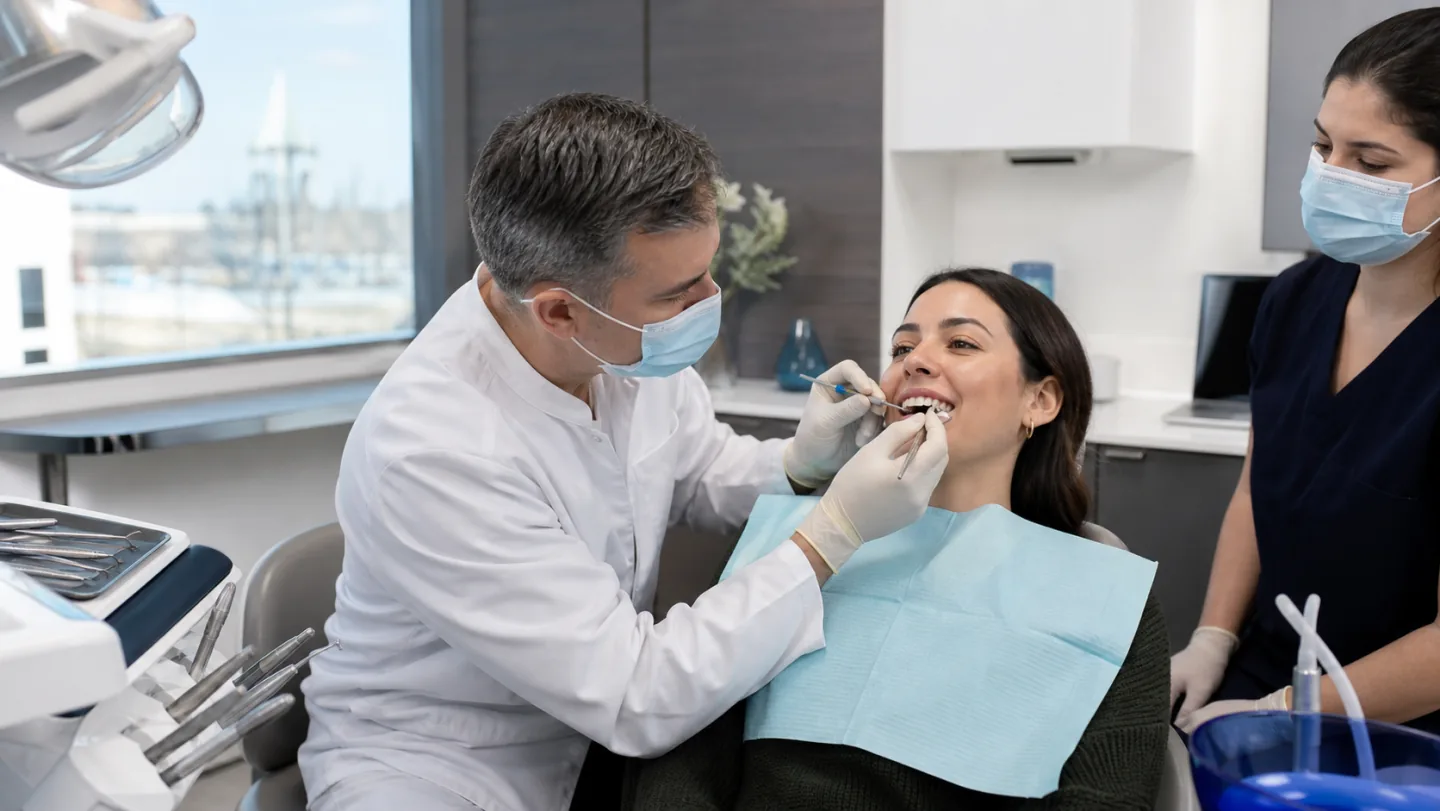
A dentist carefully completing a tooth-coloured bonding treatment
After you leave the chair

Dental Bonding for Kildonan Park Residents

Most pages about bonding stop at the final polish. If you’d like to know what comes next, including how the tooth may feel and what deserves a phone call, this one is for you.

Let's find a time

Request an appointment

We’ll call to confirm your appointment. For urgent care, please call us directly.

Thinking one step ahead

Life After Bonding: What Kildonan Park Residents Can Expect

Your tongue will probably find the new surface before your eyes do. Tongues are remarkably sensitive to change, so even a slight alteration in contour can seem bigger than it looks. For many people, a change like this stops drawing attention as they get used to it.

Other sensations do deserve a response, though. A tooth that hits first when you close, or an edge that scrapes, may simply need adjusting. Knowing the difference saves needless worry, and the clinic on McPhillips Street in Winnipeg is where any of it would be reviewed.

Explore dental bonding
Dental chair with a paper bib on the seat and overhead equipment at Winnipeg North Dental
Light blue chair and overhead equipment, with wood cabinets along the wall.

New shapes feel big

Lips and tongue often notice a small change first, and that awareness isn’t in itself a sign of a problem.

A high spot is fixable

If your bite feels off after the visit, an adjustment may be all that’s needed, so don’t just put up with it.

Ordinary routines return

Brushing and cleaning between teeth carry on normally, with extra thought given to what you bite into.

Sorting sensations

What’s just unfamiliar, and what’s worth reporting.

No page can diagnose your tooth, but these two groups are a practical way to think about what you’re noticing. If you’re in doubt, ring the clinic and ask.

Things you may simply notice

These are often about getting used to a change, particularly when an edge or the width of a tooth has been altered.

  • Your tongue returning to the area again and again.
  • Your lip resting a little differently over the tooth.
  • The tooth looking prominent because you’re studying it.
  • A smooth feel that’s different from the old chip.

Things to tell the clinic about

None of these automatically means something’s gone wrong, but each one is a good reason to call rather than wait.

  • The bonded tooth touching first when you close.
  • A sharp or rough edge catching your lip or tongue.
  • Ongoing sensitivity or an ache in the tooth.
  • A piece of the resin that’s chipped or loose.

Please use the phone rather than the form if a tooth is painful or something has broken. Staff can then tell you how to proceed.

The appointment itself

Setting up a comfortable finish.

Much of what happens afterwards depends on the final minutes in the chair. Here’s the sequence, with special attention to the parts that shape how the tooth feels when you’re back home.

Request your visit
  1. 01

    Assessment and shade

    After the tooth, gums and bite have been examined, resin shades are picked to relate to the enamel around the area you’re treating.

  2. 02

    Attach the resin

    Conditioned, isolated enamel receives adhesive, and then composite is added in controlled increments and set under a curing light.

  3. 03

    Tap, slide and adjust

    You’ll likely be asked to bite on marking paper. This shows where the new material touches, so any excess contact can be smoothed away.

  4. 04

    Feel it and speak up

    With polishing complete, run your tongue across the tooth and close together gently. Bring up anything rough or high before you go.

Plan your day a little

Think about freezing beforehand.

Often no local anaesthetic is needed when resin goes onto intact enamel, but sometimes it’s appropriate. Ask about this in advance, since numbness can make it harder to judge your bite and may affect your plans for the rest of the day.

When you’re frozen, mention it as your bite is being checked. It may be harder for you to tell how your teeth are coming together.

Before your visit

  • Any existing sensitivity in the tooth being treated.
  • A note of medications and medical conditions.
  • Whether you’ve noticed clenching or grinding.
  • Information about insurance or CDCP, when it’s applicable.
Waiting room with a child-sized white chair between two white chairs, plants and blinds at Winnipeg North Dental
White reception desk with an orchid and a glass door beyond it at Winnipeg North Dental

Chairs beneath a large blind in the waiting room, then a white reception desk with an orchid.

Small worries are welcome

Calling about a tiny thing is fine.

It’s easy to feel you’re being a bother over a tiny rough spot. A slightly high contact or snagging edge is something clinicians expect to hear about, and it’s far better raised than quietly endured.

Trust your bite

You know how your teeth normally come together, so if the closing feels wrong, that’s useful information.

Don’t file it yourself

Leave a rough edge alone rather than using a nail file or your fingernail on the resin.

Describe it simply

A short account of what you feel and when it occurs gives the team a good starting point.

Settling into normal

Bringing the tooth into everyday life.

Once the newness fades, a bonded tooth is mostly just another tooth, with a few caveats. A handful of lasting habits will help you get the most from the resin.

01

Bite with some thought

Very hard foods and non-food objects are the things most likely to take off a corner, especially with thin additions.

02

Remember the dark drinks

Coffee, tea and red wine can gradually mark composite, so a colour shift over time shouldn’t catch you off guard.

03

Keep your exams going

During regular checks, the dentist can look at the bonded area’s margins and surface along with the rest of your mouth.

Whatever you’re noticing, a phone call to the clinic can help you sort it out.

Talk with our team
Dark glass entry door and frosted windows beneath the Winnipeg North Dental sign

Winnipeg North Dental

Unit-5 2358 Mcphillips Street, Winnipeg, MB R2V 4J6
Get directions (opens in a new tab)
Where to go, before and after

Bonding on McPhillips Street for Kildonan Park Residents

For anyone living in Kildonan Park, an area in Winnipeg, bonding and any follow-up adjustment take place at Winnipeg North Dental, Unit 5, 2358 McPhillips Street, Winnipeg.

To start, use the form below or call (204) 338-3003. A form submission opens the conversation, and your booking is in place only when the clinic has confirmed it.

Questions about coverage?

Talk with our team before your visit or learn about CDCP.

A little clarity before your visit

Your questions, answered.

Helpful details about dental bonding in Kildonan Park.

Ask our team
Where would someone from Kildonan Park go if the bite feels off afterwards?

Contact the clinic where it was placed, at Unit 5, 2358 McPhillips Street, Winnipeg, by calling (204) 338-3003. Describe what you’re feeling so the team can arrange the next step.

Why does my new bonding feel so large?

Your tongue and lips pick up tiny differences in shape, so slight additions can seem bigger than they are. If that feeling persists or the tooth is catching on something, ask to have it checked.

Can I eat right after bonding?

Ask the dentist before you leave, particularly if you’ve been frozen. Advice can depend on your treatment, and if you’re numb you may not be able to judge what you’re biting.

Is sensitivity normal afterwards?

A tooth may react differently after work has been done on it, but ongoing or worsening discomfort shouldn’t be ignored. Phone the clinic so that it can be assessed.

My tooth seems too high when I close. Will it wear down on its own?

Please don’t count on that. Excess contact can overload thin resin or make the tooth uncomfortable, and an adjustment may resolve it. Call to have it looked at.

When can I go back to my usual foods and drinks?

The dentist can give you advice specific to your repair. Long term, hard objects are the chief concern for bonded edges, and dark drinks and tobacco can make staining more visible.

Know the whole picture

Ask about the visit and what comes after.

If you live in Kildonan Park, send a bonding request to our Winnipeg clinic. We’ll follow up to talk over the details and a suitable time.

Patient testimonials

Kind words from our patients

★★★★★ 5.0 from 440+ reviews on Google

Close to home

Areas we serve

Convenient dental care on McPhillips Street for families across northwest Winnipeg and nearby communities.

Explore all service areas

A healthier smile is one visit away

Ready for dental care that feels genuinely comfortable?

✓ New patients welcome ✓ Direct insurance billing ✓ Multilingual team

How can we help?

Our dental team is here for you.

Ready to book or have a question? Choose the option that works best for you.

For urgent dental concerns, please call us directly.

Send us a message

Our team will reply during clinic hours.



