Skip to content
Winnipeg North Dental
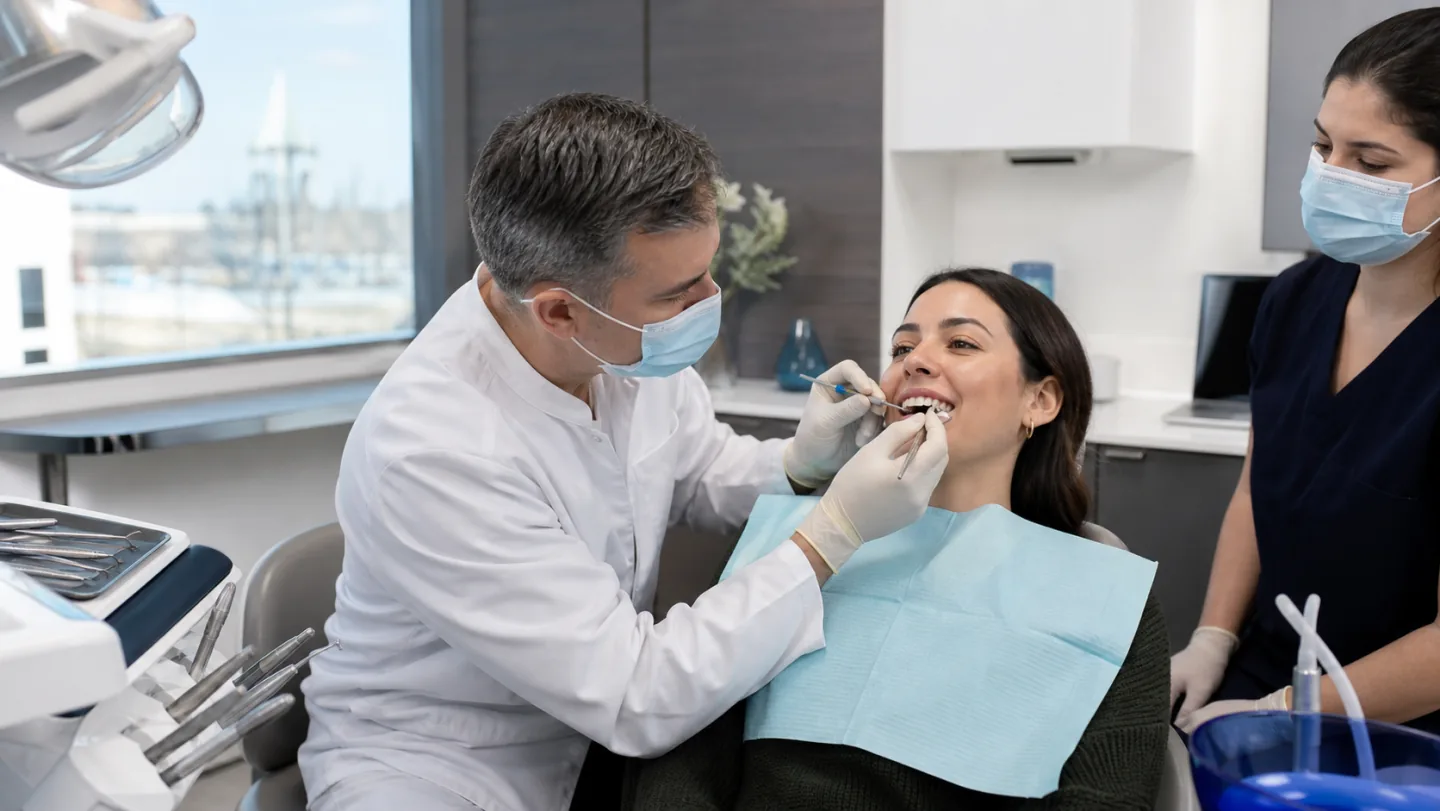
A dentist carefully completing a tooth-coloured bonding treatment
Which tooth is it, exactly?

Dental Bonding for Aurora Residents

Resin faces a different job on an upper front tooth than on one that takes a heavier load. Aurora residents wondering what that means for their own tooth can start with the explanation here.

Let's find a time

Request an appointment

We’ll call to confirm your appointment. For urgent care, please call us directly.

Position changes the plan

Why Tooth Location Matters in Bonding

Two chips of equal size can lead to quite different conversations, depending on where in your mouth they sit and which teeth they meet. Aurora residents receive this treatment at Winnipeg North Dental, whose address is on McPhillips Street in Winnipeg.

Bonding places composite resin straight onto the tooth to repair or reshape a selected area. Location is among the factors that influence how long that addition serves you, alongside its size, your bite, your habits, and how it’s maintained. Assessment shows how those factors apply to you.

Explore dental bonding
Waiting area at Winnipeg North Dental with potted plants, white chairs and a blue bench
White chairs and potted plants beside a bright window blind.

Seen versus stressed

Some surfaces matter mostly for looks, others mostly for handling force, and many have to do both.

Contact points counted

Where the opposing tooth lands can decide whether a thin addition is practical in that position.

Different materials exist

If resin isn’t the right fit for that tooth, your dentist can explain what else could be considered.

Two broad situations

Appearance-led teeth and load-bearing contacts.

This is a simplified way of thinking about it, as every mouth is individual. Still, it helps explain why your dentist asks so much about the bite.

Teeth at the front of your smile

Here the goal centres on what others see, so proportions and surface character get much of the attention.

  • Symmetry with the matching tooth on the other side.
  • Translucency and shade related to adjacent enamel.
  • Edge length planned with your bite in mind.
  • Highlights controlled by the finishing texture.

Where biting forces concentrate

An area that takes regular force has to stand up to contact, so the question shifts toward whether resin is a sound choice.

  • Examining which teeth touch, and how firmly.
  • Considering clenching or edge-to-edge contact.
  • Looking at how much natural structure remains.
  • Comparing with restorations made for larger repairs.

Thin additions can be overloaded in the wrong spot. The final recommendation rests on what the dentist finds.

Mapping your tooth

How your dentist narrows it down.

An assessment comes ahead of any treatment. A modest bonded repair is frequently finished within one appointment if the tooth and bite are suitable.

Request your visit
  1. 01

    Locate the concern

    Point out the tooth and surface in question, even if it’s only visible when you smile a particular way.

  2. 02

    Observe the contacts

    Your dentist studies how your teeth come together in that area, as the bite influences both the design and the suitability of the repair.

  3. 03

    Place the composite

    When bonding is the agreed plan, shades are chosen first. Then the enamel is conditioned and isolated, and resin is layered, shaped, and light-cured.

  4. 04

    Test under function

    With the resin hardened, your contacts are rechecked and adjusted where needed. Texture and polish complete the surface.

Getting specific

A little self-observation goes a long way.

Before you come in, notice when the tooth is visible and whether it meets anything when you bite. You don’t need the correct terms; plain descriptions work well.

Tell the clinic whether you’re asking about appearance, a repair, or both, so the conversation can begin in the right place.

Observations to share

  • Whether the tooth shows in a relaxed smile or a broad one.
  • Any foods or movements that make the area feel unusual.
  • Clenching or grinding, including anything a partner has mentioned.
  • Medications, health history, and insurance or CDCP information.
Dental operatory at Winnipeg North Dental with a teal chair and wood cabinetry
Consultation room at Winnipeg North Dental with a landscape painting on the wall

Teal patient chair and wood cabinets in a dental operatory.

Different teeth, different feel

Comfort can depend on the tooth as well.

How a repair feels partly reflects what’s being done and to which surface. Your dentist can explain what’s planned for that particular tooth if you’d like to know ahead of time.

When freezing enters the picture

Resin added to sound enamel frequently doesn’t need it. Sensitive breaks, decay removal, or preparation are different.

Your tongue will notice first

A change in shape often feels greater than it looks, and that’s worth mentioning if it stays bothersome.

Report the first bite

If the tooth seems to hit early when you close, say so during the appointment so it can be evaluated.

Depending on where it sits

Upkeep follows the tooth’s daily workload.

Any composite can chip, stain, roughen, or wear. Which of those you’re likeliest to notice first may have something to do with the position of the bonded surface.

01

Biting straight on

Try not to bite into hard objects with a bonded edge. Nails and tough packaging are common culprits.

02

Stain on the surfaces you see

Coffee, tea, red wine, and tobacco can make surface changes more visible, particularly on a tooth that shows.

03

Reach the margins

Clean along and between bonded teeth in your normal way, since the bordering natural tooth still needs protecting.

Something feels different when you bite? Call the clinic and describe which tooth.

Talk with our team
Outside view of Winnipeg North Dental with a sign reading 204-338-3003

Winnipeg North Dental

Unit-5 2358 Mcphillips Street, Winnipeg, MB R2V 4J6
Get directions (opens in a new tab)
The place you’d be seen

Bonding Care for Aurora Residents

Assessments and treatment for residents of Aurora take place at Winnipeg North Dental, Unit 5, 2358 McPhillips Street, Winnipeg. You’ll find a directions link here as well.

Requests sent through the form are not bookings until the clinic has replied with a confirmed time. Prefer to speak with someone? Try (204) 338-3003.

Questions about coverage?

Talk with our team before your visit or learn about CDCP.

A little clarity before your visit

Your questions, answered.

Helpful details about dental bonding in Aurora.

Ask our team
Where would an Aurora resident go to have a tooth assessed for bonding?

Your visit would be at Winnipeg North Dental, Unit 5, 2358 McPhillips Street, Winnipeg, MB R2V 4J6. You can request it through the form on this page or by calling (204) 338-3003.

Can bonding be done on any tooth?

Not automatically. It depends on the condition of the enamel, the extent of the change, and how your bite affects that surface, which is why the tooth has to be examined first.

Is a lower front tooth harder to bond than an upper one?

There’s no blanket answer. Your bite determines how much force a given edge receives, so the dentist looks at your particular contacts before advising you.

What is the alternative if the position makes resin a poor choice?

That depends on the reason. Moving the tooth, covering its surface, or using another type of restoration may come up, and your dentist can explain how each one differs.

Why might my front tooth be chipping at its edge?

Possible reasons include how your teeth meet, grinding, or habits like biting your nails. Mention what you’ve noticed, because the cause should be understood before material is added.

Do I need a separate assessment for each tooth I’m wondering about?

Mention every tooth on your mind when you request the visit. It’s a simple way to find out how the clinic would approach them and what could be looked at together.

For Aurora residents

Show us the tooth, and we’ll look at its bite.

Ask for an assessment at the McPhillips Street clinic in Winnipeg, and you’ll hear back from staff about setting a time.

Patient testimonials

Kind words from our patients

★★★★★ 5.0 from 440+ reviews on Google

Close to home

Areas we serve

Convenient dental care on McPhillips Street for families across northwest Winnipeg and nearby communities.

Explore all service areas

A healthier smile is one visit away

Ready for dental care that feels genuinely comfortable?

✓ New patients welcome ✓ Direct insurance billing ✓ Multilingual team

How can we help?

Our dental team is here for you.

Ready to book or have a question? Choose the option that works best for you.

For urgent dental concerns, please call us directly.

Send us a message

Our team will reply during clinic hours.



