Skip to content
Winnipeg North Dental
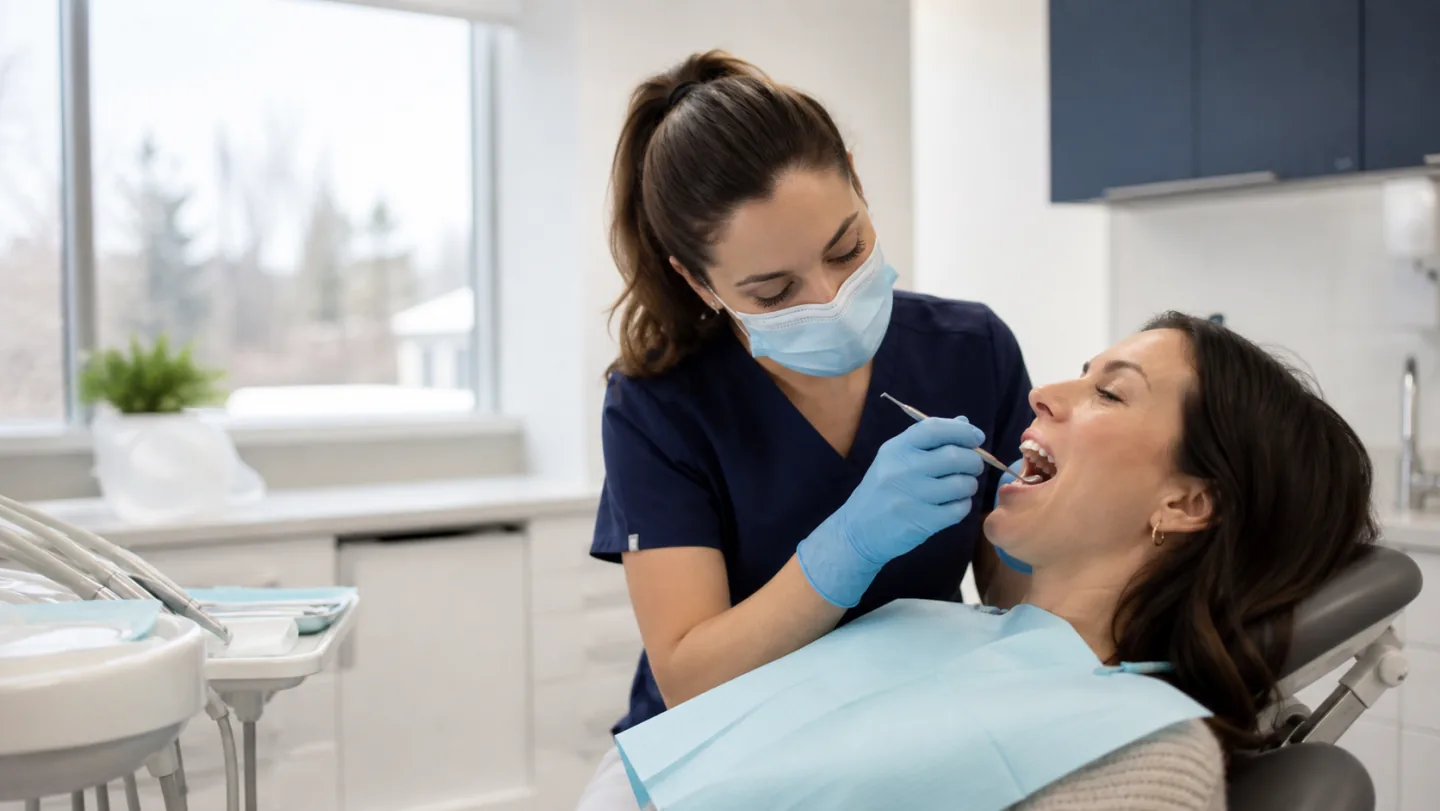
A dental hygienist providing a professional cleaning to a relaxed patient
Those numbers along your gums

Check-ups & Cleanings for St. Vital Residents

Two, three, two, four. The string of numbers read out during a gum check can sound like a code. For St. Vital residents curious about what is being recorded, here is how gum measurements sit inside a routine check-up and cleaning.

Let's find a time

Request an appointment

We’ll call to confirm your appointment. For urgent care, please call us directly.

Making sense of the gum check

What Periodontal Measurements Tell Your Dental Team

Part of a routine visit may involve periodontal measurements. Using a slim instrument, the hygienist gently checks the small space where each gum meets its tooth, calling out readings at several points so they can be recorded. Bleeding during this step is noted as well.

These readings help show whether your gums look healthy, whether there are signs of inflammation, and whether something has shifted since your previous records. They also help decide what kind of cleaning makes sense. You are always welcome to ask what your own numbers mean and how they compare with last time.

Explore check-ups & cleanings
Winnipeg North Dental treatment room with a light blue reclining chair and a monitor on the far wall
A reclined light blue dental chair and wooden cabinetry.

Readings, not a grade

The numbers describe your gums today. They give the team a starting point to compare against later.

Bleeding is noted too

Spots that bleed when checked can point to inflammation worth keeping an eye on.

Ask for the summary

Request a plain explanation of which areas look healthy and which may need closer care.

Exam, cleaning, measurements

How the gum readings connect to the rest of the visit.

Measurements are one piece of a larger picture. Your dentist and hygienist use them alongside everything else they see to decide what your teeth and gums need.

What the check-up covers

Your dentist examines your mouth as a whole and puts the gum findings in context with your teeth and health history.

  • Looking over your health history, medications and anything new.
  • Checking teeth, gums, bite, soft tissues and existing dental work.
  • Deciding whether X-rays are clinically appropriate for you.
  • Explaining what the overall findings suggest.

What the cleaning covers

Your hygienist assesses the gums, records readings where needed, and clears away the deposits that irritate gum tissue.

  • Periodontal measurements and notes about any bleeding.
  • Scaling to lift plaque and hardened tartar from teeth and the gumline.
  • Polishing when it is suitable for you.
  • Guidance aimed at the areas where readings or bleeding stood out.

When the gum assessment suggests gum disease, a routine cleaning may not be the right fit. Scaling and root planing addresses deeper deposits on affected root surfaces, and an assessment decides which care is appropriate.

Order of events

Where the measuring happens in a typical appointment.

Your visit depends on your oral health and how long it has been since you were last seen. This outline shows roughly where gum readings come in.

Request your visit
  1. 01

    Bring us up to date

    Share changes in your health, medications and anything you’ve noticed, such as gums that bleed when you brush.

  2. 02

    Gum readings and assessment

    Your hygienist checks around each tooth and records the results. Tell them if a spot feels tender while this happens.

  3. 03

    Cleaning the surfaces

    Plaque and tartar are removed with suitable instruments, with polishing when appropriate.

  4. 04

    Hearing what it adds up to

    Your dentist examines your mouth and talks through the findings, including what the gum readings suggest and when to return.

Context for the readings

Things that change how gums behave.

Your gums can be affected by more than brushing alone. Knowing a little about your general health helps your dental team interpret what they measure.

If you’ve had gum readings taken at another clinic, ask whether those records can be shared. Earlier numbers give a useful point of comparison.

Worth mentioning when you arrive

  • Diabetes or other health changes since your last dental visit.
  • Any current medications, including recent additions.
  • Whether you use tobacco.
  • Places where your gums bleed, feel sore or look swollen.
Reception counter at Winnipeg North Dental with potted plants and a light wood-look floor
Seating area at Winnipeg North Dental with white chairs by a window and a navy upholstered bench

A white reception counter with a snake plant in front.

If your gums are tender

A gentle check is still a check.

Measuring around inflamed gums can feel a bit sensitive. Letting your hygienist know which areas are sore helps them take extra care and talk with you about comfort options.

Point to the sore spots

Show your hygienist where your gums feel tender before the readings begin.

Ask what each step is

Hearing what the instrument does can make the sensation feel less strange.

Signal for a break

Settle on a gesture beforehand so you can stop for a moment whenever you like.

Watching the numbers over time

Using your readings as a baseline.

Gum measurements are most useful when they can be compared across visits. After your appointment, keep in mind what your hygienist said about the areas that need extra attention.

01

Target the trouble spots

Ask which teeth had higher readings or bleeding, and how to clean those areas more effectively.

02

Compare at your next visit

Next time, ask whether the readings in those areas have stayed steady, improved or changed.

03

A recall that suits your gums

Active gum disease is one reason more frequent care may be suggested. Your interval is set after assessment.

Gums that start bleeding more often, swell or feel sore between visits are worth a call to (204) 338-3003 rather than waiting for the next appointment.

Talk with our team
Winnipeg North Dental storefront with grey siding, white signage and frosted front windows

Winnipeg North Dental

Unit-5 2358 Mcphillips Street, Winnipeg, MB R2V 4J6
Get directions (opens in a new tab)
Where readings are taken

The Clinic Where St. Vital Residents Have Their Gums Checked

For residents of St. Vital, an area of Winnipeg, check-ups and cleanings are provided at Winnipeg North Dental, Unit 5, 2358 McPhillips Street, Winnipeg, MB R2V 4J6.

Submitting a request through the form is not a booked time. We reply to confirm the day, and you can mention any gum concerns while you’re writing to us.

Questions about coverage?

Talk with our team before your visit or learn about CDCP.

A little clarity before your visit

Your questions, answered.

Helpful details about check-ups & cleanings in St. Vital.

Ask our team
What is being measured during a gum check?

Your hygienist gently checks the small space between each tooth and the gum around it, at several points per tooth. The readings and any bleeding are recorded to help assess the health of your gums.

Are higher gum readings a bad sign?

They can suggest that the gums are inflamed or that gum disease may be present, but the numbers are interpreted together with bleeding, X-rays when used, and your history. Ask your dental team to explain what your readings mean for you.

Does the gum measuring hurt?

Most people describe a light poking or pressure. Inflamed or tender gums may feel more sensitive. Speak up during the check so your hygienist can adjust and discuss what would help.

Will my gums be measured at every appointment?

Gum assessment is a routine part of many visits, but exactly what is recorded depends on your oral health and history. Your hygienist can tell you what they plan to check and why.

What if my readings suggest gum disease?

A routine cleaning focuses on deposits around visible surfaces and the gumline. If gum disease is found, your team may recommend scaling and root planing or other gum care, and will explain why.

How do St. Vital residents set up a check-up and cleaning?

Our online form is one route; calling (204) 338-3003 is the other. Appointments happen at our McPhillips Street clinic in Winnipeg, and we follow up with you to arrange the details.

Know your numbers

Get a clear read on your gum health.

St. Vital residents can request a check-up and cleaning at our clinic on McPhillips Street and ask what their gum readings show. A member of our team will confirm your time.

Patient testimonials

Kind words from our patients

★★★★★ 5.0 from 440+ reviews on Google

Close to home

Areas we serve

Convenient dental care on McPhillips Street for families across northwest Winnipeg and nearby communities.

Explore all service areas

A healthier smile is one visit away

Ready for dental care that feels genuinely comfortable?

✓ New patients welcome ✓ Direct insurance billing ✓ Multilingual team

How can we help?

Our dental team is here for you.

Ready to book or have a question? Choose the option that works best for you.

For urgent dental concerns, please call us directly.

Send us a message

Our team will reply during clinic hours.



