Skip to content
Winnipeg North Dental
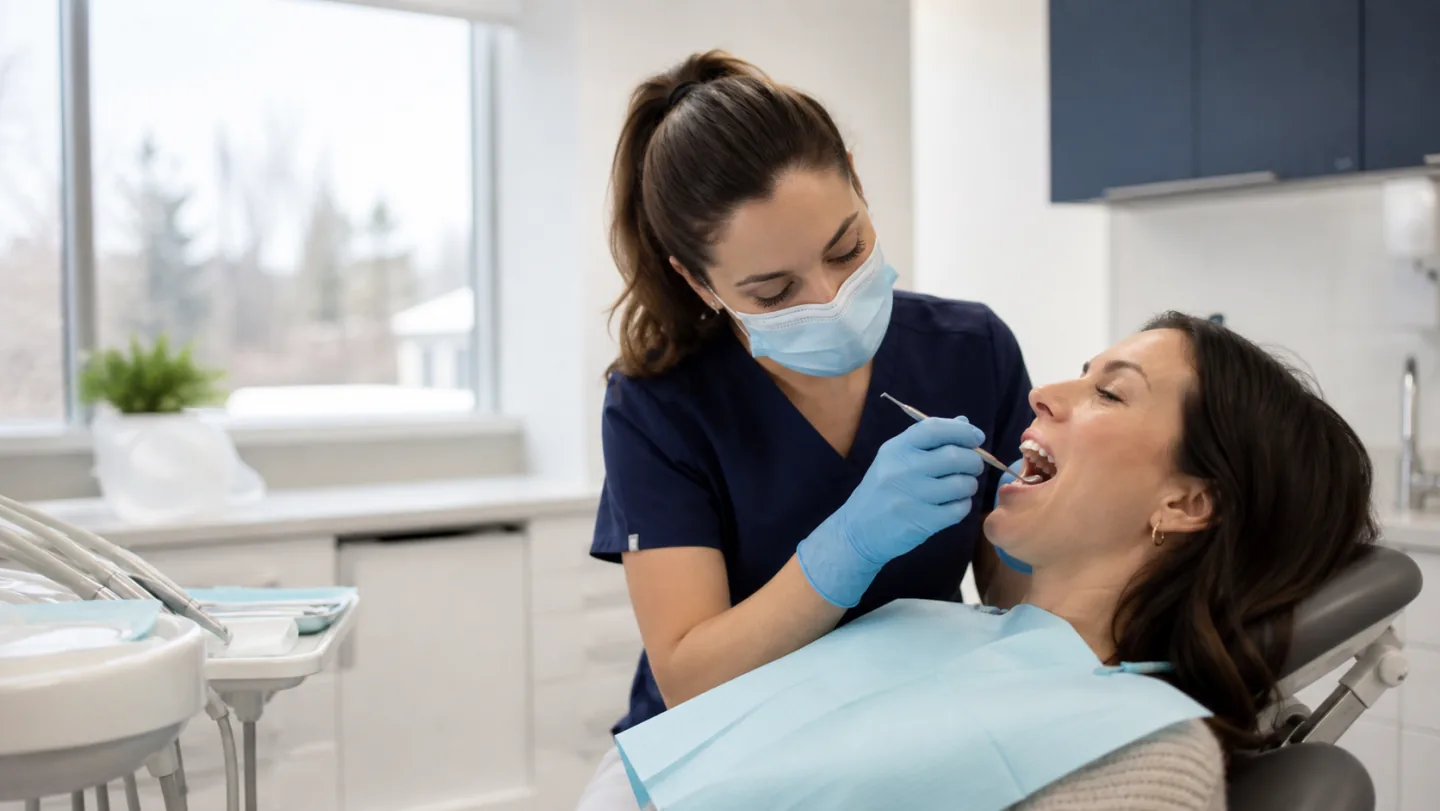
A dental hygienist providing a professional cleaning to a relaxed patient
Food stuck in the same spot?

Check-ups & Cleanings for St. Andrews Residents

Reaching for a toothpick after every meal, always at the same tooth, is a small annoyance that many people live with. It is also a detail worth raising at your next check-up and cleaning.

Let's find a time

Request an appointment

We’ll call to confirm your appointment. For urgent care, please call us directly.

That one stubborn gap

When Meals Keep Ending With a Toothpick

Food trapping rarely feels urgent, which is why it tends to go unmentioned for years. St. Andrews is outside the City of Winnipeg, and if you come in to our McPhillips Street clinic for routine care, this is exactly the kind of minor complaint to put on your list before the trip.

A dentist can look at the area and explain what is going on there, whether that turns out to be the shape of the space, a rough edge, or something in your existing dental work. Until then, nobody can say what the cause is, and it may be nothing that needs treating.

Explore check-ups & cleanings
Winnipeg North Dental treatment room with a light blue dental chair, wood-front cabinets, and a wall monitor
A reclined blue chair under its curved overhead arm.

Name the tooth

Point out exactly where things catch, since a specific location gives your dentist somewhere to start.

Mention rough edges

Something your tongue keeps finding is worth reporting, even when it doesn’t hurt at all.

Learn a cleaning method

Your hygienist can suggest how to clear that particular space between appointments.

How each part helps

One visit, two ways of looking at that spot.

An exam and a cleaning approach a food trap differently. Your dentist is trying to work out why it happens, and your hygienist deals with what has gathered there and shows you how to manage it.

The examination

Your dentist inspects your teeth, gums, bite, and any dental work, including the area bothering you.

  • Your account of when and where food catches is part of the history.
  • Old fillings and crowns in the area get a close look.
  • An X-ray may come up if your dentist needs to see between the teeth.
  • You hear what was found, and whether it should be treated or simply watched.

The hygiene appointment

Tight or awkward spaces can collect buildup, and your hygienist works on those areas along with the rest of your mouth.

  • Gums beside the trouble spot are assessed for tenderness or bleeding.
  • Scaling removes the plaque and tartar that a toothbrush has left behind.
  • Polishing and fluoride are raised when they suit your needs.
  • Coaching centres on how to clean that specific gap at home.

A rough edge can hold plaque and food even when it causes no pain. If a tooth or filling has actually broken, call instead of waiting for a routine date.

The order of things

Bringing one small complaint along for the ride.

Your routine appointment goes ahead much as usual, with this concern raised early. The details can vary with your oral health and the length of time since you were last seen.

Request your visit
  1. 01

    Describe the pattern

    Along with your health history and medications, explain which foods catch, which side, and how long it has been happening.

  2. 02

    Have it examined

    Your dentist looks over the whole mouth, then that area in particular, and recommends X-rays only if they are clinically appropriate.

  3. 03

    Clear the buildup

    Your hygienist removes plaque and hardened tartar with suitable instruments, and tells you how the gums look in that spot.

  4. 04

    Decide what comes next

    You find out whether anything needs doing, what to try at home, and when you should be seen again.

Notes for your list

A few details make the problem easier to explain.

Food trapping can be hard to describe from the chair, particularly once your mouth is clean. Taking a moment to notice the pattern over several meals gives you something concrete to report.

Since you would be travelling into the city, ask when you book how long to allow, and whether a treatment recommendation would mean coming back another day.

Worth noting beforehand

  • Which tooth or side catches food, and which meals tend to cause it.
  • Any dental work done around there, and roughly when it was done.
  • Your up-to-date medication list, plus any recent health changes.
  • Benefit plan or CDCP details, in case you want to talk about coverage.
Winnipeg North Dental waiting area with a navy bench, two abstract paintings, and a patterned rug
Winnipeg North Dental reception counter with a potted plant and a glass partition

A navy bench on the right, with white chairs under the blinds.

Tender around the trouble spot

Sore gums there? Warn your hygienist first.

Gum tissue next to a food trap may be more tender than the rest of your mouth. Knowing that ahead of time helps your hygienist adjust the approach and explain what you are likely to feel.

Point before you begin

Showing the exact place beforehand is simpler than trying to explain it with instruments in your mouth.

Expect pressure and scraping

Routine cleanings often feel like vibration, water, and scraping, and you can report anything that goes beyond that.

Settle on a pause signal

Before starting, choose a gesture that tells your hygienist you would like a moment.

After you get home

Keeping that space clear between visits.

A clean mouth does not change the shape of a gap, so the daily habit is often where the difference lies. Leave knowing the method your hygienist suggests, and what would be a reason to call.

01

A tool that fits

Spaces vary, so ask which interdental cleaner suits yours, and have someone show you the angle to use.

02

Signs worth reporting

Bleeding that increases, a new rough edge, or discomfort when biting should be assessed instead of being saved for later.

03

When to return

Your recall date reflects your own oral health, and your exam and cleaning may end up on separate schedules.

Has the catching spot become painful, or has something chipped? Telephone the clinic and describe what you notice.

Talk with our team
Front of the Winnipeg North Dental building, with the clinic sign and phone number above the glass doors

Winnipeg North Dental

Unit-5 2358 Mcphillips Street, Winnipeg, MB R2V 4J6
Get directions (opens in a new tab)
Coming in to the city

Where St. Andrews Residents Have This Care

Exams and cleanings take place at Winnipeg North Dental, Unit 5, 2358 McPhillips Street, Winnipeg. Open the directions link when you are working out your trip.

The form sends a request and doesn’t hold a time. The clinic gets back to you to settle the details, and you can raise your food-trapping concern then or at the visit.

Questions about coverage?

Talk with our team before your visit or learn about CDCP.

A little clarity before your visit

Your questions, answered.

Helpful details about check-ups & cleanings in St. Andrews.

Ask our team
Why does food keep catching between the same two teeth?

Several things can contribute, including the space between the teeth, a worn or rough edge, or existing dental work. A dentist has to look at the area to tell which applies to you.

Is a food trap a reason to come in before my regular check-up?

It depends on what comes with it. Mild catching can usually be raised at a routine appointment, but pain, swelling, or a broken tooth or filling calls for a phone call.

My filling feels rough but doesn’t hurt. Does it matter?

It can. Even a painless rough edge is able to collect plaque and food, and it may worsen with time. Have it looked at, rather than filing it away because it doesn’t bother you.

Can I do anything about it at home in the meantime?

Keep cleaning the area gently, and take note of whether your gums bleed there. Your hygienist can then recommend an interdental method suited to that spot once it has been seen.

Will this add time to my appointment?

That varies, since buildup, X-rays, and your history all affect the length of a visit. Mention your concern when you book from outside Winnipeg, and ask how long you should plan to stay.

I’m in St. Andrews. What’s the first step toward a visit?

Either send in this page’s request form or dial (204) 338-3003 to begin. Care takes place at Unit 5, 2358 McPhillips Street, Winnipeg, MB R2V 4J6, and the clinic confirms each request.

Tired of the toothpick?

Have that spot looked at during your next visit.

From St. Andrews, send a request for a check-up and cleaning at our Winnipeg clinic, and let us know which area keeps catching. A reply will follow so that the particulars can be worked out.

Patient testimonials

Kind words from our patients

★★★★★ 5.0 from 440+ reviews on Google

Close to home

Areas we serve

Convenient dental care on McPhillips Street for families across northwest Winnipeg and nearby communities.

Explore all service areas

A healthier smile is one visit away

Ready for dental care that feels genuinely comfortable?

✓ New patients welcome ✓ Direct insurance billing ✓ Multilingual team

How can we help?

Our dental team is here for you.

Ready to book or have a question? Choose the option that works best for you.

For urgent dental concerns, please call us directly.

Send us a message

Our team will reply during clinic hours.



