Skip to content
Winnipeg North Dental
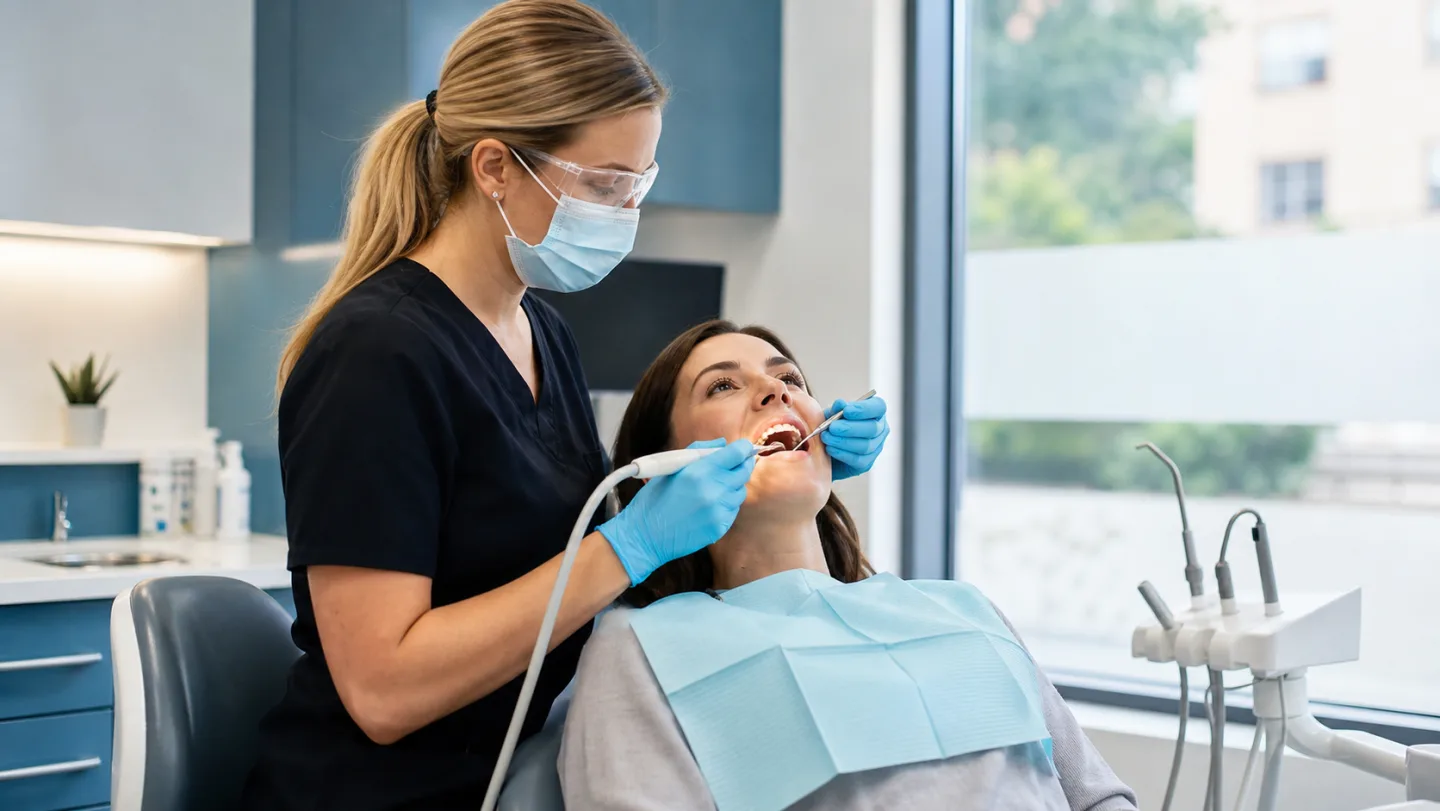
A dental hygienist providing a professional cleaning to a relaxed patient
The gritty paste and the fluoride

Check-ups & Cleanings for Sage Creek Residents

Scaling gets most of the attention, yet the final minutes of a cleaning raise plenty of questions too. Sage Creek residents who have wondered about polishing paste, fluoride or why those steps vary from visit to visit can find plain answers here.

Let's find a time

Request an appointment

We’ll call to confirm your appointment. For urgent care, please call us directly.

The finishing stage of a cleaning

Polishing and Fluoride in a Routine Dental Visit

Once plaque and hardened tartar have been scaled away, your hygienist may polish your teeth. That step uses a slightly gritty paste on a small rotating cup to smooth surfaces and lift some surface stain, which is why your teeth can feel so slick afterward.

Fluoride is a separate matter. It may be discussed based on your needs, such as how often you get cavities, whether your mouth tends to be dry, or whether you have braces or complex dental work. Neither step is automatic, and your hygienist can explain why it is or isn’t being suggested for you.

Explore check-ups & cleanings
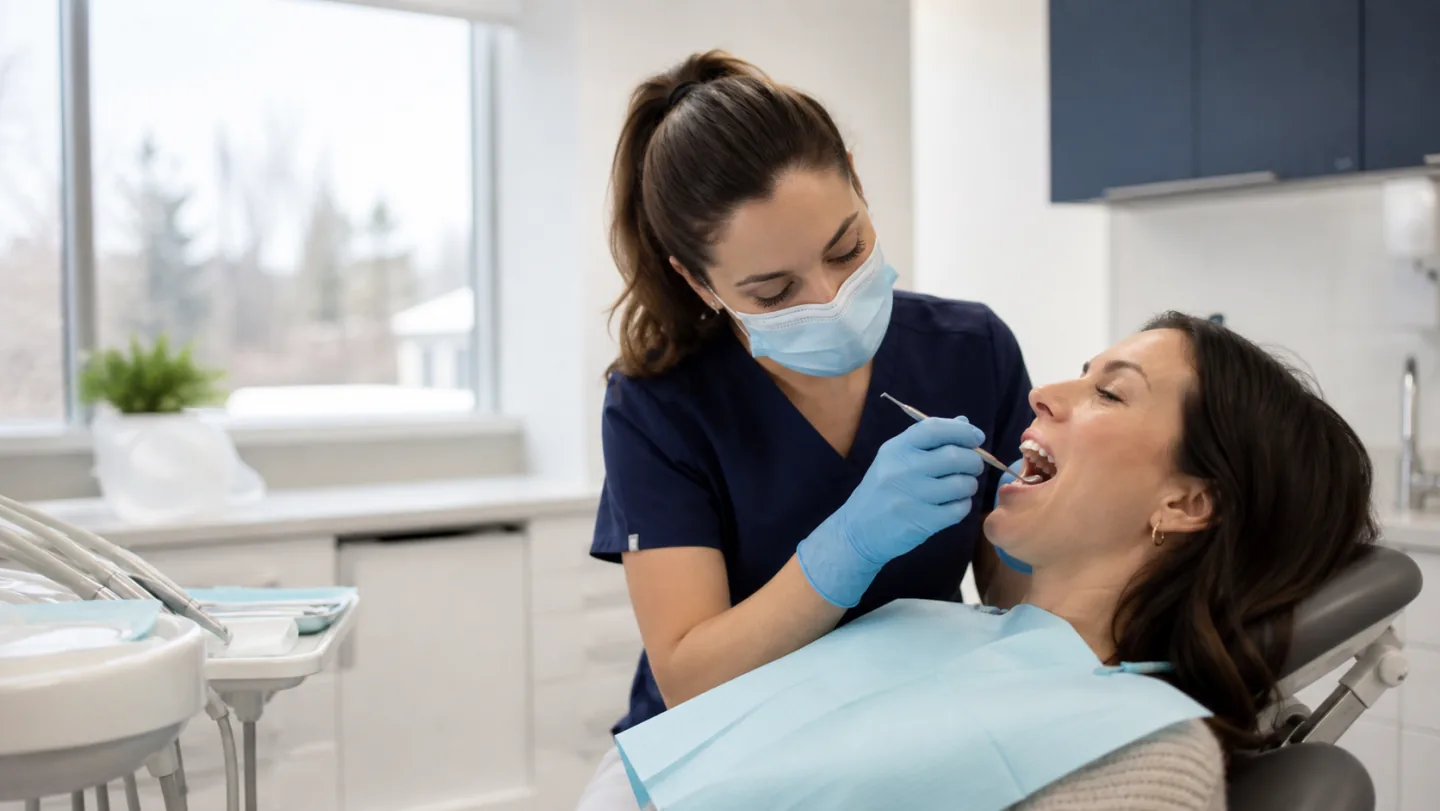
A dental hygienist carrying out a professional teeth cleaning on a patient
Gloved hands holding a mirror and scaler at a reclined patient’s mouth.

Polish is the finish

Smoothing comes after the deposits are gone. It does not replace the scaling that removes tartar.

Fluoride is case by case

Whether it comes up depends on factors like cavity history and dry mouth.

Ask why, either way

Your hygienist can tell you the reasoning behind including or leaving out each step.

From exam to final polish

Where the last steps sit within the whole visit.

A check-up and a cleaning are separate services that are often booked side by side. Polishing and fluoride belong to the hygiene side, but your exam findings can shape whether they are recommended.

The dentist’s examination

Your dentist reviews the state of your teeth and gums, which helps decide which preventive steps suit you.

  • A walk through the health background behind any cavity or dry-mouth risk.
  • Looking for decay, gum changes and wear on older fillings or crowns.
  • Radiographs if, and only if, your situation calls for them.
  • A verdict sorted three ways: fine, worth watching, or in need of care.

The hygienist’s cleaning

Your hygienist handles the hands-on preventive work, from the gum assessment through to the finishing touches.

  • A gum check, which may include recording small measurements.
  • Scraping plaque and tartar from tooth surfaces and the gumline.
  • A pass with the polishing cup if your teeth will benefit.
  • A short talk on fluoride and on which habits deserve your effort.

Polishing can take away some surface stain, but it isn’t a whitening treatment. If you’re hoping for a brighter shade, ask your dentist whether whitening would be suitable after your exam.

The running order

Following a visit through to the final rinse.

Visits vary with age, oral health and the time since your last appointment. This is a general sense of the order.

Request your visit
  1. 01

    Catching up on your health

    We ask about medications, symptoms and anything new. Dry mouth and a history of cavities are especially useful to mention for this topic.

  2. 02

    Looking closely

    Your dentist examines your teeth, gums, soft tissues, bite and dental work, and decides whether images would help.

  3. 03

    Scaling, then smoothing

    Deposits are removed first. If polishing suits you, it follows, leaving the surfaces cleaner and smoother.

  4. 04

    Wrapping up

    Fluoride, home care and your recall interval are discussed, based on what was seen during the visit.

What your hygienist weighs

Clues that shape the finishing steps.

Your hygienist chooses the last part of your cleaning partly from what you tell them. A few facts about your mouth and your habits make that choice better informed.

If you have a sensitivity to certain flavours or ingredients, mention it when you arrive so it can be considered before anything is used.

Before your cleaning, think about

  • How many cavities you’ve had in the past few years.
  • Whether your mouth often feels dry, and any medications you take.
  • Teeth that feel sensitive to cold, sweets or touch.
  • Whether you wear braces, a retainer or have bridges and crowns.
Treatment room at Winnipeg North Dental with a light blue chair and white upper cabinets
Front desk at Winnipeg North Dental with a white counter and a tall green plant

A light blue dental chair in a treatment room with white cabinets.

Taste, texture and sensitivity

Tell us if the grit or flavour bothers you.

Some people dislike the texture of polishing paste or find certain flavours hard to take. Others have teeth that react to the spinning cup. These are all reasonable things to mention so your hygienist can adjust or discuss alternatives.

Sensitive spots

If particular teeth react to the polishing cup, point them out so they can be handled gently.

Gag reflex

Paste and water at the back of the mouth can trigger gagging. A heads-up lets your hygienist pace things.

Time to rinse

Ask for a moment to swallow or rinse whenever you need one.

That smooth feeling, later on

Keeping surfaces clean after you leave.

Polished teeth start collecting plaque again within hours, which is normal. What you do every day is what keeps buildup from hardening into tartar before your next visit.

01

Ask about aftercare

If fluoride was applied, ask your hygienist whether there is anything to avoid for a while afterward.

02

Daily cleaning

Ask for tips on reaching the areas where plaque was heaviest, including between teeth.

03

Your next appointment

Many people come back roughly every six months, though your team may suggest a different interval.

If a tooth starts to ache or turns newly sensitive in the days after your cleaning, phone (204) 338-3003 so it can be looked into.

Talk with our team
Exterior of Winnipeg North Dental showing the clinic sign, phone number and front entrance

Winnipeg North Dental

Unit-5 2358 Mcphillips Street, Winnipeg, MB R2V 4J6
Get directions (opens in a new tab)
Where the cleaning happens

The Clinic Sage Creek Residents Visit for Cleanings

Residents of Sage Creek, in Winnipeg, have their check-ups and cleanings at Winnipeg North Dental, which you’ll find at Unit 5, 2358 McPhillips Street, Winnipeg, MB R2V 4J6.

Sending the form puts in a request, not a confirmed booking. We follow up to agree on a time, and your message can include any questions about fluoride or polishing.

Questions about coverage?

Talk with our team before your visit or learn about CDCP.

A little clarity before your visit

Your questions, answered.

Helpful details about check-ups & cleanings in Sage Creek.

Ask our team
Is polishing the same as cleaning?

No. The cleaning itself is the scaling that removes plaque and tartar. Polishing, if included, smooths the surfaces afterward and can lift some surface stain.

Do I need fluoride at every cleaning?

Not necessarily. Your hygienist considers factors like cavity history, dry mouth and dental work when deciding whether to bring it up. Ask what they recommend for you and why.

Why did my last clinic skip the polish?

Polishing is done when it is appropriate for the person in the chair. If you’re curious about why it was or wasn’t done, your hygienist can explain how they decide.

Can polishing whiten my teeth?

It can reduce some surface stain, but it doesn’t change the natural shade of your teeth. Your dentist can tell you whether teeth whitening might be an option after your exam.

My teeth feel sensitive during polishing. What should I do?

Let your hygienist know straight away. Exposed roots or tender areas can react to the cup, and the approach can be adjusted while comfort options are talked through.

How do I request a cleaning if I live in Sage Creek?

Fill out the short request on this page, or pick up the phone and dial (204) 338-3003. Your check-up and cleaning would be at our McPhillips Street clinic in Winnipeg, and the clinic confirms the details with you.

Finish with clarity

Ask about every step, right to the end.

People in Sage Creek can request a check-up and cleaning at our clinic on McPhillips Street. We’ll get back to you to set the appointment.

Patient testimonials

Kind words from our patients

★★★★★ 5.0 from 440+ reviews on Google

Close to home

Areas we serve

Convenient dental care on McPhillips Street for families across northwest Winnipeg and nearby communities.

Explore all service areas

A healthier smile is one visit away

Ready for dental care that feels genuinely comfortable?

✓ New patients welcome ✓ Direct insurance billing ✓ Multilingual team

How can we help?

Our dental team is here for you.

Ready to book or have a question? Choose the option that works best for you.

For urgent dental concerns, please call us directly.

Send us a message

Our team will reply during clinic hours.