Skip to content
Winnipeg North Dental
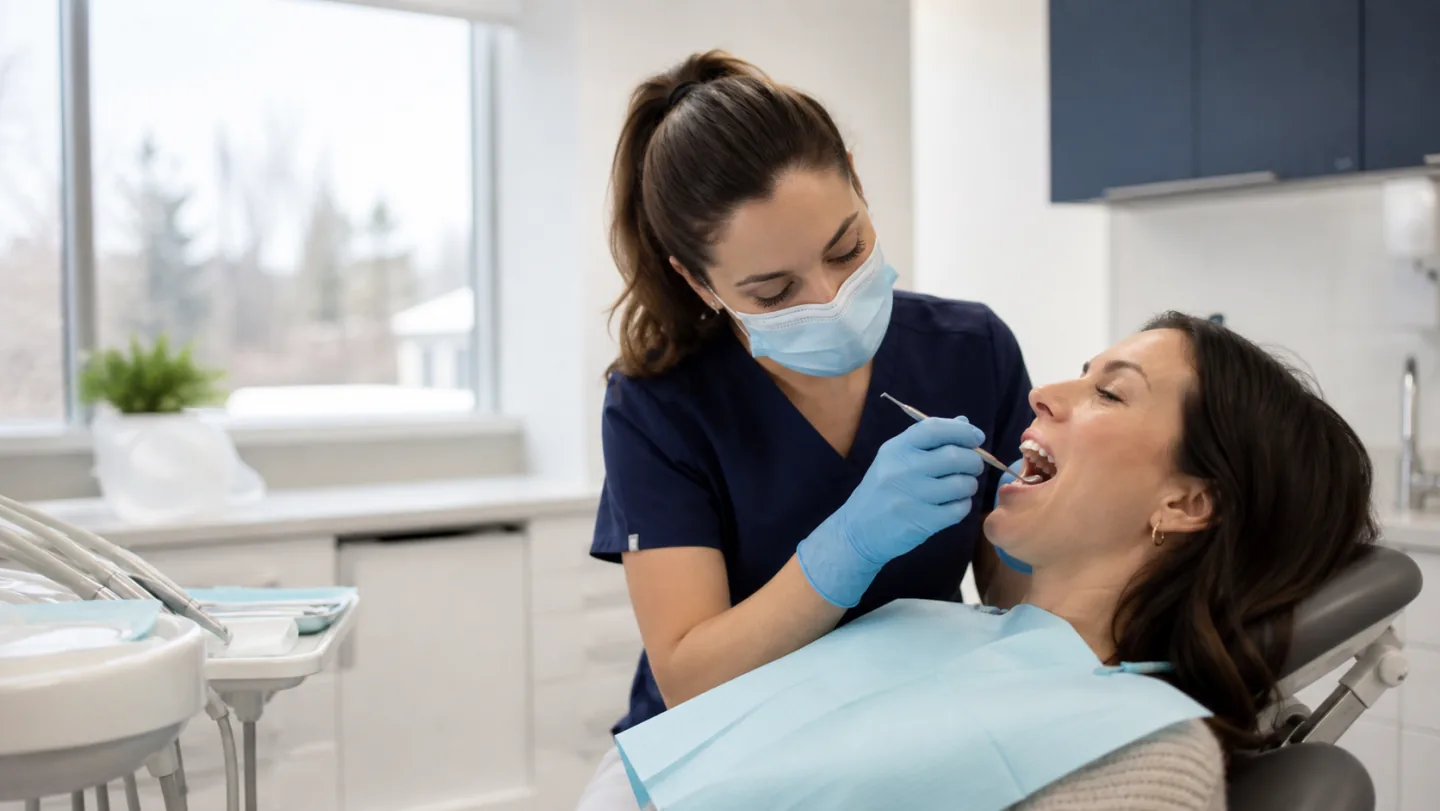
A dental hygienist providing a professional cleaning to a relaxed patient
Teeth that react to cold

Check-ups & Cleanings for Robertson Residents

Ice water makes you flinch, and you may be bracing yourself for the scaler. If that sounds like you and you live in Robertson, here is how sensitive teeth can be handled during a routine visit.

Let's find a time

Request an appointment

We’ll call to confirm your appointment. For urgent care, please call us directly.

When teeth are touchy

Having a Check-up and Cleaning With Sensitive Teeth

Sensitivity is a good reason to come in, not a reason to stay away. A sharp reaction to cold, touch, pressure, or certain foods tells your dentist something worth looking into, and an examination can help sort out what is behind it.

It also changes how your cleaning is approached. Exposed roots and tender gums can make scaling feel sharper, so people from Robertson, an area in Winnipeg, are encouraged to say so at our McPhillips Street clinic before anyone picks up an instrument.

Explore check-ups & cleanings
Reception counter with a glass partition, orchid, and blue bench at Winnipeg North Dental
Our reception counter, with a blue bench to one side.

Point out the spot

Knowing which teeth react, and to what, gives your dentist somewhere specific to begin looking.

An approach you can adjust

What you report during scaling can change how your hygienist carries on with the work.

Looking for the cause

Your examination aims to explain the sensitivity, not simply get you through the appointment.

Two jobs, one sore subject

How each half of the visit deals with sensitivity.

Your exam tries to work out why a tooth is reacting, while your cleaning has to be done in a way that takes the reaction into account.

Finding out why

Discomfort with temperature, biting, or pressure deserves an assessment, because several different things may produce a similar feeling.

  • You describe when it started and what sets it off.
  • The dentist checks the teeth involved, along with the gums and restorations surrounding them.
  • An X-ray may be discussed when more information is needed.
  • You hear what was found and whether anything needs treating.

Cleaning around tender areas

Buildup still needs to come off, and your hygienist can work with what you report about any sore or reactive zones.

  • Sore or exposed spots are identified ahead of scaling.
  • Tartar and plaque come off using instruments chosen for the task.
  • Polishing is done when suitable for your teeth.
  • Advice for home covers brushing near any sensitive gumline areas.

Sensitivity can have more than one explanation, so try not to assume the cause. An assessment is how yours gets identified.

Keeping it manageable

How your appointment can go, step by step.

Every step can be explained to you before it starts, and the order may change a little according to what your mouth needs that day.

Request your visit
  1. 01

    Describe what you feel

    Share your symptoms along with your medical history and medications. Even a vague sense of which side bothers you is useful.

  2. 02

    Have it looked at

    A careful examination takes in your teeth, gums, bite, and any previous work, with images considered only where clinically appropriate.

  3. 03

    Work through the scaling

    Expect pressure, vibration, and water. If something turns sharp, say so right then, so the method can be changed and comfort options talked over.

  4. 04

    Talk about what’s next

    Findings are explained, and a treatment plan or a return date is suggested, along with advice for looking after the sensitive areas.

A little detective work

Notice what sets it off.

Spend a few days paying attention before you come in. Being able to say that one upper tooth reacts to cold is much more useful than saying your teeth hurt sometimes.

A tooth that has started to hurt, or a filling that has broken, is worth a phone call now instead of waiting until your booked cleaning.

Things to note down

  • Which teeth or which part of your mouth reacts.
  • The triggers: cold, touch, pressure, or specific foods.
  • Whether it began recently or has been around for a long time.
  • Current medications, plus any insurance or CDCP information.
Reclined pale blue dental chair and lamp arm in a Winnipeg North Dental treatment room
White chairs and a small table in front of a sunlit window at Winnipeg North Dental

A treatment room with wood cabinets and a reclined blue chair.

Saying it out loud

Nobody expects you to tough it out.

You won’t get extra credit for staying silent in the chair. A hygienist who knows what you are feeling is in a far better position to change course.

Speak up as you go

Report a twinge as it happens so your hygienist can respond, rather than waiting until the cleaning has finished.

Ask about comfort options

If you know scaling tends to bother you, find out before starting what could be done to make it easier.

Arrange a break signal

A raised hand or another agreed sign can give you a breather whenever you need one.

When you get home

Looking after sensitive teeth between visits.

You should leave knowing what your team thinks is happening and what to do about it, whether that means treatment, watching, or a change in your routine.

01

A gentler daily routine

Ask your hygienist to show you how to clean along the gumline in the spots where your mouth is tender.

02

Watch for changes

Find out what your dentist would like to monitor, and what shift would be a reason to get in touch sooner.

03

Knowing when to return

Your recall recommendation reflects your oral health, and that can include how closely a particular area needs watching.

If a sensitive tooth turns into real pain, or you notice swelling, please call the clinic.

Talk with our team
Glass entry doors below the Winnipeg North Dental sign and phone number

Winnipeg North Dental

Unit-5 2358 Mcphillips Street, Winnipeg, MB R2V 4J6
Get directions (opens in a new tab)
Arranging your appointment

Care for Robertson Residents at Our McPhillips Street Clinic

Sensitive teeth or not, a Robertson resident’s check-up happens at Winnipeg North Dental, Unit 5, 2358 McPhillips Street, Winnipeg. You can open the directions link to see the way there on a map.

Your form submission is a request, with the time settled once the clinic has replied. Mentioning sensitivity at that point gives the team some notice.

Questions about coverage?

Talk with our team before your visit or learn about CDCP.

A little clarity before your visit

Your questions, answered.

Helpful details about check-ups & cleanings in Robertson.

Ask our team
Will scaling hurt if my teeth are already sensitive?

A routine cleaning usually feels more like pressure and scraping than pain, though exposed roots or tender gums can heighten what you notice. Keep your hygienist informed, because the approach can be changed as you go.

What usually causes a tooth to react to cold?

More than one thing can do it, including exposed roots, and an exam is how yours gets identified. Telling your dentist exactly which tooth reacts helps narrow things down.

Should I postpone my cleaning until the sensitivity settles?

There is no need to hold off for that reason. New sensitivity is itself something to have assessed, so it makes sense to mention it when you get in touch.

Is sensitivity after biting different from sensitivity to cold?

They can point in different directions, which is why the details are so useful. Discomfort with biting, pressure, or temperature should each be described and assessed.

Can a rough or chipped spot be the reason?

A broken tooth or filling can certainly deserve attention, even without pain, since a rough edge may worsen or trap plaque and food. Have it checked instead of leaving it for your next routine date.

Does a check-up cover the sensitive tooth, or do I need a separate visit?

Raise it when you ask for your appointment, so the clinic knows the reason you are coming. Depending on what is found, further care may need its own time.

What do Robertson patients do when a tooth starts hurting?

Call (204) 338-3003 instead of using the form, and describe what is happening. For a routine visit, the form works, and care is given at Unit 5, 2358 McPhillips Street, Winnipeg, MB R2V 4J6.

Tired of avoiding the cold side?

Let’s find out what your teeth are telling you.

Request a check-up and cleaning at our McPhillips Street clinic if you live in Robertson, and mention which teeth react so we know ahead of time.

Patient testimonials

Kind words from our patients

★★★★★ 5.0 from 440+ reviews on Google

Close to home

Areas we serve

Convenient dental care on McPhillips Street for families across northwest Winnipeg and nearby communities.

Explore all service areas

A healthier smile is one visit away

Ready for dental care that feels genuinely comfortable?

✓ New patients welcome ✓ Direct insurance billing ✓ Multilingual team

How can we help?

Our dental team is here for you.

Ready to book or have a question? Choose the option that works best for you.

For urgent dental concerns, please call us directly.

Send us a message

Our team will reply during clinic hours.



