Skip to content
Winnipeg North Dental
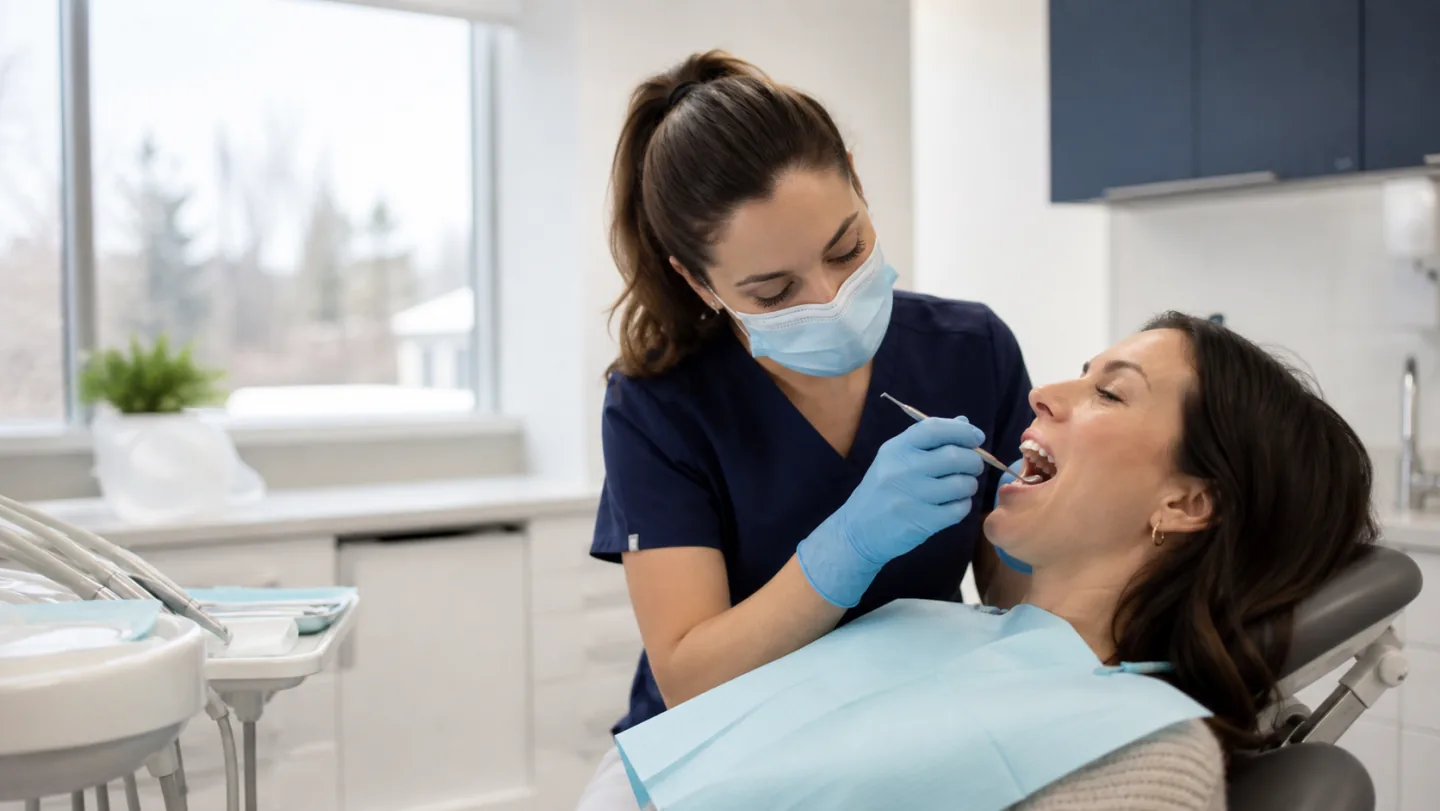
A dental hygienist providing a professional cleaning to a relaxed patient
Another filling, again?

Check-ups & Cleanings for Pembina Residents

Some people go years without a cavity. Others hear about a new one almost every time they sit down. If you live in Pembina and you’re in the second group, a check-up and cleaning is where the pattern can be looked at properly.

Let's find a time

Request an appointment

We’ll call to confirm your appointment. For urgent care, please call us directly.

Cavities that keep turning up

Routine Dental Visits When Cavities Seem to Follow You

Hearing that you need yet another filling can feel discouraging, particularly when you thought your brushing was fine. Repeated decay is rarely about one single habit. Plaque, how often teeth are exposed to sugar or acid, dry mouth, older dental work with edges that trap food, and spots that are simply hard to reach can all play a part.

Frequent cavities are one of the situations where your dentist and hygienist may suggest seeing you more often than the usual interval. At an exam and cleaning, you can ask what they think is driving the decay in your mouth and which steps at home would make the most difference for you.

Explore check-ups & cleanings
Treatment room at Winnipeg North Dental with a pale blue dental chair, overhead light arm and wood cabinets
A pale blue chair beside wood-grain cabinets and a wall monitor.

Look for the pattern

Ask whether your cavities tend to appear in the same kind of spot, such as between teeth or along old fillings.

Prevention, not just repair

Fluoride and home-care changes may be discussed according to what your mouth needs.

A schedule to match

Your recall interval can be set around how quickly problems have been developing for you.

Two angles on decay

How the exam and cleaning each help with cavity risk.

A check-up and a cleaning are usually booked as one appointment, though they do separate work. For someone who keeps getting cavities, both halves have something useful to offer.

The examination

Your dentist looks for decay, weak spots and changes in existing restorations, then explains what is worth treating now and what can be watched.

  • A look through your health history, including medications that can dry the mouth.
  • Checking each tooth, the gums and any fillings or crowns you already have.
  • X-rays when your cavity risk and history make them clinically appropriate.
  • A plain explanation of anything found, with time for your questions.

The cleaning

Your hygienist removes the plaque and hardened tartar that give decay a place to start and shows you where buildup has been collecting.

  • An assessment of your gums and the areas that tend to hold on to plaque.
  • Scaling to clear deposits that a toothbrush can’t remove.
  • Polishing, if appropriate, and a conversation about fluoride.
  • Advice on cleaning between teeth and around older dental work.

If decay is found, your dentist will explain the options for treating it. A filling or other repair is usually planned as its own appointment.

The appointment itself

Four parts of a visit, with cavities in mind.

Every visit varies with your age, history and how long it has been since you were last seen. Here is a general outline, along with what to raise at each stage.

Request your visit
  1. 01

    History and habits

    Mention how many fillings you’ve had recently, any snacking or sipping through the day, and whether your mouth often feels dry.

  2. 02

    Examination

    Your teeth, gums, bite and dental work are checked. Images may be recommended when they would help spot decay that can’t be seen directly.

  3. 03

    Hygiene care

    Buildup is cleared from your teeth and along the gumline. Ask your hygienist to point out the places where plaque has been sitting.

  4. 04

    Talking it through

    You hear what was found, what is recommended and when to come back. Some people prone to decay are asked to return sooner than others.

Getting ready to talk about it

A little detective work helps.

Nobody expects you to have the answer to why your teeth keep getting cavities. A few notes about your routine, though, can help your dental team narrow things down.

If you already know a filling is likely, you can ask when you book how treatment would be scheduled and about estimated costs, so the next steps don’t catch you off guard.

Things to think about beforehand

  • What you usually drink between meals, and how often.
  • The medications you take, since some can lead to a dry mouth.
  • Whether you clean between your teeth, and with what.
  • Any tooth that has felt rough, sensitive or caught food lately.
Consultation room at Winnipeg North Dental with a white desk, black chairs and window blinds
Waiting area at Winnipeg North Dental with white chairs, a blue bench and abstract artwork

A white desk and two black chairs in front of window blinds.

Without the lecture

A cavity is information, not a failing.

It’s easy to brace for a scolding when you keep needing work. That isn’t the point of the visit. The aim is to understand where your oral health is today and find realistic changes that fit your life.

Ask what matters most

If the advice feels like a long list, ask which single change your hygienist would start with.

Mention sensitive teeth

Teeth that react to cold or sweets are worth pointing out before the cleaning begins.

Pause when you need to

Agree on a hand signal so you can stop for a moment without having to speak.

Between now and next time

Small changes that are easier to keep.

What happens in the months between appointments matters as much as the visit. Try the adjustments your hygienist suggests, then report back on how they went.

01

Cleaning between teeth

Cavities often start where a toothbrush doesn’t reach. Ask which tool suits the spaces in your mouth.

02

Spacing out sweets and sips

Ask how the frequency of snacks and sugary drinks may relate to the decay you’ve been having.

03

Keeping your recall

If you’ve been asked to come back sooner than six months, booking that visit ahead of time makes it easier to keep.

A new toothache, sensitivity that lingers or a filling that feels broken is worth a call to (204) 338-3003 instead of waiting for your recall.

Talk with our team
Front of Winnipeg North Dental with its sign and phone number above glass doors

Winnipeg North Dental

Unit-5 2358 Mcphillips Street, Winnipeg, MB R2V 4J6
Get directions (opens in a new tab)
Planning where to go

Where Pembina Residents Have Their Exam and Cleaning

People living in Pembina, a part of Winnipeg, have their check-ups and cleanings with us at Winnipeg North Dental, Unit 5, 2358 McPhillips Street, Winnipeg, MB R2V 4J6.

The appointment form sends a request rather than holding a time, and a confirmation follows from our front desk. Feel free to mention that cavities have been a recurring problem.

Questions about coverage?

Talk with our team before your visit or learn about CDCP.

A little clarity before your visit

Your questions, answered.

Helpful details about check-ups & cleanings in Pembina.

Ask our team
I brush twice a day, so where are these cavities coming from?

Brushing matters, but it doesn’t reach every surface, and decay can also be influenced by diet, dry mouth and the shape of older dental work. Your dentist and hygienist can look at your mouth and suggest which factors are most likely in your case.

Should someone prone to cavities come in more often?

Possibly. Frequent cavities are one reason more frequent care may be recommended. The interval is based on your own oral health, and your exam and cleaning schedules may not be identical.

Will I have X-rays because of my cavity history?

X-rays are recommended according to factors such as your age, history, symptoms and cavity risk. Your dentist will explain whether they would be useful at this visit. Recent images from another clinic may be transferable, so ask.

Is fluoride part of the cleaning?

It can come up, depending on what your mouth needs. If cavities keep appearing, fluoride is a fair topic to raise with your hygienist so they can explain whether it is suitable for you.

Will a cavity be filled at the same appointment?

A check-up and cleaning is focused on assessment and hygiene care. If decay is found, your dentist will explain the options, and treatment is generally arranged for another visit.

What’s the first step for a Pembina resident with a cavity history?

Send the request form on this page, or speak to us at (204) 338-3003 if a call suits you better. Your check-up and cleaning would take place at our McPhillips Street clinic in Winnipeg, and the clinic contacts you to settle the details.

Break the pattern

Find out what’s behind the cavities.

Pembina residents tired of hearing about new fillings can ask for an exam and cleaning on McPhillips Street. We’ll be in touch to settle on a time.

Patient testimonials

Kind words from our patients

★★★★★ 5.0 from 440+ reviews on Google

Close to home

Areas we serve

Convenient dental care on McPhillips Street for families across northwest Winnipeg and nearby communities.

Explore all service areas

A healthier smile is one visit away

Ready for dental care that feels genuinely comfortable?

✓ New patients welcome ✓ Direct insurance billing ✓ Multilingual team

How can we help?

Our dental team is here for you.

Ready to book or have a question? Choose the option that works best for you.

For urgent dental concerns, please call us directly.

Send us a message

Our team will reply during clinic hours.



