Skip to content
Winnipeg North Dental
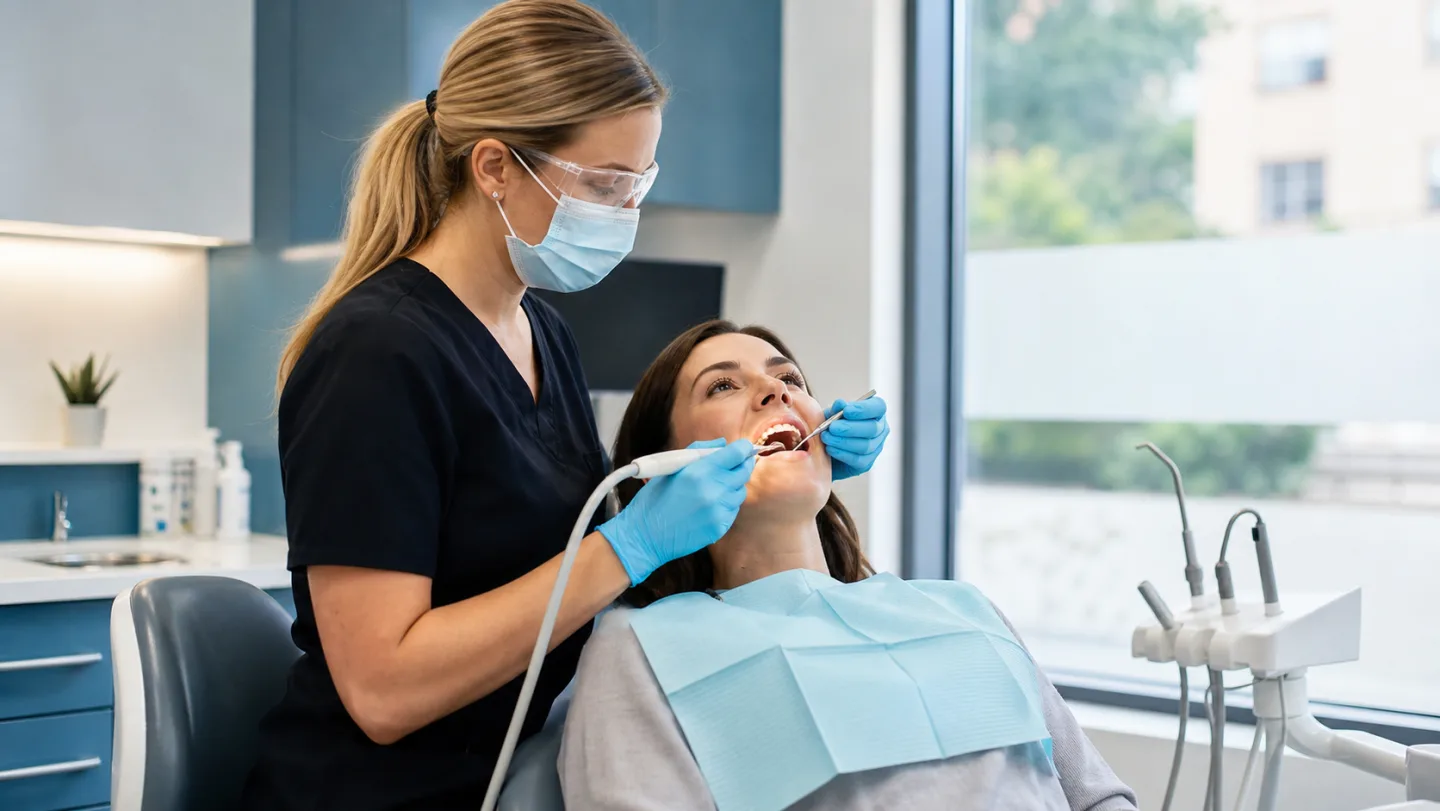
A dental hygienist providing a professional cleaning to a relaxed patient
When tartar keeps coming back

Check-ups & Cleanings for Kildonan Park Residents

You brush, you floss, and your hygienist still finds a hard crust along the gumline. If you live in Kildonan Park and tartar seems to return quickly, here is what that may mean for your visits.

Let's find a time

Request an appointment

We’ll call to confirm your appointment. For urgent care, please call us directly.

Plaque that has set

What to Do About Heavy Tartar Buildup

Tartar is plaque that has hardened on your teeth. Once that has happened, your toothbrush can no longer remove it, and professional instruments are needed. Some people simply accumulate it faster than others, and a history of heavy buildup can affect how often a cleaning is recommended.

Residents of Kildonan Park, an area in Winnipeg, can have this assessed at our McPhillips Street clinic. Your hygienist looks at how much has formed and where, along with the state of your gums, and uses that to decide what kind of cleaning makes sense.

Explore check-ups & cleanings
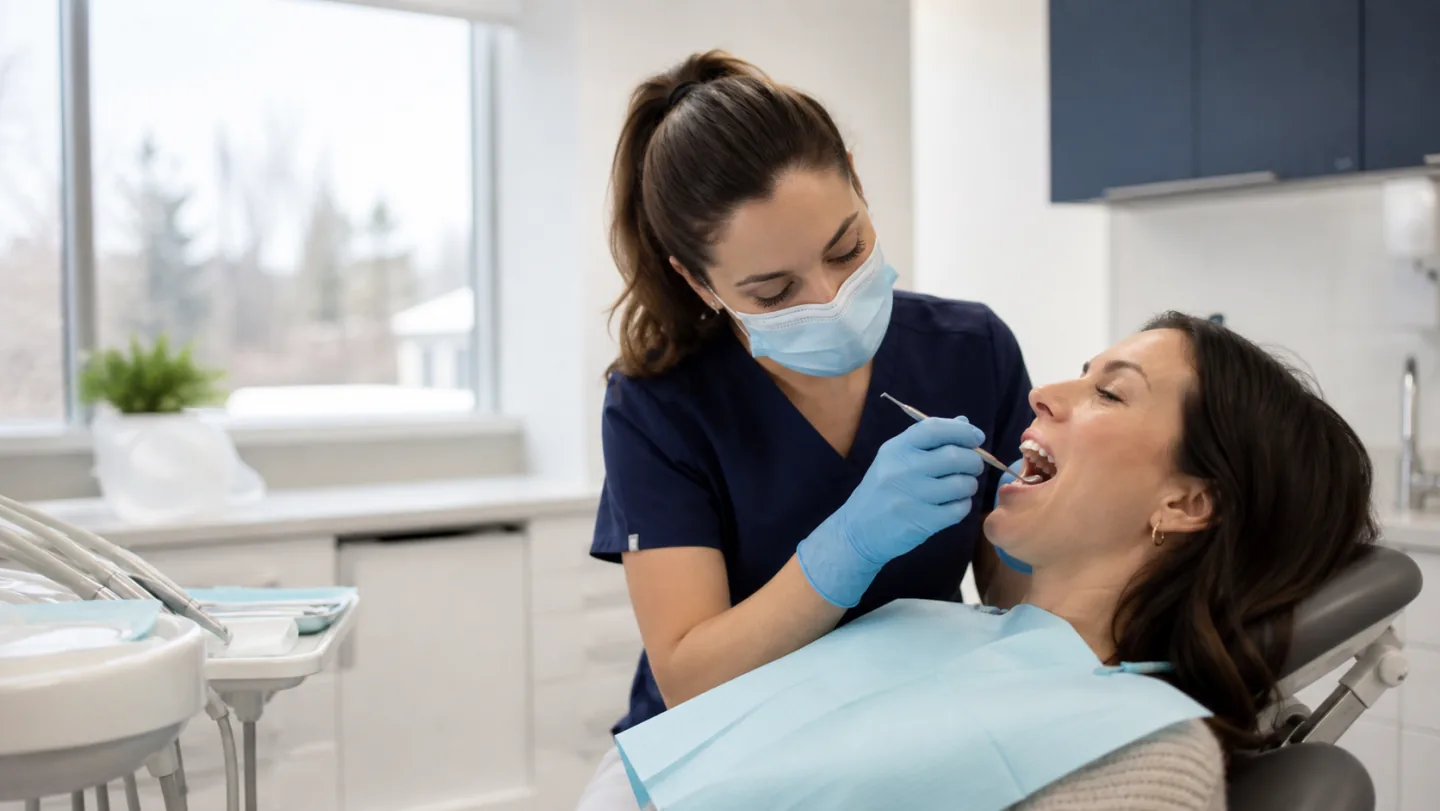
A hygienist in gloves cleaning a patient’s teeth with dental instruments
A hygienist cleaning a patient’s teeth.

Professional removal

Once deposits have hardened, instruments are needed to lift them off your teeth.

A look at your gums

Buildup near the gumline makes your gum assessment an important part of the appointment.

Timing to match

If deposits form quickly, your suggested cleaning interval may be shorter than the familiar pattern.

Removing it, understanding it

Your cleaning clears it. Your exam puts it in context.

Getting rid of tartar is only part of the job. The other part is working out whether it has had an effect on your gums and what might help keep it in check.

At the hygiene chair

Scaling physically removes the deposits, and the hygienist gets a clear sense of where they tend to collect in your mouth.

  • Your gum health is assessed as a first step.
  • Instruments are matched to the amount and location of the tartar.
  • Surface stain can be polished off where that is suitable.
  • You are shown the areas that keep gathering deposits.

At the dentist’s exam

Your dentist reviews your teeth and gums more broadly to see whether heavy buildup is part of a larger concern.

  • Medical history and any dry mouth are considered.
  • Gums, supporting tissues, and existing work are checked for changes.
  • Images may be recommended if more detail is needed.
  • You learn whether a routine cleaning is enough or other care is advised.

A routine cleaning deals with deposits around visible surfaces and the gumline. Deposits on affected root surfaces call for a different approach, and an assessment determines which is right for you.

From first look to last word

Why a heavy-buildup visit can take its own shape.

The amount of tartar is one of the things that affects how your appointment runs. Yours may follow this sequence or be arranged differently.

Request your visit
  1. 01

    Begin with your routine

    Describe how you clean your teeth and when you last had a professional cleaning. Your medications and health changes are also reviewed.

  2. 02

    Measure the situation

    Your gums are assessed, which may include periodontal measurements, and your teeth and bite are examined. Any X-rays needed will be discussed.

  3. 03

    Scale, perhaps in stages

    Tartar is removed with appropriate tools. Heavier buildup can mean more hygiene time, or possibly a second appointment.

  4. 04

    Set a realistic schedule

    You are told what the findings suggest, and a recall interval or treatment plan is recommended on that basis.

Before you book

Mention how quickly it comes back.

If previous hygienists have remarked on your tartar, that history is useful. Sharing it when you ask for an appointment allows for a better estimate of the time that might be required.

Since hygiene time affects cost, you may want to ask for an estimate and find out how your benefit plan treats additional time. Plans vary in what they pay for, and the care you receive matters too.

What will help us plan

  • The date of your last professional cleaning, even if approximate.
  • Places where you notice rough deposits or trouble getting clean.
  • Your current medications, particularly if your mouth feels dry.
  • Plan or CDCP information, and the name of your previous clinic.
Treatment room at Winnipeg North Dental with a turquoise reclining chair and a sink along the wall
Winnipeg North Dental consultation desk with a keyboard and framed coastal artwork on the wall

A reclining turquoise chair with a sink along the wall.

No lectures here

Tartar isn’t a verdict on your brushing.

You may have heard a lot about flossing over the years. This visit is meant to be practical instead: an honest look at your mouth and useful suggestions for what to try next.

Longer scaling sessions

Heavy buildup can mean more time in the chair, so say when you would like a rest.

Tender after a long gap

Inflamed gums and exposed roots may be more sensitive during scaling, and your hygienist will want to know.

Hear what’s going on

Your hygienist can describe the sounds and sensations of scaling in advance if that makes it easier.

Slowing the return

How to help between appointments.

Plaque is soft at first, and that is your opportunity. Daily cleaning aims to disturb it before it has a chance to harden, with special attention to areas that gather the most.

01

Your personal trouble spots

Ask your hygienist exactly where deposits tend to form, so your brushing and interdental cleaning go where they count.

02

Leave the scraping to us

Trying to pick off hardened deposits at home isn’t the answer, so save them for your hygienist.

03

A cleaning date that suits

More frequent cleanings may be advised, and the schedule can be reviewed as you see how things go.

Have gums that have started bleeding more or swelling? Book sooner instead of waiting for your recall.

Talk with our team
Winnipeg North Dental exterior with grey and blue panels and a pale sign band over the door

Winnipeg North Dental

Unit-5 2358 Mcphillips Street, Winnipeg, MB R2V 4J6
Get directions (opens in a new tab)
Getting your cleaning arranged

Hygiene Visits for Kildonan Park Residents

Scaling and the exam that goes with it are both done at Winnipeg North Dental, Unit 5, 2358 McPhillips Street, Winnipeg. If you need a map, try the directions link next to the address.

Tell the clinic about your tartar history when you phone or fill in the form. A request isn’t yet a reservation, so watch for a reply with your time.

Questions about coverage?

Talk with our team before your visit or learn about CDCP.

A little clarity before your visit

Your questions, answered.

Helpful details about check-ups & cleanings in Kildonan Park.

Ask our team
Why do I get so much tartar even though I brush?

Some plaque can escape even a careful routine, and hard-to-reach areas are especially prone to it. Health factors like dry mouth may also play a role, which your team can consider along with your history.

Can heavy tartar affect my gums?

Deposits along the gumline are one reason your gums get assessed. If there are signs of inflammation or gum disease, the findings will be explained so you know what care is appropriate.

Does lots of tartar mean I need a deep cleaning?

Not automatically. Scaling and root planing is used to manage gum disease on affected root surfaces, so the decision rests on your gum assessment and not simply on how much tartar is visible.

Could my cleaning take more than one appointment?

It could. While some people finish everything at one visit, others benefit from additional hygiene time. Your hygienist can explain what is advisable after looking at your mouth.

Will shorter intervals keep tartar down?

More frequent cleanings are often suggested for heavy buildup, as there is less time for deposits to accumulate. Your recommended interval depends on your own findings, and it may be different from your exam schedule.

Will the rough feeling on my lower teeth go away?

If that roughness is tartar, scaling should remove it. A rough edge might also come from a chipped tooth or filling, so mention the spot and have it checked.

What is the first step if I live in Kildonan Park?

Send a request using the form on this page or phone (204) 338-3003. Your visit is held at Unit 5, 2358 McPhillips Street, Winnipeg, MB R2V 4J6, at the time agreed with the clinic.

Rough spots along the gumline?

Get that buildup professionally taken care of.

Kildonan Park residents are welcome to request a check-up and cleaning on McPhillips Street. Let us know when you were last seen, and we’ll be in touch.

Patient testimonials

Kind words from our patients

★★★★★ 5.0 from 440+ reviews on Google

Close to home

Areas we serve

Convenient dental care on McPhillips Street for families across northwest Winnipeg and nearby communities.

Explore all service areas

A healthier smile is one visit away

Ready for dental care that feels genuinely comfortable?

✓ New patients welcome ✓ Direct insurance billing ✓ Multilingual team

How can we help?

Our dental team is here for you.

Ready to book or have a question? Choose the option that works best for you.

For urgent dental concerns, please call us directly.

Send us a message

Our team will reply during clinic hours.