Skip to content
Winnipeg North Dental
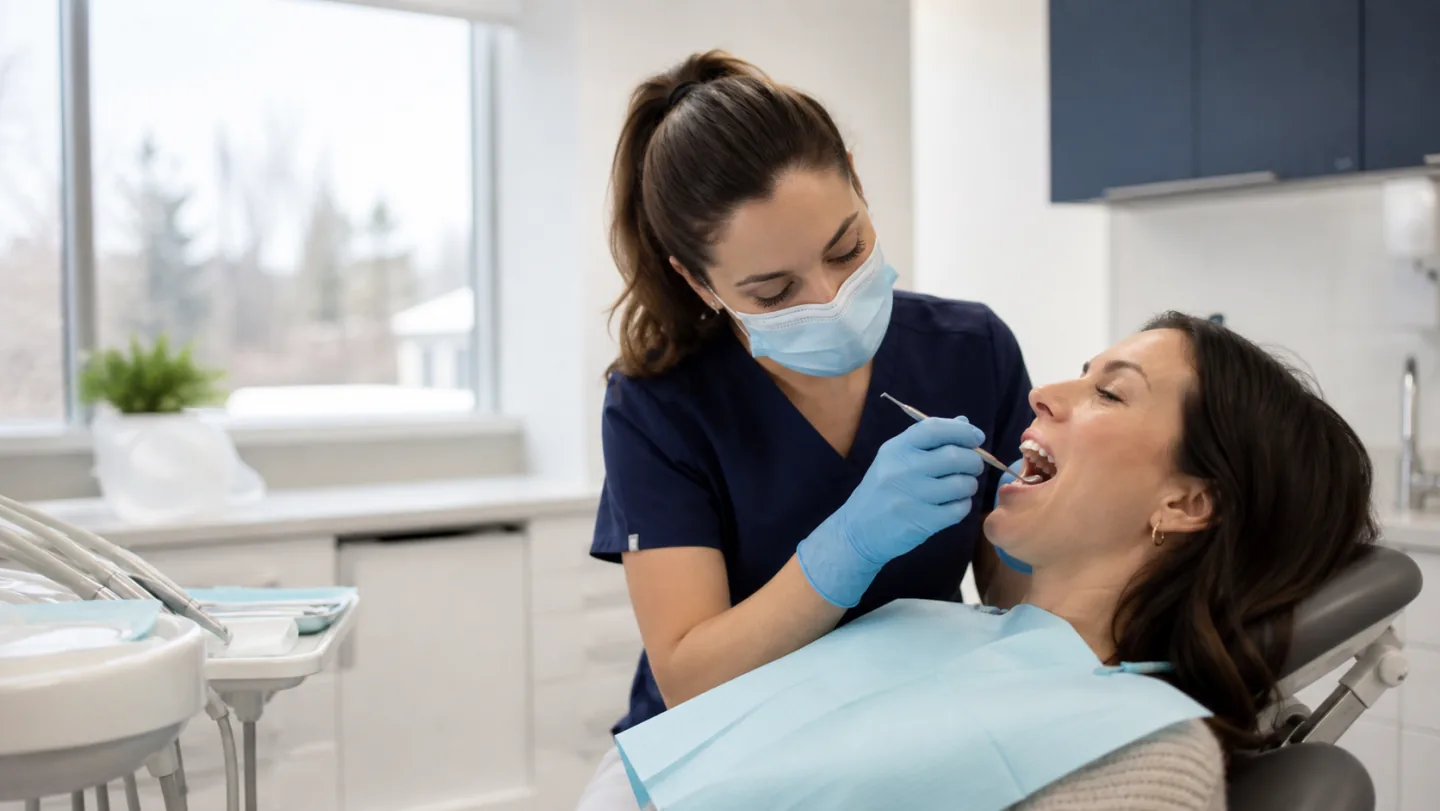
A dental hygienist providing a professional cleaning to a relaxed patient
It’s not all about teeth

Check-ups & Cleanings for Exchange District Residents

Why is your dentist looking at your tongue? Exchange District residents can learn what soft-tissue checks are, and why lips, cheeks, and gums belong in a routine exam.

Let's find a time

Request an appointment

We’ll call to confirm your appointment. For urgent care, please call us directly.

The rest of your mouth

What a Check-up Covers Beyond Your Teeth

Most people assume a dental exam is a hunt for cavities. That’s part of it, but your dentist also examines your gums, bite, existing dental work, and the soft tissues around them: the lining of your cheeks, your lips, and your tongue.

Those tissues are hard to inspect properly with a bathroom mirror, and a change there can go unnoticed. Persistent changes deserve attention, and a routine visit is a natural chance to have them seen. It’s also an easy time to mention that spot you keep meaning to ask about.

Explore check-ups & cleanings
Treatment chair with an overhead arm and a counter with a sink at Winnipeg North Dental
A treatment chair with a sink along the far wall.

Soft tissues count

Your exam takes in lips, tongue, and cheeks, as well as your teeth and gums.

Mention slow healers

A sore that isn’t going away is reason enough to ask for a visit before your recall.

Ask what they’re seeing

If you wonder what your dentist is checking at any moment, it’s fine to ask.

A wider view

Everything the appointment looks at.

A routine visit divides into two jobs. The first assesses the whole mouth, while the second focuses on the hard deposits that collect on your teeth and affect your gums.

A whole-mouth examination

Your dentist builds an overview from several structures, instead of concentrating on any one tooth.

  • Lips, tongue, and cheeks are looked over for persistent changes.
  • Tooth surfaces and older restorations are checked for wear or damage.
  • Your bite forms part of the overall assessment.
  • Radiographs are proposed if something can’t be judged by looking alone.

Gums and hard deposits

Your gums sit right at the meeting point of tooth and soft tissue, and they get close attention from your hygienist.

  • The gumline is assessed, with periodontal measurements if needed.
  • Plaque and tartar are removed using suitable instruments.
  • Teeth can be polished afterward, if that’s appropriate.
  • You receive advice about keeping gum margins clean between visits.

An exam doesn’t mean something is wrong, and a finding isn’t automatically serious. Your dentist can explain what they saw and whether it should be watched or investigated.

From first question to last

What gets checked, and when.

The order can differ, and your history shapes where your team spends more time. Here is one way a routine visit may go.

Request your visit
  1. 01

    Raise anything new

    A patch, a sore, or an odd texture belongs in this first conversation, along with updates on your health and medications.

  2. 02

    The mouth, surface by surface

    You’ll be asked to open, turn your head, and perhaps move your tongue while your dentist examines each area and explains what they notice.

  3. 03

    Time for the cleaning

    Your hygienist evaluates your gums, clears away plaque and tartar, and asks you to report anything that seems tender or unusual.

  4. 04

    Go over the findings

    Learn what looks healthy, what’s worth monitoring, and whether anything calls for another visit. A recall timeframe comes up as well.

A quick look at home

Notice what you can before you come in.

You don’t need to carry out your own examination. Just think back over the past few months and note any spot in your mouth that has felt different or taken a long time to settle.

If you’re asking about a specific concern, say so in your request. You’re also welcome to ask how long the appointment could take and what it’s likely to cost.

Things to mention

  • Where a patch or sore is, and when you first saw it.
  • Anything that makes your lips, tongue, or cheeks sting or feel irritated.
  • All your medications, along with any recent health changes.
  • Plan or CDCP information, if you’ll be using it.
Waiting area with a window, white chairs, and a patterned rug at Winnipeg North Dental
White reception counter with a lobby beyond at Winnipeg North Dental

A patterned rug and white chairs by the window blinds.

If looking worries you

It’s normal to feel uneasy about what might be found.

Lots of people avoid asking about a spot because they are afraid of the answer. Coming in to have it checked is a reasonable step, and you can ask for an explanation at each stage.

Ask in plain language

If you’re told a spot will be watched, ask what that means and what you should look for.

Report tender places

Any sore tissue can be handled more carefully when your team knows about it before they begin.

Stop when you need to

Holding your mouth open can get tiring, so agree on a signal to ask for a short pause.

Your own eyes, between exams

Knowing what’s normal for you.

You see your mouth more often than anyone. After this visit, you’ll be better placed to notice when something has changed and to decide whether it’s time to call.

01

Changes worth reporting

Lips, tongue, cheeks, or gums that show a change that doesn’t resolve deserve to be seen.

02

Follow-up on any finding

If your dentist recommends rechecking a spot, ask when that should happen and how you’ll arrange it.

03

Everyday gum care

Your hygienist can show you how to clean along the gumline, particularly in places you tend to miss.

Have a sore that isn’t healing or new swelling? Raise it by phone at (204) 338-3003, not through the form.

Talk with our team
Dark-sided building with Winnipeg North Dental lettering above its entrance

Winnipeg North Dental

Unit-5 2358 Mcphillips Street, Winnipeg, MB R2V 4J6
Get directions (opens in a new tab)
Having it looked at

Where Your Exam Would Happen

The Exchange District is an area in Winnipeg, and residents would come to Winnipeg North Dental, Unit 5, 2358 McPhillips Street, for this care. A map is available through the directions link on this page.

Your request goes to the clinic, which replies to arrange a time. It’s not a confirmed booking, so phone instead if your concern is pressing.

Questions about coverage?

Talk with our team before your visit or learn about CDCP.

A little clarity before your visit

Your questions, answered.

Helpful details about check-ups & cleanings in Exchange District.

Ask our team
Why does the dentist look at my tongue and cheeks?

A routine exam includes your soft tissues because changes can show up there too. Persistent differences in your lips, tongue, cheeks, or gums are worth attention, even when nothing hurts.

How long should I wait before showing someone a mouth sore?

If it isn’t healing, don’t hold on until your next routine visit. Contact the clinic, describe where it is and how long it has been there, and ask to have it assessed.

Should I point out a spot I’ve always had?

Yes, please do. It’s useful for your dentist to know what you’ve noticed and how long it has been there, as well as whether it has changed at all.

Is a bump or patch automatically serious?

Not automatically, but it can’t be judged from a description online. An in-person assessment lets your dentist explain what they see and what, if anything, should be done.

Do the hygienist and dentist both look at my gums?

Generally yes, for different purposes. The hygienist assesses them to plan your cleaning, and the dentist considers them as part of your overall exam and any recommended care.

What should an Exchange District resident do to request an exam?

Send the online form, or ring (204) 338-3003 if you have a concern you’d like to discuss. Appointments are at Unit 5, 2358 McPhillips Street, Winnipeg, MB R2V 4J6.

Ask about that spot

Get your whole mouth looked at.

Living in the Exchange District, you can ask for an exam and cleaning at our McPhillips Street clinic. Once your note arrives, staff will contact you about a time.

Patient testimonials

Kind words from our patients

★★★★★ 5.0 from 440+ reviews on Google

Close to home

Areas we serve

Convenient dental care on McPhillips Street for families across northwest Winnipeg and nearby communities.

Explore all service areas

A healthier smile is one visit away

Ready for dental care that feels genuinely comfortable?

✓ New patients welcome ✓ Direct insurance billing ✓ Multilingual team

How can we help?

Our dental team is here for you.

Ready to book or have a question? Choose the option that works best for you.

For urgent dental concerns, please call us directly.

Send us a message

Our team will reply during clinic hours.



