Skip to content
Winnipeg North Dental
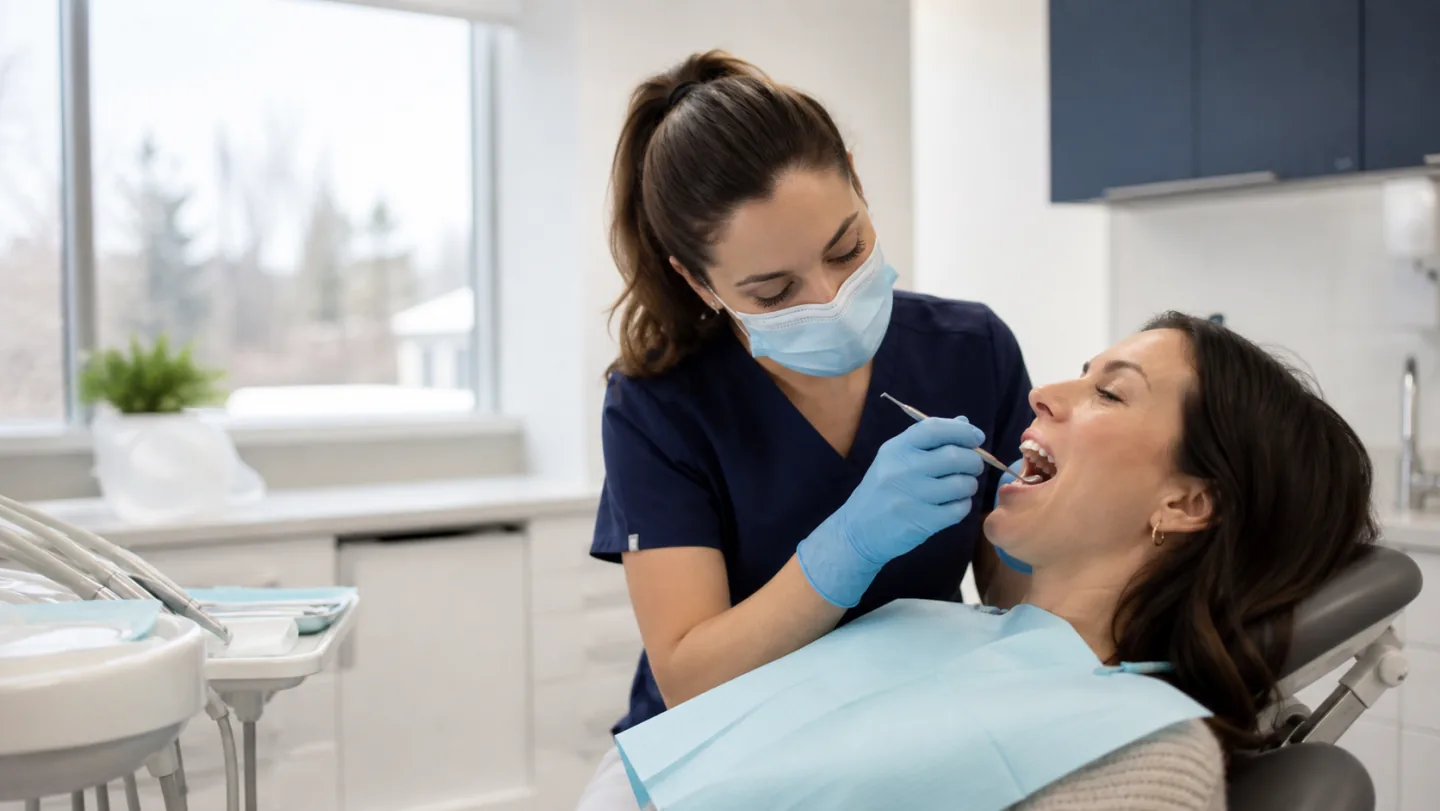
A dental hygienist providing a professional cleaning to a relaxed patient
Do you brush like you mean it?

Check-ups & Cleanings for Birds Hill Residents

Worn-out bristles after a few weeks. A toothbrush grip like a pot scrubber. If this sounds like you, your next check-up and cleaning is a good time to have your technique looked at.

Let's find a time

Request an appointment

We’ll call to confirm your appointment. For urgent care, please call us directly.

Effort isn’t the same as technique

A Check-up and Cleaning When You Brush Too Hard

Plaque is soft and can be removed with gentle, thorough brushing, while tartar has hardened and won’t come away at home however hard you scrub. People who brush with a lot of force are usually trying to do the right thing, yet heavy pressure may irritate gums and wear at exposed tooth surfaces over the years.

Birds Hill is outside the City of Winnipeg, so an appointment with us means coming in to our McPhillips Street clinic. During that visit, your dentist can check for signs of wear, and your hygienist can watch how you hold a brush and suggest any adjustment.

Explore check-ups & cleanings
Winnipeg North Dental waiting area with white chairs by a window, a tall potted plant, and a navy bench
A tall variegated plant at the end of a row of window seats.

Show your grip

Ask to demonstrate how you actually brush, so the advice is based on what you really do.

Have wear assessed

Your dentist can tell you whether your gums or tooth surfaces show changes worth watching.

Learn a lighter touch

A few pointers on pressure and angle may let you clean well without so much force.

Two sets of eyes on your routine

Checking for wear, and clearing what’s left.

A thorough brusher can still have tartar in hard-to-reach places, and a sore gumline can have more than one cause. Both halves of your visit help you find out what is actually happening.

An exam with wear in mind

Your dentist reviews your teeth, gums, and bite, while keeping in mind what you have said about your brushing.

  • Notches or worn areas near the gumline can be pointed out to you.
  • Sensitive teeth are noted, as sensitivity may have several causes.
  • Any existing fillings and crowns are examined for their condition.
  • If grinding or another cause is suspected, your dentist can explain why.

A cleaning with coaching

Your hygienist deals with the deposits brushing cannot move, then goes over a way of brushing that may ask less of your arm.

  • Your gums are measured and assessed before the cleaning begins.
  • Hardened tartar is removed using professional instruments.
  • Brush type and bristle firmness can come up as a practical question.
  • Interdental cleaning is reviewed, since a brush can’t reach everything.

Gum changes and tooth wear have many possible causes, and force is only one of them. Your dentist would need to assess you before saying what applies in your case.

The sequence of your visit

Where a brushing demonstration fits in.

This appointment follows the usual routine. Raising your concern early on gives your dental team the chance to keep your brushing in mind as they go.

Request your visit
  1. 01

    Explain your habit

    After reviewing your medical and dental background, describe how often you replace your brush, and whether your gums ever feel sore afterward.

  2. 02

    Look at the gumline

    An examination covers teeth, gums, soft tissues, and bite. Any X-rays are determined by what is clinically appropriate for you.

  3. 03

    Clean, then compare notes

    Scaling and possibly polishing come next, and your hygienist can mention any spots your brush seems to be missing or overworking.

  4. 04

    Practise before you go

    Ask to try the suggested technique, then talk over recall timing and any care your dentist recommends.

Evidence from your bathroom

Your toothbrush may have a story to tell.

A worn brush can be a helpful clue. Have a look at yours before you come, and consider bringing it along if you would like your hygienist’s view of the bristles or the head.

If you are making the trip into the city for this, ask when booking how much time to allow, and what might bring you back for a second appointment.

What you might bring or note

  • Your current toothbrush, and how long you have been using it.
  • Teeth or gum areas that feel tender or look different lately.
  • Your list of medications, along with any recent health changes.
  • Insurance or CDCP particulars, if you plan to discuss your plan.
Treatment room at Winnipeg North Dental with a light blue dental chair, a sink, and frosted cabinets
White desk and dark chairs in the Winnipeg North Dental consultation room, with a potted plant by the window

A pale blue chair with a stool at the left edge of the room.

If your gums are already sore

A gentler cleaning conversation starts with you.

Exposed roots or tender gums can increase what you feel during scaling. Your hygienist cannot know that unless you say so, and a word beforehand allows the approach to be adjusted.

Flag the tender spots

Tell your hygienist where brushing already stings, so those places can be approached with some care.

Ask about comfort options

Find out what can be done if a sensitive area becomes uncomfortable during the cleaning.

Keep your signal handy

Decide together how you will indicate a pause, then use it whenever you need to.

Retraining your hand

Old habits take a little patience.

After years of firm brushing, a lighter touch can feel as though you are not doing enough. Give yourself some time to adjust, and check back with your hygienist at your next appointment.

01

Watch the bristles

Splaying soon after you start a new brush can suggest pressure is still high, which makes for a simple self-check.

02

Notice your gums

Bleeding that is frequent or has recently increased should be assessed, regardless of how you brush.

03

Compare at recall

When you return, ask whether any area being monitored has changed since the previous visit.

Noticed a sudden change, or sensitivity that won’t settle? A phone call to the clinic is the way to raise it.

Talk with our team
Winnipeg North Dental entrance with black-framed glass doors under the clinic sign

Winnipeg North Dental

Unit-5 2358 Mcphillips Street, Winnipeg, MB R2V 4J6
Get directions (opens in a new tab)
Your appointment in Winnipeg

Where Birds Hill Residents Have Their Visit

Your technique gets its review at Winnipeg North Dental, Unit 5, 2358 McPhillips Street, Winnipeg. The directions link is there to help you plan the trip.

After you send a request, the clinic writes or calls to arrange the appointment. Nothing is booked until then, so call if you would rather discuss it directly.

Questions about coverage?

Talk with our team before your visit or learn about CDCP.

A little clarity before your visit

Your questions, answered.

Helpful details about check-ups & cleanings in Birds Hill.

Ask our team
Can I actually brush too hard?

Heavy pressure may irritate gums and contribute to wear on exposed tooth surfaces. Whether that is happening to you is something an exam can help answer, so don’t assume either way.

Why do I still have tartar if I scrub so well?

Once plaque has hardened it stays attached, and it also forms where bristles don’t easily reach. Removing it calls for professional instruments, not extra effort at home.

Should I switch to a softer brush?

Many people find a soft brush a sensible choice, but it is worth asking your hygienist about your own mouth. Show them what you use now, and how firmly you tend to press.

Would an electric toothbrush solve the problem?

It might suit some people, although a pressing habit can follow you to any brush. Discuss the idea with your hygienist, who can watch your technique and comment on the type you are considering.

Can you tell if brushing is what’s making my teeth sensitive?

Your dentist can look for possible explanations, but several things can cause sensitivity. Describe what triggers it, whether cold, touch, pressure, or food, to help narrow down what to examine.

I’ve been coming in from outside the city. Can the follow-up wait?

That depends on what was found, so ask which items are time-sensitive and which can be scheduled later. Your dentist can explain the reasoning, which helps you plan your return visit.

How does someone in Birds Hill request a check-up?

Use the form here or call (204) 338-3003. The clinic will confirm the details of your visit to Unit 5, 2358 McPhillips Street, Winnipeg, MB R2V 4J6.

Ease up, and get it checked

Have your brushing looked at during your next cleaning.

In Birds Hill and due for care? Request a check-up and cleaning at our Winnipeg clinic on McPhillips Street. We’ll follow up with you to arrange it.

Patient testimonials

Kind words from our patients

★★★★★ 5.0 from 440+ reviews on Google

Close to home

Areas we serve

Convenient dental care on McPhillips Street for families across northwest Winnipeg and nearby communities.

Explore all service areas

A healthier smile is one visit away

Ready for dental care that feels genuinely comfortable?

✓ New patients welcome ✓ Direct insurance billing ✓ Multilingual team

How can we help?

Our dental team is here for you.

Ready to book or have a question? Choose the option that works best for you.

For urgent dental concerns, please call us directly.

Send us a message

Our team will reply during clinic hours.



