
Packing usually starts with the obvious things: clothing, chargers, tickets and medication. Dental care tends to enter the list only when a tooth becomes uncomfortable a few days before departure. Suddenly, a concern that felt easy to postpone has to compete with work deadlines and final travel arrangements.
Pre-travel dental planning in Winnipeg is mostly about avoiding that squeeze. It does not mean every short trip requires a special examination or that dental treatment should be rushed before a holiday. It means raising existing concerns early, understanding any unfinished treatment and knowing how to obtain help if something changes away from home.
Whether you are leaving Manitoba for a long winter stay, visiting family or taking a brief work trip, a few practical preparations can reduce uncertainty. The most useful plan fits your current dental condition and destination rather than assuming every traveller needs the same checklist.
Start with unresolved concerns
Think about anything you have been working around: chewing on one side, avoiding cold drinks, a filling that catches food or a crown that feels different. Mention those concerns when booking. A routine cleaning appointment may not provide the same time or assessment as a visit arranged for a specific symptom.
Describe your departure date and how long you will be away. If access to dental care may be limited at the destination, explain that too. The dentist needs the context to discuss what should be assessed before departure and what can reasonably wait.
Avoid asking for a guarantee that nothing will happen. An examination can identify concerns and inform decisions, but it cannot predict every future fracture or infection. A more useful question is, “Is there anything about my current condition that changes how I should plan this trip?”
The ADA’s travel tips encourage keeping a dental home and addressing concerns before travelling. Early communication leaves more room for examination, treatment when needed and follow-up without compressing everything into the final day.
Leave time to understand treatment choices
When treatment is recommended shortly before a trip, ask about timing rather than assuming the quickest option is best. Some procedures need more than one appointment, a laboratory stage or a healing period. Others may be assessed and managed differently depending on symptoms and risk.
Ask what can be completed before departure, what remains afterward and what signs would require reassessment. If a temporary restoration will be present during travel, request specific care instructions and an explanation of what to do if it loosens or breaks.
Discuss the consequences of postponing as well as proceeding. The answer should relate to your tooth and the proposed treatment, not a universal number of days that applies to everyone. Your travel schedule is relevant, but it should not be the only factor determining care.
Do not pressure yourself into an elective procedure simply because a holiday is approaching. If the goal is cosmetic, allow time for discussion, realistic expectations and any review that the clinician recommends.
Tell the team what the trip involves
A quiet weekend with relatives and a remote expedition create different practical constraints. So do a short domestic journey and several months abroad. Explain where you will be staying, the activities planned and whether follow-up care would be easy to access.
If you have recently had surgery or another significant procedure, ask the treating clinician how the trip fits recovery. Discuss flying, strenuous activity, eating arrangements and any restrictions relevant to the treatment. Avoid relying on a generic internet waiting period when the procedure and healing status are different.
Make sure you understand who is responsible for follow-up. If treatment is shared between a general dentist and a specialist, clarify which office to contact about particular concerns. Save both numbers if appropriate.
For a long stay, ask whether a short written treatment summary or copies of relevant records would be useful. The aim is continuity, not carrying your entire dental history unnecessarily. Records should be transferred through an appropriate, secure process when another clinician needs them.
Pack the routine you already use
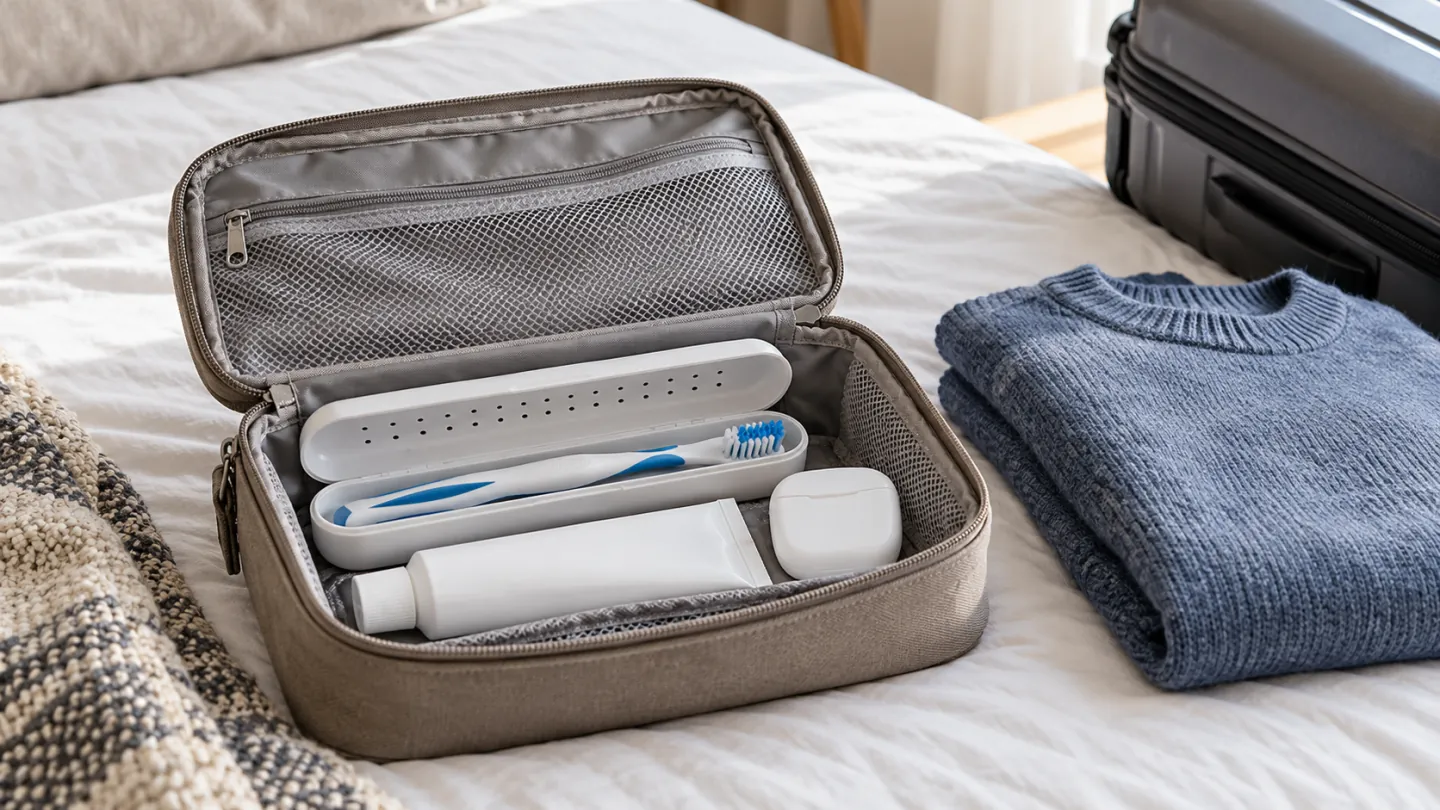
A trip is usually a poor time to experiment with unfamiliar tools. Pack a soft toothbrush, your usual fluoride toothpaste and the interdental aid that works for you. If you use an electric brush, consider charging arrangements and whether a manual backup would be convenient.
Put essential supplies where a delayed checked bag will not make them inaccessible. Follow current carrier and security requirements for liquids and other items rather than assuming rules are identical everywhere. A small, usable kit is more valuable than a large collection of products you cannot carry conveniently.
After brushing, rinse the brush and allow it to dry when practical. A protective case helps during transport, but do not leave a wet brush sealed indefinitely. In a shared bathroom, keep your supplies identifiable and separate from those of other travellers.
If you use a prescribed dental product, take enough for the trip and keep the instructions available. Ask the prescriber about storage needs or a longer supply before the final packing day.
Give appliances a protected place
Retainers, aligners, night guards and removable dentures need their own cases and cleaning supplies. Do not wrap an appliance in a napkin during a meal; it is easy to mistake for rubbish. A dedicated case should travel with you whenever the appliance may come out.
Ask the treating provider about a replacement plan if loss or breakage would be difficult to manage during a long stay. If you are in active orthodontic treatment, clarify which appliances to bring and what to do if one no longer fits. Do not invent a new wear schedule because travel interrupts your usual routine.
Keep appliances away from heat and follow the relevant cleaning instructions. Hotel kettles and hot car dashboards are not substitutes for approved cleaning methods. Our retainer-care guide includes practical storage and fit questions.
Before checking out of accommodation, look in the places where small dental items disappear: bedside tables, bathrooms and breakfast napkins. Adding the appliance case to your departure checklist is a simple way to avoid an expensive return journey or replacement.
Review insurance before you need it
Travel insurance and routine dental benefits are separate questions. A policy may distinguish accidental injury, emergency pain relief, ongoing treatment and routine dental care. Do not assume that the word emergency means every expense will be covered.
The Government of Canada’s travel-insurance guidance emphasizes understanding exclusions, pre-existing conditions and the assistance process. Read your actual policy and ask the insurer how dental situations are handled for your trip.
Find out whether you need to contact an assistance service before treatment when circumstances permit, what documents a claim requires and whether you may need to pay the clinic first. Save the policy number and contact information somewhere available without relying on a single internet connection.
Ask questions using concrete examples: a broken tooth after an accident, a previously uncomfortable tooth becoming painful, or a temporary crown coming off. The insurer can explain the policy; a dental office cannot promise payment on its behalf. Obtain clarification before departure rather than trying to interpret exclusions while in pain.
Keep medication information clear
Carry an accurate list of your medicines, allergies and relevant health conditions. Another dentist may need that information even for a brief urgent appointment. Include the names and doses rather than descriptions such as “the small white pill.”
The Government of Canada’s medication travel advice recommends original labelled containers and checking destination requirements. Medicines available in Canada may be regulated differently elsewhere, so verify the rules for the actual countries involved.
Do not pack leftover antibiotics as a general solution for a possible toothache. Dental pain has different causes, and medication cannot reliably replace treatment of the source. If you are concerned about a known condition, discuss it with the treating clinician before travelling.
For over-the-counter pain relief, a pharmacist can review what is appropriate for your health history and other medicines. Follow the product directions and individualized advice. Avoid assuming that a travel companion’s medication is suitable for you.
Know the difference between urgent dental and medical help
A broken tooth, lost restoration or significant toothache warrants prompt dental advice. Severe facial or neck swelling, difficulty breathing or swallowing, major trauma or uncontrolled bleeding may require emergency medical care. Do not wait for a flight home when symptoms suggest a serious problem.
The Ontario Dental Association’s emergency guidance emphasizes contacting a dentist promptly after an injury. If an adult tooth is knocked out, time matters; seek immediate professional help and keep the tooth moist while obtaining instructions. A baby tooth should not be replanted.
When calling for help away from home, give the location, symptoms, timing and relevant medical information. A clear description helps the provider determine the appropriate next step. Photographs may assist communication but do not replace an examination.
Our dental emergency guide offers general background. Save useful contacts before travelling so you are not beginning the search from scratch when uncomfortable or worried.
After treatment away, bring the information home
If you receive care during the trip, ask for a summary of what was done, any imaging that can be appropriately shared, the materials or medicines used when relevant and the recommended follow-up. Keep receipts and claim documents separately from clinical instructions.
A temporary measure may have made you comfortable without completing the full treatment plan. Ask explicitly whether the restoration or procedure is intended to be definitive and what needs to happen next. Do not let relief from pain become the reason follow-up disappears from the calendar.
Contact your Winnipeg dental team when you return, particularly if another clinician recommended review. Explain any ongoing symptoms and arrange transfer of records with the appropriate permissions. That helps avoid uncertainty about what has already been assessed.
If the trip is lengthy, follow-up may need to happen where you are staying. Ask the treating provider about timing rather than automatically postponing until you return to Manitoba.
Make departure day uncomplicated
Before leaving, check that your dental kit, appliance case, medication list and relevant contact information are accessible. Confirm any outstanding appointments and keep written instructions with the supplies they relate to. Small preparations are easier at home than in an unfamiliar place.
For pre-travel dental planning in Winnipeg, request an appointment at Winnipeg North Dental and mention your departure date when booking. Bring existing concerns early, leave room for informed decisions and keep the plan focused on the care your mouth actually needs.