
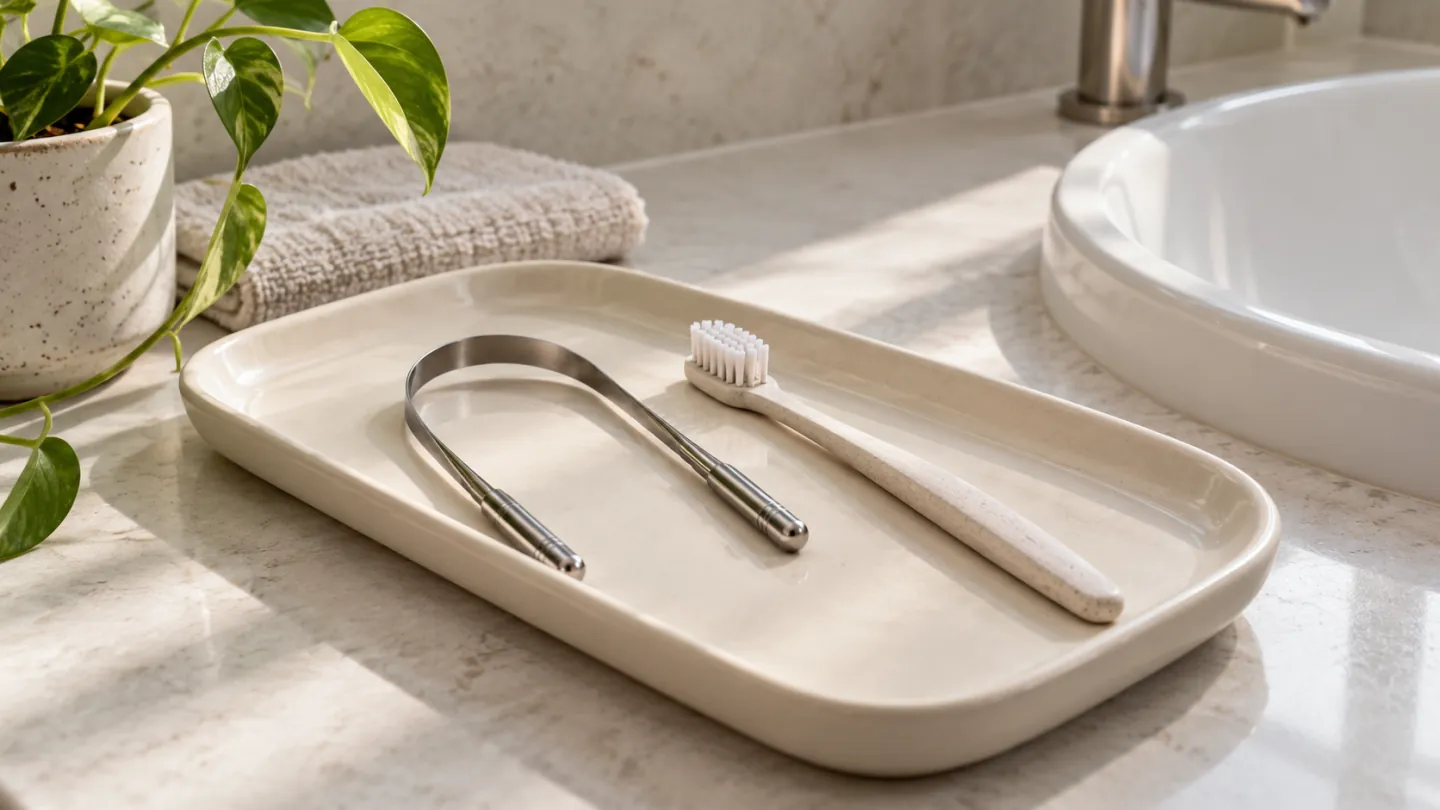
A tongue scraper is a small tool that can generate surprisingly large promises. Product packaging and social media may suggest that a few passes will transform your breath, remove every unwanted bacterium, or reveal a perfectly pink tongue. A useful routine is much more modest: gentle care that feels comfortable and does not distract from the reasons a mouth may need professional attention.
If you are considering tongue cleaning in Winnipeg, start by asking what you want it to accomplish. Do you simply prefer the clean feeling? Are you concerned about persistent bad breath? Have you noticed a new patch, soreness, or a change in appearance? Those are different questions, and a scraper does not answer all of them.
Tongue cleaning can be an optional part of your routine. It should not replace brushing with fluoride toothpaste, cleaning between teeth, or dental assessment when something changes. The aim is comfortable care, not repeated scraping until the tongue matches an image online.
Understand what a tongue cleaner does
A tongue cleaner is designed to pass gently over the accessible surface of the tongue. Some people use a dedicated scraper; others prefer a soft toothbrush. The tool is different from an instrument used to examine or treat a tongue lesion.
The American Dental Association’s tongue-scraper guidance describes tongue cleaning as a matter of personal preference rather than a necessary step and cautions against assuming it will prevent or resolve chronic bad breath. If you like the feeling and can do it comfortably, it can sit alongside your usual care.
That does not mean you need to purchase a specialized device before your next dental visit. Ask the clinician whether tongue cleaning is relevant to your concern and which approach would suit you. If your main problem is gum bleeding or a painful tooth, spend the conversation on that issue rather than treating a new accessory as the solution to the whole mouth.
Keep expectations about breath realistic
Advice on tongue cleaning is not identical across professional patient resources. The NHS includes gentle daily tongue cleaning in its self-care advice for bad breath, while the ADA is more cautious about its ability to improve chronic halitosis. A sensible approach is to avoid treating any temporary fresh feeling as proof that the underlying cause has been resolved.
If breath concerns persist, describe them at an appointment. Tell the dentist when you notice the problem, whether someone else has mentioned it, and whether you also have dryness, a bad taste, gum symptoms, or appliance difficulties. Those details are more useful than the brand of scraper alone.
Our guide to bad breath in Winnipeg covers the broader assessment. You should not feel that you have failed at hygiene because a tongue-cleaning routine did not solve the issue. Persistent symptoms are a reason to investigate, not automatically a reason to increase pressure, frequency, or the number of products you use.
Choose a tool you can control comfortably
If you choose a scraper, look for a smooth design that you can hold securely and use without sharp or damaged edges. Follow the manufacturer’s instructions and ask the dental team for a demonstration if the shape or technique is unfamiliar.
A soft toothbrush may be more convenient for someone who prefers not to add another tool. A dedicated scraper may feel easier to another person. The useful comparison is how well you can control the movement and tolerate the sensation, not whether the device looks more professional or is made from a fashionable material.
Avoid improvising with sharp utensils, dental picks, or other household objects. Do not share a tongue cleaner. If grip is difficult because of arthritis or reduced dexterity, bring the tool to your appointment and ask about a suitable alternative. Buying a wider or heavier version without trying it may make control harder rather than easier.
Make gentleness the main rule
Ask the clinician to show you how to use the tool on the accessible part of your tongue without provoking gagging. Use light pressure and a controlled movement, following the product instructions. Stop if it causes pain, bleeding, or irritation.
The NHS bad-breath advice specifically warns against cleaning so hard that the tongue or gums bleed. Bleeding is not evidence that you have removed something that needed to come off. It is a reason to stop and reconsider the technique or seek advice.
Do not keep repeating passes because the surface still looks different from what you expected. Your tongue is living tissue, not a countertop that must be polished to one uniform appearance. If a particular spot looks unusual or does not change with ordinary gentle care, have it examined instead of increasing force. You should be able to finish the routine comfortably and move on with your day.
Do not turn gagging into a challenge
Some people gag when a brush or scraper moves toward the back of the tongue. You do not need to reach as far as possible or tolerate repeated retching to prove that you have cleaned effectively. Stop before the movement becomes distressing.
If the sensation is frequent, ask whether tongue cleaning is worthwhile for you and discuss an approach you can tolerate. A smaller tool or different method may be considered, but the decision should fit your mouth and the reason for cleaning. Do not use throat-numbing products or perform aggressive desensitization exercises on your own.
Our guide to managing a gag reflex during dental visits explains how to describe triggers and discuss adjustments. If gagging also prevents toothbrushing, make that the priority in the conversation. An optional tongue-care step should not make you dread the entire routine or lead you to skip cleaning the teeth that need regular attention.
A coating is not the same as a diagnosis
People often use “white tongue” to describe several different appearances. A general surface coating, a distinct patch, and a sore area may look similar in a photograph while having different causes. A clinician needs the history and examination to interpret what is present.
The NHS guidance on a sore or white tongue advises seeking dental or medical advice for white patches and pain or itching that persists or worsens. It also cautions against self-diagnosis. Scraping harder is not a reliable way to determine whether an area is harmless.
Note when you first noticed the change and whether it is painful, spreading, recurring, or associated with a new product or medicine. Bring that information to the appointment. If you take a photograph to document a change, use it as a record for the clinician rather than comparing it to dramatic images online. Do not repeatedly rub the area to test whether it will come off.
Look beyond the tongue when dryness is present
If your mouth feels sticky, you wake needing water, or speaking for a long time becomes uncomfortable, mention that separately. A scraper does not restore saliva or explain why your mouth feels dry.
The ADA’s information on bad breath identifies dry mouth, gum disease, food, tobacco, and some medical conditions among possible contributors. It recommends assessment when the cause is unclear and notes that further medical evaluation may be appropriate when dental causes have been addressed.
Describe your day in practical terms. A Winnipeg commuter who sips sweetened coffee throughout the morning may have different habits to discuss from someone whose mouth became dry after a medication change. Do not stop medicine yourself. Bring a list and ask the dental team or prescriber about the symptom. Our dry-mouth guide offers additional questions for that discussion.
Keep the rest of the routine in view
It is easy to spend more attention on a new tool than on familiar tasks. Check that tongue cleaning has not displaced brushing all tooth surfaces or cleaning between teeth. If time is limited, focus on the core routine recommended by your dental professional.
If you wear dentures, a retainer, or another removable appliance, ask how it should be cleaned and stored. Odour concerns may involve more than the tongue. The cleaner for an appliance is not necessarily suitable for use directly in the mouth, so read labels and follow the instructions for that material.
Avoid introducing a scraper, strong mouthwash, whitening toothpaste, and other products all at once. If soreness develops, it becomes harder to tell which change contributed. A simpler routine is easier to describe at an appointment and easier to adjust. Our mouthwash guide explains why choosing a rinse should start with its intended purpose rather than the strength of its taste.
Clean and store the tool according to its instructions
Rinse the cleaner after use and follow the manufacturer’s guidance for washing, drying, and replacement. Store it where it can stay clean and where household members will not confuse it with their own supplies. Check for damage before using it again.
Do not assume that boiling, bleaching, or placing a device in the dishwasher is appropriate for every material. If the instructions are missing, consult the manufacturer or choose a product with clear care information. A simple device still needs suitable cleaning, but it does not require an elaborate home sterilization project.
For travel, use a storage arrangement that protects the tool without leaving it indefinitely wet and dirty. Once you return home, clean it as directed rather than putting the closed travel case straight into a drawer. These ordinary steps are more useful than accumulating several scrapers and forgetting which one has been cleaned.
Know when to ask for an examination
Arrange assessment for persistent bad breath, a new or persistent patch, a sore that is not healing, unexplained bleeding, a lump, or ongoing tongue pain. If symptoms are getting worse, contact the office sooner rather than waiting to see whether a more intensive cleaning routine helps.
Sudden tongue swelling with breathing or swallowing difficulty is a medical emergency. Seek emergency assistance rather than trying mouthwash or scraping. For less urgent changes, bring your symptom history and the products you have used so the clinician can understand what happened before and after the change.
Tongue cleaning should remain a gentle, optional habit with realistic expectations. If it feels comfortable, fits your routine, and your dentist has no concern about the tissues, keep it simple. If you are unsure about coating, odour, or a change in your tongue, request an appointment for an assessment in Winnipeg. A clear explanation is more useful than repeatedly trying to scrape away uncertainty.