
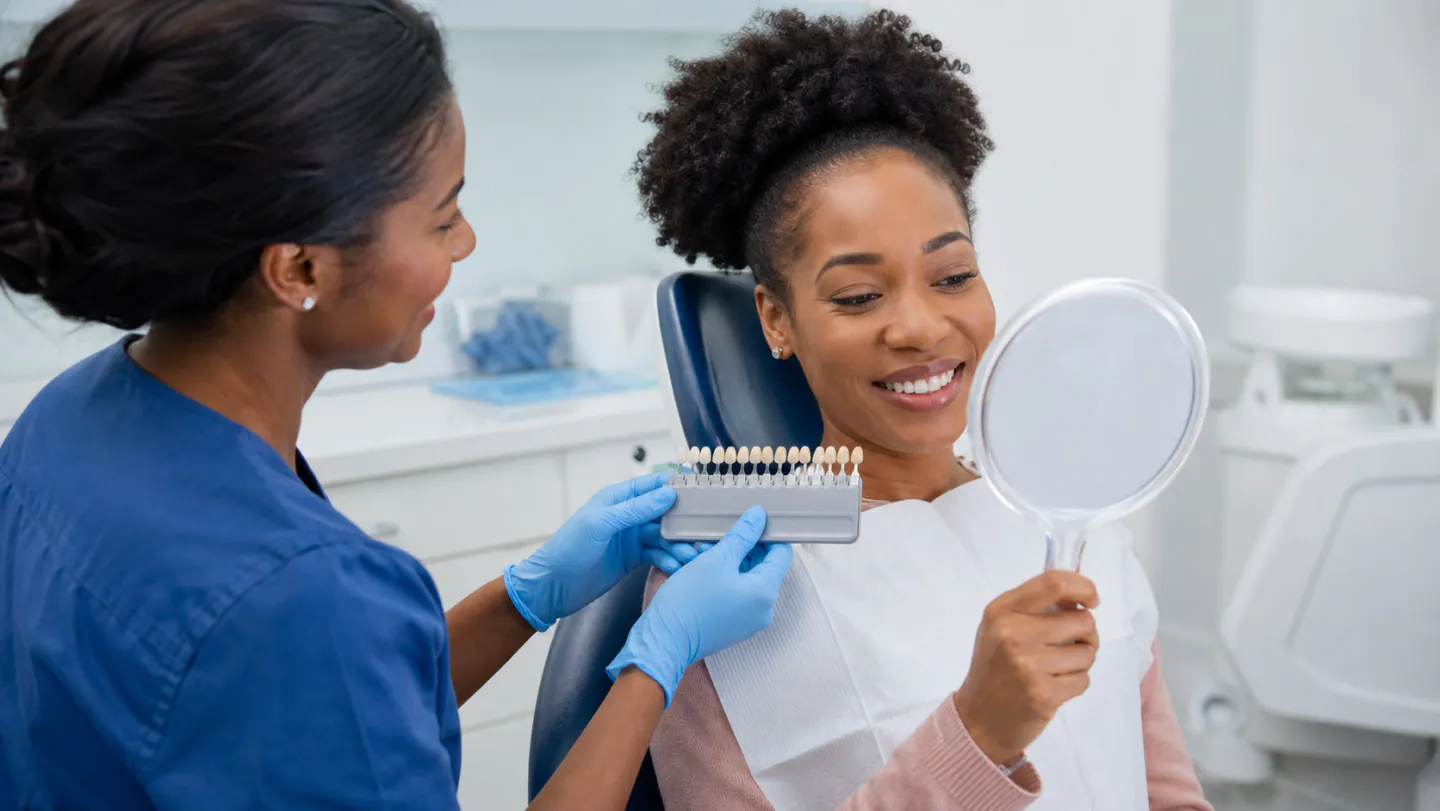
Teeth are not naturally paper white. Enamel has its own colour and translucency, and the warmer layer beneath it influences how a smile looks. Coffee, tea, red wine, tobacco, age, and everyday meals can gradually deepen that colour. Wanting a brighter smile is common, but the number of whitening strips, lights, pens, toothpastes, and online promises can make a simple goal surprisingly confusing.
Whitening can work well when the product and method fit the type of discolouration. It can also cause sensitivity, irritate gums, or create uneven results when used without understanding existing dental work. A very dark tooth, visible filling, or patchy white area needs a different conversation than general surface staining.
If you are comparing teeth whitening in Winnipeg, this guide explains the choices in plain language. The goal is not to promise a particular shade. It is to help you pursue a realistic result without overlooking the health of your teeth and gums.
Why teeth change colour
Tooth colour changes for several reasons. Some stains sit mainly on the surface. Others are held within the tooth.
Common surface-staining sources include:
- Coffee and tea
- Red wine and dark sauces
- Tobacco and cannabis smoke
- Strongly coloured foods and drinks
- Plaque and tartar buildup
Surface stains may improve with a professional cleaning or stain-removing toothpaste. Whitening treatment goes further by using a bleaching ingredient to change colour within the tooth.
Deeper discolouration can relate to age, trauma, tooth development, some medications taken while teeth were forming, or a tooth whose nerve has died. Enamel also becomes thinner over time, allowing more of the yellowish dentin underneath to show.
The cause matters because not every colour responds equally. A dentist can help identify whether cleaning, whitening, bonding, a veneer, a crown, or simply monitoring is the more suitable approach.
Whitening, bleaching, and cleaning are not the same
The words are often used interchangeably in advertising, but they describe different effects.
A dental cleaning removes plaque, tartar, and some surface stain. It can make teeth look cleaner and brighter, but it does not bleach their natural colour.
Whitening toothpaste usually polishes away external stain. Some products contain ingredients that produce a limited chemical whitening effect. More abrasive is not always better; aggressive scrubbing can wear surfaces and worsen sensitivity.
Bleaching products contain peroxide-based ingredients that lighten tooth colour. The Canadian Dental Association’s teeth-whitening information notes that methods may include professionally supervised home trays and treatment provided in a dental office.
Understanding which change you want prevents disappointment. If the concern is tartar near the gumline, whitening gel will not remove it. If teeth are naturally darker, polishing alone will not make them several shades lighter.
Who should have a dental examination before whitening?
Everyone benefits from knowing that the mouth is healthy first, but an examination is especially important if you have:
- Untreated cavities
- Cracked or broken teeth
- Gum recession or exposed roots
- Significant tooth sensitivity
- Bleeding or inflamed gums
- One tooth that is much darker than the others
- White, brown, or grey patches
- Visible fillings, crowns, bonding, or veneers
- Recent dental treatment
- Pain or swelling
Whitening gel can pass through a cavity or irritate an exposed area, making sensitivity more intense. Gum inflammation should be addressed before cosmetic treatment. A single dark tooth may need nerve testing and an X-ray because trauma or infection can change colour.
An examination also creates a record of existing shades and restorations. That makes planning more predictable.
Professional in-office whitening
In-office whitening uses a higher-strength product applied by a dental professional. The gums and other soft tissues are protected before the gel is placed. Treatment is completed in one or more controlled sessions, depending on the system and response.
The main advantage is supervision. The team can isolate the gums, watch sensitivity, and adjust application. It can be useful when a patient wants a faster change or prefers not to manage trays at home.
Faster does not mean permanent or sensitivity-free. A strong product can create temporary zingers or aching, especially in teeth with recession, cracks, or a history of sensitivity. Some of the immediate brightness after treatment can also reflect temporary dehydration. The colour may settle over the following days.
Ask what result is realistic for your starting shade, what the appointment involves, and whether take-home maintenance is included.
Dentist-supervised take-home whitening
With supervised home whitening, custom trays are made to fit closely around your teeth. The dentist provides gel at a suitable strength and instructions for how much to use, how long to wear the trays, and when to stop.
The process is gradual, which many patients like because they can monitor colour and sensitivity. Custom trays also limit how much gel sits on the gums when loaded correctly. They may be kept for future touch-ups if they still fit and remain in good condition.
Using more gel does not create a better result. Overfilling trays mainly pushes product onto the gums and increases waste and irritation. Wear time also matters; leaving a product on longer than directed can increase sensitivity without producing a useful advantage.
If a tooth becomes sharply painful or the gums turn persistently sore, stop and contact the office rather than trying to push through.
Store-bought strips, pens, and kits
Over-the-counter whitening can provide a modest change for some people with general yellow staining. Products differ in fit, ingredient strength, directions, and quality.
Strips may not contact every tooth evenly, especially when teeth overlap or rotate. Gel can reach the gum edge in some areas while missing darker spaces in others. One-size trays can leak or press product against soft tissues.
Follow the label exactly and use products authorized for sale in Canada. Do not combine several systems or extend treatment because an online video recommends it. Stop if you develop strong pain, gum burns, or a noticeable change in one tooth.
Retail products cannot diagnose the reason for discolouration. If you have not had an examination recently, the safest first purchase may be information rather than another kit.
Do whitening lights and lasers improve the result?
Many whitening systems are promoted with bright lights, heat, or the word “laser.” The technology can make the appointment look more advanced, but the active whitening ingredient is generally the bleaching gel.
Some systems use light as part of their specified process. That does not mean every light sold online makes peroxide safer, deeper, or permanent. The CDA notes that in-office techniques using lasers and lights have not all received the same degree of scientific assessment.
Ask what the light is intended to do, whether the system’s instructions require it, and how sensitivity is managed. A responsible plan should focus on diagnosis, tissue protection, product concentration, and realistic expectations rather than the visual drama of the device.
Which stains respond best?
General yellowing often responds more predictably than grey, banded, or deeply developmental discolouration. Surface stain may improve first with a cleaning. A tooth darkened after trauma or root canal treatment may require a different internal whitening technique or a restoration.
Results also vary within the same mouth. Canine teeth are naturally more yellow than front incisors because of their dentin thickness. Areas near the gumline may respond differently than thinner edges. Existing white patches can appear more noticeable at first, even if the surrounding tooth gradually becomes more even.
Bring examples of the change you want, but avoid expecting another person’s exact shade. Tooth shape, skin tone, lighting, photography, and filters all affect how white a smile appears.
Whitening does not change fillings, crowns, or veneers
Bleaching ingredients lighten natural tooth structure. They do not change the colour of composite fillings, bonding, crowns, bridges, or veneers. As natural teeth brighten, an existing restoration may begin to look darker or more obvious.
This matters most in the front of the mouth. If you are planning a new crown, veneer, or bonding, whitening is often completed first. The colour is then allowed to settle before the restoration shade is selected.
Replacing sound dental work only for colour is a personal cosmetic decision and involves removing material from the tooth. Ask whether polishing or a small repair could help and whether the visual difference is noticeable in normal conversation, not only in close-up bathroom lighting.
Tooth sensitivity during whitening
Temporary sensitivity is one of the most common whitening side effects. Teeth may react to cold air, water, or even breathing through the mouth. The feeling often settles after a pause or once treatment ends.
Ways to reduce sensitivity may include:
- Using a lower-strength product
- Shortening wear time
- Whitening every other day rather than daily
- Taking a planned break
- Using a sensitivity toothpaste before and during treatment
- Treating exposed or damaged areas first
Follow advice from your dentist because the best adjustment depends on the cause. Sensitivity that lingers, occurs without a trigger, or affects one tooth much more than others should be assessed. Whitening may have revealed an existing problem rather than created the entire issue.
Gum irritation and other safety concerns
Gel that sits on the gums can cause temporary whitening, burning, or soreness of the tissue. Custom trays, careful loading, and soft-tissue barriers during in-office treatment reduce contact.
Do not place household bleach, acidic fruit, charcoal mixtures, cleaning products, or concentrated peroxide on teeth. “Natural” does not mean harmless. Lemon juice and vinegar expose enamel to acid, while abrasive powders can wear surfaces. Damage from a home experiment can outlast any brief colour change.
Swallowing whitening product should be avoided. Keep products away from children and pets, and store gel as directed. If you are pregnant, breastfeeding, under 18, or managing significant medical or dental concerns, discuss timing and product suitability with a dentist before proceeding.
How white can teeth become?
Whitening changes the starting colour by a variable number of shades; it does not let you select an exact paint-chip result. Some teeth reach a brighter point quickly and then stop changing despite additional use.
Over-whitening can make teeth look flat or unusually opaque and increases the chance of sensitivity. Chasing the lightest possible shade can also create a cycle of frequent touch-ups that irritates teeth and gums.
A natural-looking goal often considers the whole smile: tooth colour, shape, surface texture, existing dental work, and the way the result looks in daylight. Take before-and-after photographs in similar lighting if you want to judge progress. Daily mirror checks are unreliable because your eyes quickly adapt.
How long do whitening results last?
Whitening is not permanent. The result gradually changes as teeth continue to contact coloured foods, beverages, and smoke. How long it remains noticeable depends on the starting shade, product, habits, cleaning, and personal biology.
You do not have to give up coffee forever. Simple habits can reduce new surface stain:
- Rinse with water after a staining drink
- Avoid holding or swishing coffee and tea around the teeth
- Clean teeth consistently
- Attend professional cleanings based on your needs
- Avoid tobacco and smoking
- Use touch-up gel only as recommended
Do not brush immediately after a very acidic drink. Rinse with water and give saliva time to neutralize the mouth first.
Teeth whitening costs in Winnipeg
Cost varies by method. In-office treatment generally costs more than supervised take-home whitening because it uses chair time, professional application, and tissue protection. Custom trays have an initial cost but may be reusable for future touch-ups if they continue to fit.
Whitening is usually considered cosmetic and is commonly excluded from dental benefit plans and the Canadian Dental Care Plan. Confirm with your plan if you are unsure, but budget with the expectation that you may pay the full fee.
Ask what is included: the examination, cleaning, trays, gel, in-office sessions, desensitizing products, and follow-up may be priced separately. Comparing only the advertised starting price can hide those differences.
Questions to ask at a whitening consultation
Consider asking:
- What is causing my discolouration?
- Are my teeth and gums healthy enough to whiten?
- Which teeth or areas may not respond evenly?
- Will my fillings, crowns, or veneers look different afterward?
- Which method fits my sensitivity and timeline?
- What side effects should make me stop?
- How should I maintain the result?
- Are there options if whitening cannot create the change I want?
A useful consultation should help you decide whether whitening is appropriate, not pressure you to purchase the strongest package.
Planning teeth whitening in Winnipeg
The safest whitening plan begins with the reason for the colour change. Healthy teeth with general yellow staining may respond well. A single dark tooth, untreated cavity, gum inflammation, or visible restoration needs individual planning.
Winnipeg North Dental offers teeth-whitening options and can assess how whitening may interact with your existing dental work. If you would like a brighter smile and want to understand the realistic choices, request an appointment for a patient-focused discussion before starting.