
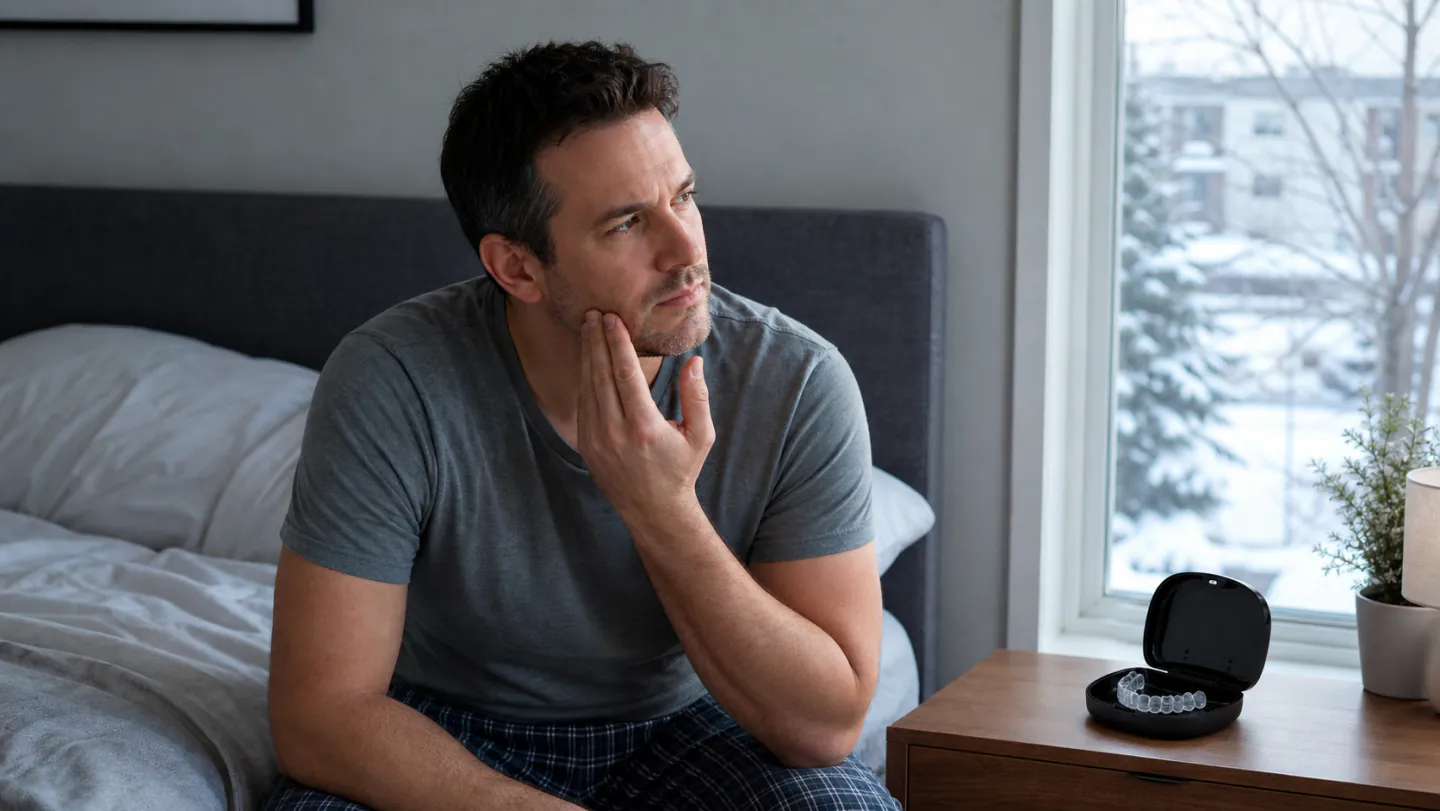
You may not know that you grind your teeth until someone hears it at night. Other people first notice a chipped tooth, morning jaw tightness, headaches, or a filling that keeps breaking. Some clench during focused work without making any sound at all.
Teeth grinding and clenching are often grouped under the word bruxism. They can happen during sleep or while awake. The habit ranges from occasional and harmless to forceful enough to damage teeth, strain muscles, and disturb comfort.
A night guard can protect teeth in selected cases, but it is not a universal cure for jaw pain, headaches, or poor sleep. If you are looking for help with teeth grinding in Winnipeg, this guide explains the signs, the role of a custom guard, and the reasons a broader assessment may matter.
Grinding and clenching are not exactly the same
Grinding involves moving teeth against each other. Clenching means holding the jaw muscles tight and pressing teeth together, often with little movement. A person can do one or both.
Awake clenching commonly appears during concentration, stress, driving, screen work, or physical effort. Sleep bruxism happens without conscious control and can vary from night to night.
Teeth are designed to contact during chewing and swallowing, not to remain pressed together for long periods. Repeated extra force can affect teeth, restorations, muscles, and jaw joints. However, finding a small wear mark does not automatically mean active severe grinding. The dentist considers the whole pattern.
Signs that you may grind your teeth
Possible clues include:
- A partner or family member hearing grinding sounds
- Tight or tired jaw muscles on waking
- Morning headaches near the temples
- Flattened, shortened, or chipped tooth edges
- Small cracks in enamel
- Tooth sensitivity
- Repeatedly broken fillings, crowns, or veneers
- Cheek ridges or tongue impressions
- Jaw soreness after focused work
- A feeling that teeth are under pressure
These signs overlap with other conditions. Headaches can have many causes. Tooth sensitivity may be decay or recession. Jaw pain may come from the joint, muscles, injury, arthritis, or another health concern.
Do not buy a guard only because one symptom appears on a checklist. An examination can show whether grinding damage is present and whether a guard is likely to help.
Why people grind or clench
There is rarely one simple cause. Stress and concentration can increase awake clenching. Sleep bruxism may relate to sleep patterns and brief arousals. Caffeine, alcohol, smoking, some medications, and certain health conditions may influence symptoms for some people.
An uneven bite is often blamed, but reshaping healthy teeth is not a routine answer to grinding. Tooth position can affect where forces land without necessarily causing the behaviour itself.
The Canadian Dental Association’s bruxism guidance notes that stress, interrupted sleep, and dental factors can be associated and that management may involve other health professionals. A useful assessment looks beyond one tooth and avoids promising a single cure.
How grinding damages teeth
Repeated force can wear the outer enamel, especially when teeth slide across each other. Edges may become flat or uneven. As teeth shorten, the bite and appearance can gradually change.
Fillings and crowns do not escape the force. They may chip, crack, loosen, or wear against opposing teeth. A natural tooth can develop a fracture that begins as brief biting sensitivity and becomes harder to restore.
Acid wear can make grinding damage worse because softened surfaces wear more easily. Frequent energy drinks, pop, reflux, and vomiting should therefore be part of the conversation.
Damage happens over time, and not everyone with wear needs extensive rebuilding. The goal is to identify active change, protect remaining structure, and restore only what is necessary for comfort and function.
Jaw muscles, joints, and headaches
Clenching can overwork the chewing muscles. You may feel tightness in the cheeks, temples, or area in front of the ears. Opening wide, chewing tough food, or yawning can become uncomfortable.
The jaw joints can click or pop without pain, and a sound alone does not always require treatment. Pain, locking, limited opening, or a bite that suddenly changes deserves assessment.
Headaches near the temples can be related to muscle tension, but not every headache is dental. New, severe, frequent, or unusual headaches should be discussed with a physician. A dentist can look for jaw and tooth findings but should not claim that a night guard will solve every headache.
What a night guard does
A night guard creates a protective surface between upper and lower teeth. It can spread contact, reduce direct tooth-to-tooth wear, and protect restorations. Depending on its design, it may also provide a more stable place for the jaw to rest during sleep.
A guard does not necessarily stop the brain and muscles from producing a grinding event. Some patients still clench while wearing it. The value is often protection rather than elimination of the habit.
The design must suit the bite, missing teeth, dental work, jaw comfort, and treatment goal. A guard made only to cover one area can allow other teeth to move if worn for long periods. That is why fit and follow-up matter.
Custom night guard versus store-bought guard
A custom guard is made from a scan or impression of your teeth and adjusted to your bite. It can be shaped for even contact, retention, comfort, and the amount of protection required.
Boil-and-bite guards are less expensive and may be useful for short-term situations, but fit and thickness vary. A bulky guard can make sleep difficult, press on gums, or change how the jaw feels. Soft material may encourage chewing in some people.
Over-the-counter guards should not be worn over loose teeth, active gum disease, significant pain, or complex dental work without advice. Stop using a guard that changes your bite, causes worsening pain, or no longer fits. A cheaper device is not a bargain if it hides a cracked tooth or creates a new problem.
How a custom guard is made
The dentist first examines the teeth, gums, bite, muscles, and jaw movement. Existing cavities, broken restorations, or active pain should be addressed. A digital scan or impression then records the teeth.
The guard is made to fit either the upper or lower arch. At delivery, the dentist checks that it seats fully, stays in place, and contacts the opposing teeth as intended. Small adjustments can make a major difference in comfort.
Bring the guard to follow-up visits. Teeth and restorations can change, and a guard may need adjustment. Do not force it into place after a new crown, filling, or orthodontic change.
Getting used to sleeping with a guard
A new appliance can feel bulky for the first several nights. Saliva flow may increase temporarily, and speech can sound different if you wear it before bed. Begin with short evening periods while reading or relaxing, then use it for sleep as directed.
The guard should feel snug but not painfully tight. It should not rock, pinch the gums, or require force to remove. Morning bite awareness can occur briefly, but a bite that stays changed or discomfort that grows needs a check.
Consistency matters. A guard left in a drawer cannot protect teeth. If you cannot tolerate it, tell the dentist. Thickness, edge shape, bite contacts, jaw symptoms, or the selected arch may need review.
Cleaning and storing a night guard
Rinse the guard after removal and clean it using the method recommended for its material. A soft brush and mild product may be advised. Hot water can distort many guards, and abrasive toothpaste can scratch the surface.
Let it dry as instructed and store it in a ventilated case away from pets. Dogs are remarkably skilled at finding and chewing dental appliances.
Clean the storage case regularly. Bring the guard to dental appointments so the team can check for cracks, buildup, fit, and wear. White deposits, persistent odour, roughness, or a change in fit are reasons for professional cleaning or replacement.
Daytime clenching: awareness matters
A night guard does nothing while it sits beside the bed and you clench through an eight-hour workday. Awake clenching is a behaviour you can often begin to interrupt.
At rest, keep your lips comfortable and your teeth slightly apart. Set subtle reminders on your phone, monitor, or steering wheel. When the reminder appears, drop your shoulders, let the jaw loosen, and breathe slowly.
Avoid chewing gum for hours if the jaw is already tired. Break up long screen sessions and notice whether you tense during difficult tasks. These steps are not a judgment that pain is “just stress.” They reduce unnecessary muscle work while the cause and damage are assessed.
Sleep quality and possible sleep apnea
Grinding sounds can occur alongside snoring, restless sleep, or breathing interruptions. A dental guard for grinding is not the same as an appliance designed and monitored for sleep apnea.
Speak with a physician if you have loud snoring, witnessed pauses in breathing, gasping, morning headaches, or significant daytime sleepiness. Sleep apnea can affect overall health and needs proper diagnosis.
Do not use an online mouthpiece to reposition your jaw based only on snoring. The wrong design may affect the bite or jaw and delay appropriate medical care. Your dentist and physician can coordinate when both tooth protection and sleep assessment are needed.
When teeth already have significant wear
A guard can protect what remains, but it does not restore lost tooth shape. If wear affects chewing, appearance, sensitivity, or space for restorations, the dentist may discuss bonding, fillings, onlays, crowns, orthodontics, or a broader reconstruction plan.
Rebuilding worn teeth is complex because every change affects the bite. It should not begin until active causes—grinding, acid exposure, missing support, and gum health—have been considered.
Some worn mouths need only monitoring and prevention. Photographs, scans, or models can help track whether wear is active. Treatment should match function and risk, not simply the appearance of flat edges.
Night guard costs and coverage in Winnipeg
The fee depends on the guard type, material, records, and adjustments. Private dental plans may contribute under a preventive, appliance, or major-service category, with their own limits and replacement frequencies. The Canadian Dental Care Plan has separate eligibility and authorization rules for appliances.
Ask for an estimate and confirm whether adjustments are included. Coverage does not establish whether a guard is clinically appropriate, and lack of coverage does not mean it is unnecessary.
If cost is a concern, discuss the urgency, the current signs of damage, and any safe short-term steps. Avoid buying several unsuitable devices that together cost as much as a properly assessed option.
When to call a dentist promptly
Arrange care if you have a broken tooth, increasing bite pain, a loose restoration, jaw locking, swelling, or significant limitation in opening. A guard should not be used to postpone assessment of acute symptoms.
Seek medical attention for serious facial injury, trouble breathing, a suddenly changed bite after trauma, or a severe new headache with other concerning symptoms.
For less urgent signs such as morning tightness or gradual wear, book an examination and bring any existing guard. Early protection may prevent a manageable chip from becoming a larger fracture.
Getting help for teeth grinding in Winnipeg
Grinding and clenching are patterns with several possible influences. A useful plan separates tooth protection from promises of a cure, checks for other causes of pain, and includes daytime and sleep habits when relevant.
Winnipeg North Dental can assess tooth wear, restorations, muscles, and bite during a general dental examination. If you are waking with jaw tension, breaking dental work, or wondering whether a night guard fits your situation, request an appointment for a clear discussion of the options.