
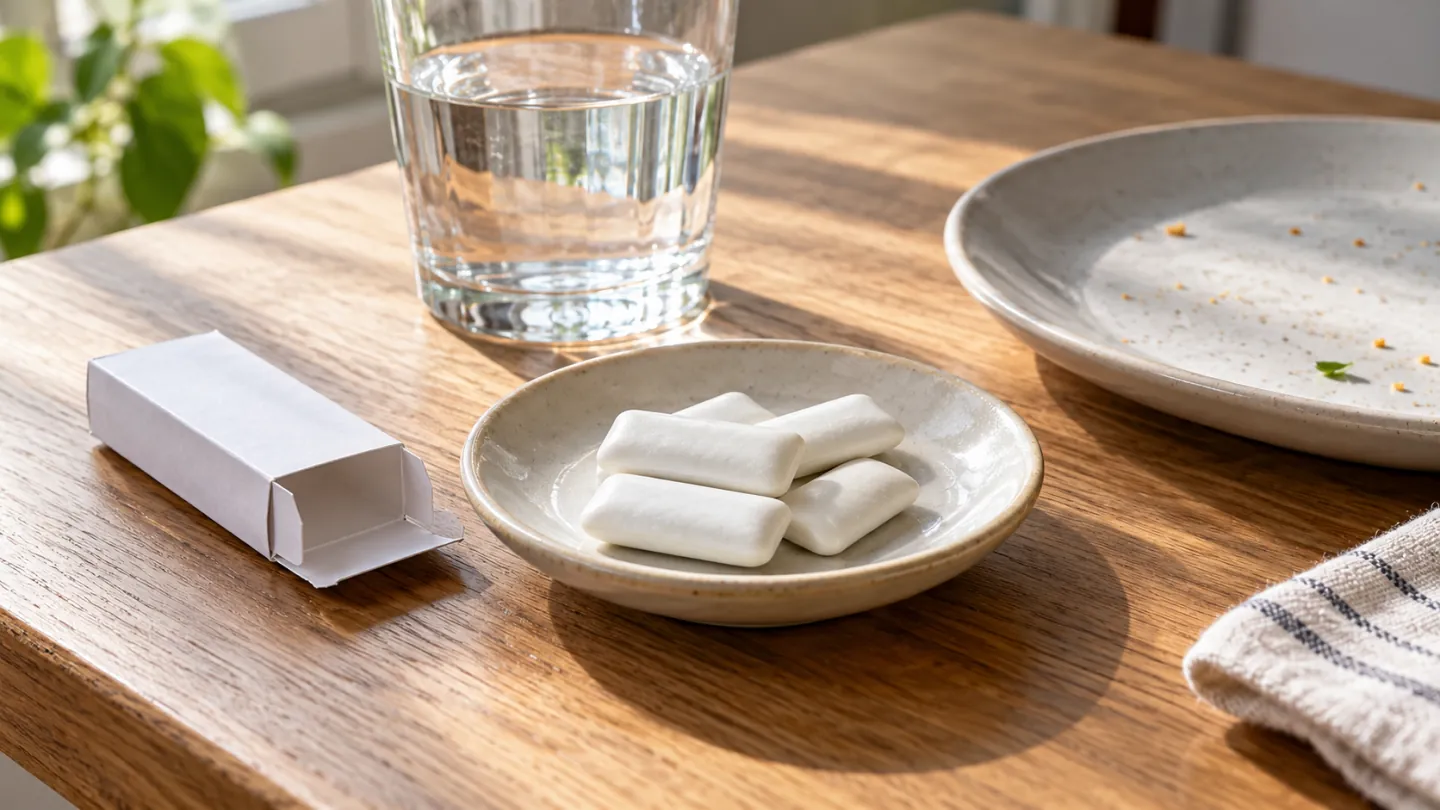
You have finished lunch, your next appointment starts soon, and a toothbrush is nowhere nearby. A piece of sugar-free gum feels like an easy way to freshen up. But is it doing anything useful for teeth, or simply changing the taste in your mouth?
Sugar-free gum can have a place in oral care, mainly because chewing stimulates saliva. It also has limits. It does not brush the gumline, clean every space between teeth or repair a damaged filling. For someone with jaw discomfort, a swallowing problem or particular dental appliances, it may be an unsuitable choice altogether.
This guide to sugar-free gum in Winnipeg looks at the practical middle ground. The aim is to understand when a simple after-meal habit may help, what package claims mean and when another approach makes more sense. Gum should make a routine easier, not become an expensive obligation or a reason to postpone dental care.
The useful effect begins with saliva
Saliva helps clear the mouth and buffer acids. Chewing increases saliva flow, which is one reason sugar-free gum can be helpful after eating. The distinction between sugar-free and sugar-containing gum matters: the latter supplies sugar while you chew.
The American Dental Association’s chewing gum overview discusses saliva stimulation and evidence for sugar-free gum as an addition to usual preventive care. The benefit is connected to the product and how it is used, rather than a general rule that anything chewy protects teeth.
Think of gum as a possible extra step during a day when brushing facilities are inconvenient. It does not turn a lunch break into the equivalent of a complete home-care routine. You still need the usual cleaning later.
That distinction also helps set expectations. A fresh taste may appear immediately, but it is not a measurement of plaque removal. Your mouth can taste minty while the areas between teeth still need attention.
What does the evidence actually support?
Health claims can sound more dramatic when shortened to a few words on packaging. It is useful to know that the relevant question is whether using a particular product in a particular way can help reduce risk, not whether gum guarantees freedom from cavities.
Health Canada’s assessment of sugar-free chewing gum supports a relationship between qualifying sugar-free gum and reduced dental-caries risk under specified conditions. That evidence does not replace an individual assessment of your teeth, diet, saliva and cleaning habits.
If you see a seal or a dental claim, read the directions beside it. A claim evaluated for one product is not automatically transferable to every product with similar packaging. Nor does a favourable study mean that chewing continuously gives greater benefit.
For a patient, the sensible response is modest: gum may be one useful tool if it suits you. It is not the foundation on which every other preventive decision depends.
Xylitol is an ingredient, not a complete care plan
Xylitol is a sugar alcohol used to sweeten some sugar-free gums. Other products use sorbitol, mannitol or different sweeteners, sometimes in combination. The front label may emphasize one ingredient without making the full formulation or the amount obvious.
Do not assume that the product with the largest xylitol wording must be the best choice for your mouth. Consider whether the gum is sugar-free, whether its claims are supported, whether you tolerate it and whether your dentist has a specific reason to recommend it.
The ADA’s patient guide to chewing gum explains that accepted sugar-free products use non-cavity-causing sweeteners and remain an addition to regular dental care. It does not make a special gum purchase a substitute for fluoride toothpaste or interdental cleaning.
If a clinician recommends a particular product or schedule, ask why. An individual recommendation should be clear enough that you can recognize a suitable replacement when your usual Winnipeg store is out of stock.
Make after-meal use a defined habit
For someone who enjoys gum and can use it safely, an after-meal routine is easier to manage than chewing throughout the day. Follow the product directions and any advice from your dental team. Do not assume that extending chewing time indefinitely improves the result.
Imagine a lunch break away from home. You finish eating, drink water and choose gum for a limited period before disposing of it. That is a manageable event. Replacing each piece as soon as the flavour fades can quietly turn the same idea into hours of chewing.
Keep a small supply where it fits your routine, but avoid treating an empty package as a dental emergency. If you forget gum, you have not lost the ability to care for your teeth. Return to your normal brushing and interdental cleaning when appropriate.
The habit should remain optional. People who dislike gum or cannot chew comfortably can discuss other preventive measures without feeling that they are missing an essential treatment.
Jaw comfort can change the recommendation
Chewing is activity for the jaw muscles and joints. If you develop aching, fatigue, headaches associated with chewing, or difficulty opening comfortably, adding more chewing is not a sensible way to test whether the problem will improve.
The National Institute of Dental and Craniofacial Research’s TMD guidance includes reducing gum chewing among conservative steps for temporomandibular symptoms. Jaw problems have different causes, so persistent symptoms deserve assessment rather than a self-diagnosis based on one habit.
Notice the pattern: does discomfort appear after a long drive spent chewing, at the end of a workday or when you wake? Does it affect one side or both? Do you also clench during concentrated work? These observations can help explain the load on the jaw.
Our jaw pain and TMD article describes the broader discussion. If gum makes symptoms worse, stop chewing it and seek advice. A potential preventive benefit does not require tolerating a painful habit.
Dental appliances need their own instructions
Braces, removable aligners, retainers, dentures and temporary restorations can change what is practical. The instructions from the clinician responsible for the appliance or treatment should guide your decision. Do not assume that a friend’s experience with a different appliance applies to yours.
If you wear clear aligners, clarify whether gum is allowed at all and when the appliance must be removed. If you have a temporary crown, follow the dentist’s food and chewing restrictions. A loose restoration or appliance should be assessed rather than held in place by changing how you chew.
When gum sticks to dental work, do not use sharp objects to scrape around the restoration. Contact the dental team for advice if gentle cleaning does not resolve the issue or if something has moved. Keep any displaced piece safely for assessment.
Bring questions up before leaving the treatment appointment. “Can I chew my usual gum with this?” is a small question that can prevent uncertainty later, especially if your routine includes gum after most meals.
Fresh breath and dry mouth are different concerns
Gum may briefly improve taste and increase moisture, but persistent bad breath or dryness needs a broader explanation. Using gum repeatedly to manage a symptom can make it easy to overlook how often the symptom occurs.
Keep track of when you reach for it. Is your mouth dry throughout the day? Do you need it to speak comfortably? Does bad breath return immediately after the flavour disappears? Mention those patterns at an appointment rather than simply reporting that you like gum.
Our guides to dry mouth and bad breath explain relevant questions. A dentist may need to review the mouth, medicines, hydration habits and other health information. Do not change prescribed medicines yourself because you suspect they contribute.
If chewing helps you feel more comfortable, that is useful information. It still does not establish the cause or show whether extra preventive support is needed. Symptom relief and diagnosis are separate parts of care.
Read warnings as well as benefits
Sugar-free does not mean a product is suitable in unlimited amounts or for every person. Check the ingredient list and package warnings, especially if you have known sensitivities or a condition requiring dietary restrictions. Follow medical advice relevant to you.
If a product seems to cause digestive discomfort or mouth irritation, stop and discuss the reaction with an appropriate healthcare professional. Keep the wrapper so the ingredients can be reviewed. Do not keep increasing the amount in pursuit of a dental benefit when your body is telling you the product is uncomfortable.
Children need age-appropriate supervision, and people with swallowing difficulties may not be safe chewing gum. Avoid treating it as a universal substitute when brushing assistance is difficult. A dental or healthcare team can help develop a safer routine.
It is also sensible to consider the setting. Gum may be impractical during certain work tasks, while using protective equipment or when communication requires clear speech. Your preventive routine should fit the environment rather than interfere with it.
Store xylitol products away from dogs
One household detail deserves special attention: xylitol can be dangerous to dogs. A product that is appropriate for a person can still be hazardous when a pet gets into a bag or coat pocket.
The U.S. Food and Drug Administration warns that xylitol is toxic to dogs. If you suspect a dog has eaten a xylitol-containing product, contact a veterinarian or emergency animal clinic promptly rather than waiting for symptoms.
Store gum in a secure place and dispose of used pieces where pets cannot reach them. A handbag on the floor or a low entryway table may be convenient for you and equally accessible to an inquisitive animal.
This precaution does not change the human dental discussion. It simply recognizes that a small everyday product becomes part of the household environment. Good storage is an easy habit to establish when you first decide where to keep the package.
Keep the priority list clear
Before adding gum, make sure the basic routine is workable: effective brushing with fluoride toothpaste, cleaning between teeth and appropriate dental follow-up. If one of those steps is difficult, address that barrier rather than expecting an extra product to compensate.
For guidance on sugar-free gum in Winnipeg, request an appointment at Winnipeg North Dental. Bring the package you use and explain whether your goal is convenience, breath freshness, dry-mouth comfort or cavity prevention. The answer may be that your current habit is reasonable, that a small adjustment would help, or that another approach better suits your mouth.