
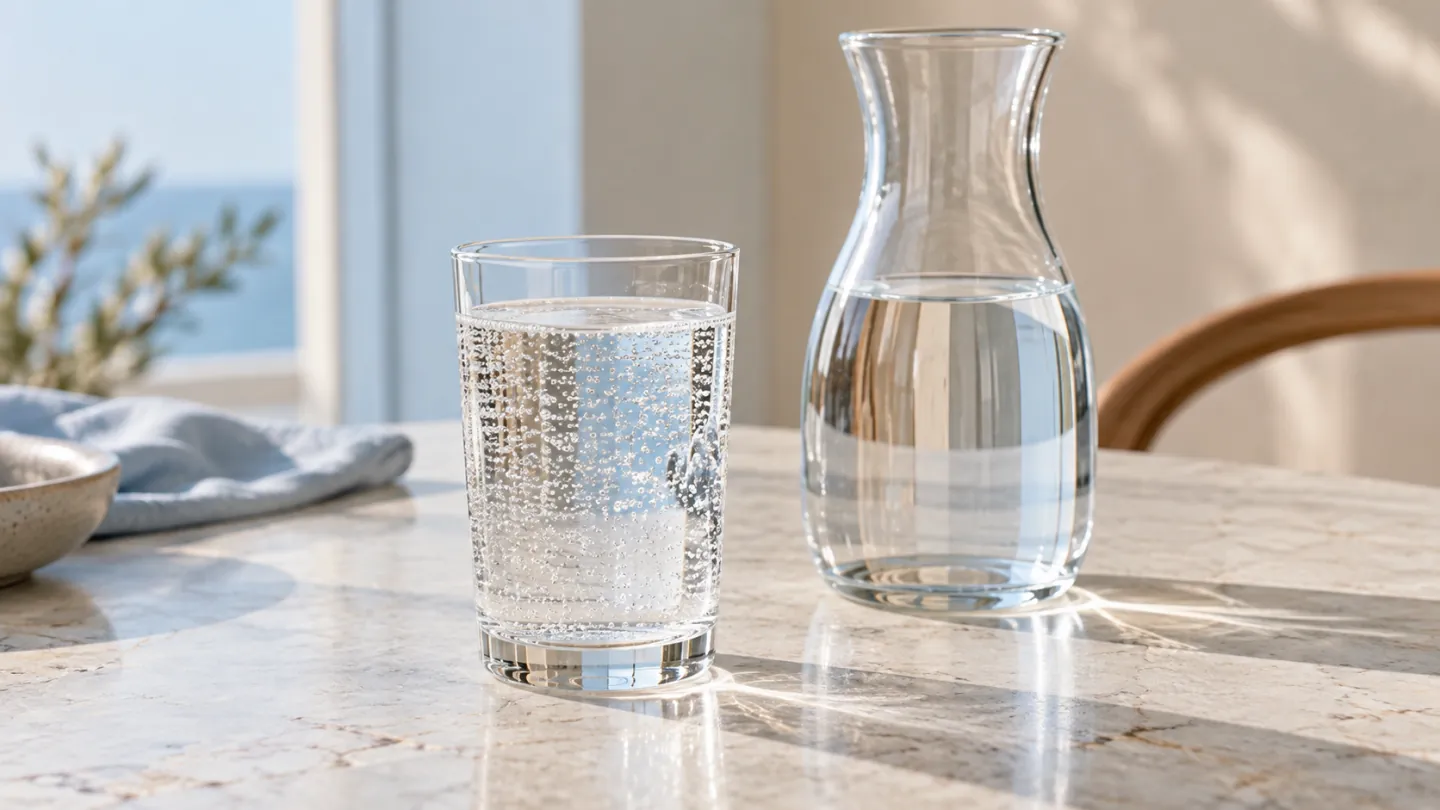
Sparkling water often enters the fridge as a sensible swap. You want something more interesting than still water, perhaps with dinner or during a long afternoon, and a can without sugar seems straightforward. Then a headline suggests that the bubbles might be damaging your teeth, leaving you unsure whether the change helped at all.
The category deserves a more careful look than either “completely harmless” or “just as bad as pop.” Plain sparkling water, a citrus-flavoured drink with added acids, tonic water and a sweetened sparkling beverage are different products. Their labels and your drinking pattern matter more than the fact that each one fizzes.
For questions about sparkling water and teeth in Winnipeg, start with what is actually in the glass. This guide explains the relevant distinctions, how to keep the risk in perspective and what to discuss if your dentist has already identified tooth wear or sensitivity.
Plain carbonation is not the whole story
Carbon dioxide dissolved in water produces a mildly acidic drink. That does not automatically make plain sparkling water equivalent to a sugary soft drink. Acidity, mineral content, added ingredients and exposure patterns all affect the comparison.
The ADA’s patient information on sparkling water describes plain sparkling water as generally acceptable for teeth while drawing attention to flavourings and added sugar. It also encourages keeping fluoridated water in the routine.
This is a useful starting point rather than permission to ignore every label. A beverage marketed as sparkling water may contain more than water and carbonation. The product you buy should be evaluated on its actual ingredients, not on how similar its can looks to another brand.
If you recently replaced sweetened pop with plain sparkling water, there is no need to assume that you made a pointless change. Keep the distinction clear and consider whether any further adjustment is relevant to your own dental findings.
Compare like with like at the shelf
Read the ingredient list and nutrition information. Look for added sugars, fruit juice and acids such as citric acid. A flavour name alone does not tell you the complete formulation, and a zero-sugar claim answers only the sugar question.
| Drink type | What to check | Useful question |
|---|---|---|
| Plain sparkling water | Water, carbonation and any listed minerals | Is this genuinely unflavoured and unsweetened? |
| Flavoured sparkling water | Added acids, juice, flavourings and sweeteners | Does the formulation differ from the plain version? |
| Tonic or sparkling soft drink | Sugar, sweeteners and other ingredients | Am I comparing a soft drink with plain water? |
| Home-carbonated water | The ingredients added after carbonation | What changes when I add syrup, juice or citrus? |
The table is a reading guide, not a ranking of every available product. Formulations can change, and two flavours in the same range may differ. If you are unsure about a drink you use frequently, photograph the full label rather than trying to remember a long ingredient list at your next appointment.
Sugar and erosion are different questions
Tooth decay involves acids produced by plaque bacteria. Erosion involves acids contacting the tooth surface from other sources, including certain foods, drinks or stomach acid. A product can contain no sugar and still raise an acid-exposure question.
The Australian Dental Association’s erosion guidance explains that acidic exposures and frequent sipping can contribute to wear. This does not mean every sugar-free beverage causes the same amount of wear or that one drink explains all tooth changes.
For a practical comparison, ask two separate questions: does the drink supply sugar, and does it contain added acids? Then consider how often you drink it. That approach is more useful than treating one front-of-package statement as a complete dental assessment.
If your dentist has mentioned erosion, bring the drinks you actually use into the discussion. Include lemon water, sports beverages, juice and supplements dissolved in water. The goal is to understand the overall pattern rather than single out the most recently purchased product.
Why an internet pH chart is incomplete
A low pH indicates acidity, but a single number does not describe every feature relevant to tooth wear. The drink’s composition, the amount of acid that needs neutralizing and conditions in the mouth also matter. A chart can therefore be informative without being a complete ranking of risk.
The UK prevention toolkit’s chapter on tooth wear discusses these factors and distinguishes unflavoured carbonated mineral water from other acidic beverages. It also describes uncertainty around some commonly suggested protective strategies.
Be cautious about drawing personal conclusions from a demonstration in which a tooth sits in a drink for a long period. That setup is not the same as drinking a serving with a meal while saliva is present. Laboratory findings can help investigate mechanisms without predicting exactly what will happen to your teeth.
The most relevant evidence for your situation includes the examination: whether wear is present, where it occurs and whether it is progressing. A dramatic video cannot supply those answers.
The all-day bottle deserves attention
Consider two routines. In one, a person has a plain sparkling water with dinner. In another, a person refills a bottle with an acidic flavoured drink throughout the day and swishes each mouthful before swallowing. The exposure pattern is different even if both people describe themselves as sparkling-water drinkers.
When a beverage contains added acids, keeping it to a defined eating occasion is a practical way to reduce repeated contact. Avoid holding or swishing the drink around the mouth. Use plain still water as the easy default between meals.
For a Winnipeg office or home workspace, a small organizational change may be enough. Put the still-water bottle within reach and leave the flavoured cans in the kitchen. You can still choose one deliberately without it becoming the automatic answer to every pause in the day.
If the bubbles themselves are what you enjoy, try comparing your usual flavoured drink with a genuinely plain version. Taste preferences vary, so choose a change you can maintain rather than buying a case of something you will never finish.
Winnipeg tap water has a separate benefit
Local context matters here. The City of Winnipeg’s fluoride information states that fluoride is added to the municipal supply to help prevent tooth decay. That makes tap water relevant to the dental discussion for people using the city supply.
Do not assume that every bottled or sparkling product contains the same fluoride level. The source and processing may differ. If you rely almost entirely on bottled drinks, tell your dentist so your overall fluoride exposure can be considered alongside toothpaste and other preventive measures.
This is not a reason to buy supplements on your own. Additional fluoride recommendations depend on age, risk and existing exposure. People using a private well or another water supply should discuss the actual source rather than assuming Winnipeg’s municipal information applies.
For many households, keeping tap water available is also convenient and inexpensive. You can enjoy a sparkling drink while retaining a simple still-water habit through the rest of the day.
A garnish changes the drink you are discussing
Home carbonation makes it easy to control ingredients, but it also makes additions easy to overlook. A squeeze of lemon, a spoonful of syrup or a splash of juice changes the plain-water comparison. Repeatedly topping up the same citrus-filled bottle can extend that exposure.
Describe the finished drink when speaking with your dentist. “Water from a carbonator” is incomplete if every bottle also contains juice concentrate. A photograph of the ingredients you add can be useful, especially when amounts are estimated rather than measured.
You do not need to eliminate enjoyable flavours from every meal. The useful distinction is between a chosen drink at a particular time and an acidic mixture that stays beside you all day. If you have established erosion, the dental team can help prioritize the changes most relevant to your pattern.
Our article on enamel erosion explains how wear is assessed and monitored. Protecting a changing tooth surface requires more than deciding which brand of bubbles to buy.
Sensitivity should not be self-diagnosed
A cold sparkling drink can reveal sensitivity, but the trigger does not prove the cause. Exposed roots, decay, a crack, worn enamel or another problem may be involved. Switching drinks can make the symptom less noticeable while leaving the underlying issue unexplained.
Record whether one tooth reacts or several, whether pain stops promptly and whether biting is also uncomfortable. Tell the dentist about any visible chip, change in shape or recent treatment. Those details help direct the examination.
Do not repeatedly test a sore tooth with cold drinks to see whether it has improved. If symptoms persist, worsen or occur without a trigger, arrange assessment. Our sensitivity guide describes the range of questions that may be relevant.
If wear is being monitored, ask how progress will be judged. Photographs, examination findings and a clear review interval are more useful than relying on whether your teeth feel sensitive on a particular day. Some wear may progress without obvious discomfort.
Keep daily care gentle and consistent
After an acidic drink, rinsing with water is a reasonable practical step. Continue gentle brushing with fluoride toothpaste and appropriate interdental cleaning. Avoid responding to concern about acidity by scrubbing more forcefully or adding abrasive powders to your routine.
Guidance about exact brushing intervals after acid exposure is not identical across professional sources. If you have established erosion, ask your dentist how to organize brushing around your own eating and drinking pattern. Reducing repeated acid exposure is more useful than treating a timer as complete protection.
Do not expect an enamel-repair label to recreate tooth structure that has already been lost. A product recommendation should have a defined purpose, and any damaged areas may need their own monitoring or treatment discussion.
For help understanding sparkling water and teeth in Winnipeg, request a visit at Winnipeg North Dental. Bring the label, explain how you drink it and ask whether your examination shows any reason for a specific change. That turns a confusing headline into a practical decision based on your mouth.