
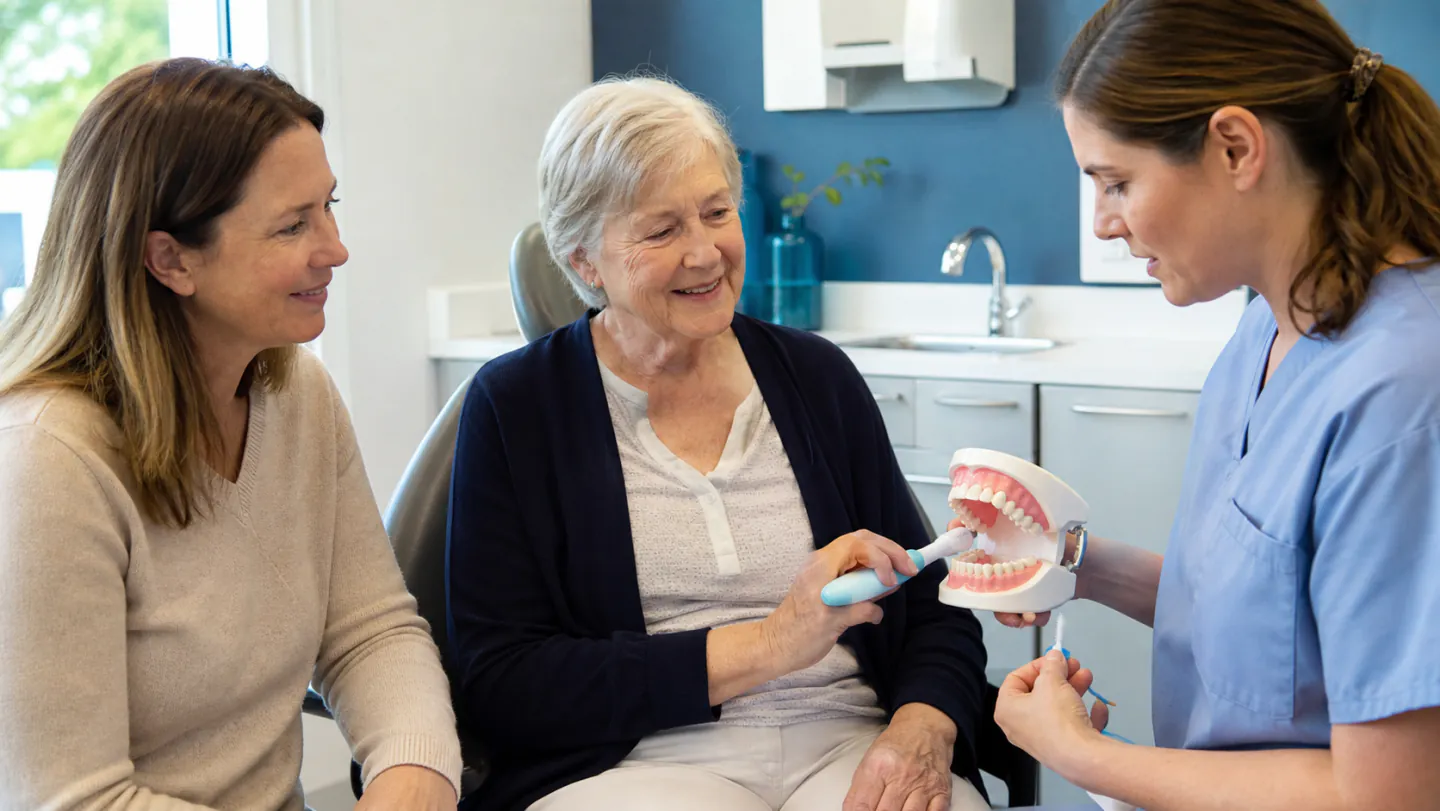
Growing older does not automatically mean losing teeth. Many adults keep natural teeth throughout life, while others use dentures, bridges, or implants to eat and speak comfortably. What often changes is the number of factors affecting the mouth: medications, dry mouth, hand movement, chronic conditions, old dental work, and the need for caregiver support.
Senior dental care should focus on more than counting cavities. Comfort, chewing, nutrition, speech, confidence, and the ability to maintain a realistic daily routine all matter. A technically perfect plan is not useful if the patient cannot clean it, tolerate the appointments, or fit it into their health priorities.
If you are looking for senior dental care in Winnipeg for yourself or someone you support, this guide explains common changes and practical ways to prepare for visits.
Aging itself does not cause cavities
Teeth do not suddenly become destined to decay at a certain birthday. Risk can increase because gums recede, roots become exposed, saliva decreases, medications change, and dental restorations have had many years of use.
An older adult may also snack more frequently, use sweet drinks to swallow pills, or have difficulty brushing because of arthritis, tremor, stroke, vision loss, or memory changes.
Prevention therefore needs to adapt. The answer may include a larger toothbrush handle, electric brush, stronger fluoride product when prescribed, caregiver help, or a different cleaning schedule—not simply telling someone to “brush better.”
Root cavities
When gums recede, the root surface becomes exposed. Root material is softer than enamel and can develop decay more quickly, especially in a dry mouth. Cavities may form near the gumline or underneath the edge of an old crown.
Early root decay can be difficult to see and may not hurt. Regular examinations and appropriate X-rays help identify changes. Fluoride, diet adjustments, saliva support, and improved plaque control may slow very early areas. A formed cavity may need a filling.
If a root cavity extends deeply below the gum, restoring it can be challenging. Preventive care is especially valuable before the area becomes large.
Dry mouth and medications
Many commonly used medicines can reduce saliva. Dry mouth may also be related to diabetes, dehydration, autoimmune disease, cancer treatment, mouth breathing, tobacco, or other factors.
The mouth may feel sticky, dentures may rub, speech and swallowing can become difficult, and cavities can develop quickly around roots and dental work. A patient may not complain of dryness even when saliva flow is low.
Bring a current medication list to every visit, including non-prescription products. Do not stop prescribed medicine without speaking to the prescriber. The dentist can identify oral effects and may coordinate with a physician or pharmacist while recommending fluoride, saliva substitutes, hydration, or other support.
Gum disease in older adults
Gum disease can progress with little pain. Bleeding, recession, bad breath, drifting teeth, and looseness may be signs that the tissues and bone supporting teeth need care.
Health conditions, smoking, dry mouth, and difficulty cleaning can affect risk and response. Treatment may involve professional cleaning below the gumline and a maintenance schedule based on the individual rather than a fixed six-month rule.
If a person uses a blood thinner, gums can bleed more visibly, but the medicine is not necessarily the cause of the inflammation. Do not stop it on your own. Improve plaque control and have repeated bleeding assessed.
Old fillings, crowns, and bridges
Restorations work under biting forces every day. Over time, fillings can wear, crowns can develop decay at their edges, and bridge-supporting teeth can become harder to clean.
Not every old filling needs replacement. The dentist looks for active decay, cracks, open edges, pain, and functional problems. Replacing a stable restoration unnecessarily removes more tooth.
Ask whether an area can be monitored, repaired, or polished instead of fully replaced. When treatment is needed, the overall value of the tooth, nerve, root, gums, and bite should guide the choice.
Denture fit changes over time
The jaw and gums change after teeth are lost. A denture that fit well several years ago may begin to move, trap food, affect speech, or create sore spots.
Adhesive may improve retention for some patients, but it should not hide a major fit problem. Persistent sores, cracks, sharp edges, and a changing bite need professional assessment. A reline, repair, adjustment, or new denture may be discussed.
Remove and clean dentures daily using instructions for their material. The Canadian Dental Association’s caregiver guidance emphasizes daily denture cleaning and regular checks of the mouth tissues. Unless specifically directed otherwise, dentures should be removed for sleep so tissues can rest.
Dental implants still need care
Implants do not develop cavities, but the gum and bone around them can become inflamed or diseased. Plaque, smoking, uncontrolled diabetes, and cleaning difficulty can increase risk.
Clean around implant crowns, bridges, and overdenture attachments every day with tools suited to the design. Report bleeding, swelling, a bad taste, movement, or difficulty cleaning.
The visible crown or denture component can also wear or loosen even when the implant in the bone remains stable. Regular visits allow the dentist to separate a repairable mechanical issue from a tissue problem.
Chewing, nutrition, and weight change
Dental pain, loose dentures, or missing teeth can lead someone to avoid meat, vegetables, nuts, and other foods that require chewing. A person may rely on soft processed food without telling family why.
Ask direct but respectful questions: Does chewing hurt? Does food collect? Is one side avoided? Has the denture become loose? Has weight changed?
Dental treatment can support chewing, but medical, swallowing, appetite, and financial factors may also be involved. Significant weight loss, choking, or swallowing difficulty should be discussed with a physician. A dietitian or speech-language professional may be part of the care team.
Oral cancer and tissue checks
Dental examinations include more than teeth. The dentist looks at the tongue, cheeks, lips, gums, palate, and throat area for changes.
Contact a dentist or physician about a sore that does not heal, unexplained bleeding, a persistent red or white patch, a lump, numbness, difficulty swallowing, or a lasting voice change. Tobacco and alcohol increase risk, but oral cancer can occur in people who use neither.
Dentures should be removed during the examination so the tissues underneath can be seen. Do not assume a sore is harmless simply because the denture has rubbed before.
Diabetes and oral health
Diabetes can affect healing and gum health, and active gum inflammation can make overall health management more complicated. Tell the dental team about diabetes, recent control, medications, and meal timing.
Morning appointments may suit some patients, while others need timing around food and medication. Do not change insulin or other medicine without medical guidance. Bring a fast-acting sugar source if your care plan calls for it.
Report frequent dry mouth, infections, slow healing, or changes in taste. Coordination with the medical team may be helpful for surgical or extensive treatment.
Blood thinners and dental treatment
Many older adults take medication that reduces clotting. This does not mean routine dental treatment or every extraction is impossible. It means the dentist needs the exact drug, dose, reason, and prescribing clinician.
Never stop a blood thinner on your own. The risk of stopping can be more serious than manageable dental bleeding. The dentist will plan local bleeding control and consult the physician when a change is being considered.
Bring an updated medication list and pharmacy contact. “A little white pill” is not enough information for safe planning.
Arthritis, tremor, and easier home care
Small toothbrush and floss handles can be difficult to control. Adaptations include:
- An electric toothbrush with a larger grip
- A handle built up with foam or a bicycle grip
- Floss holders or interdental brushes
- A water flosser when appropriate
- Sitting at a table with a mirror and good light
- A caregiver guiding or completing part of the routine
Choose the simplest tools that reach important areas safely. A hygienist can demonstrate positioning and check whether the tool is actually cleaning, not just moving around the mouth.
Supporting someone with memory loss
Routine and familiarity can reduce distress. Schedule at the person’s best time of day, use the same bathroom setup, and give one short instruction at a time. Show the toothbrush before touching the mouth and explain what you are about to do.
Stand where you can support the head and see clearly. If the person resists, pause and try later rather than forcing the mouth open. Sudden refusal may signal pain, a broken tooth, or an ill-fitting denture.
Dental consent and decision-making can become complex. Bring legal documentation and the contact information of the substitute decision-maker when applicable. The patient should still be included and respected to the greatest extent possible.
Preparing for a senior dental appointment
Bring:
- A complete medication and allergy list
- Names of physicians and pharmacy
- Dental benefit or program information
- Dentures, guards, and removable appliances
- Relevant legal or consent documents
- A short list of symptoms and priorities
- Mobility, transfer, hearing, vision, or communication needs
Tell the clinic before arrival if wheelchair access, extra transfer time, a caregiver, or shorter appointments are needed. Advance information helps the team plan rather than improvise.
Choosing realistic treatment goals
The most extensive option is not always the best. Treatment should consider comfort, health, prognosis, appointment tolerance, daily cleaning, finances, and the patient’s wishes.
A plan might focus first on pain, infection, sharp teeth, and denture fit. Preventive steps may then protect stable teeth. Cosmetic or complex reconstruction can be considered only if it adds meaningful benefit.
Ask the dentist to separate urgent, disease-control, maintenance, and optional care. For a patient with serious medical or functional limitations, a simpler restoration that is easy to clean may be safer than a complex one.
Dental coverage for seniors in Winnipeg
Some seniors have private coverage through a retirement plan or spouse. Others may qualify for the Canadian Dental Care Plan, NIHB, or another public program. Each has its own fees, co-payments, limits, and approval rules.
Bring all active plan information. Ask for estimates before planned treatment and remember that pre-treatment responses are not final guarantees. Coverage should support decision-making but should not be confused with clinical need.
If cost is a concern, ask whether care can be phased and which problems are most urgent. Preventing pain and maintaining a clean, comfortable mouth are meaningful goals even when every ideal restoration is not possible.
Senior dental care in Winnipeg
Good oral health in later life is about dignity and everyday function. Comfortable teeth or dentures can support eating, speaking, social connection, and confidence. Care works best when it adapts to health and ability rather than expecting every patient to follow the same routine.
Winnipeg North Dental provides general dentistry, restorative care, and denture services for older adults. Request an appointment and tell the team about mobility, medication, anxiety, or caregiver needs so the visit can be planned respectfully.