
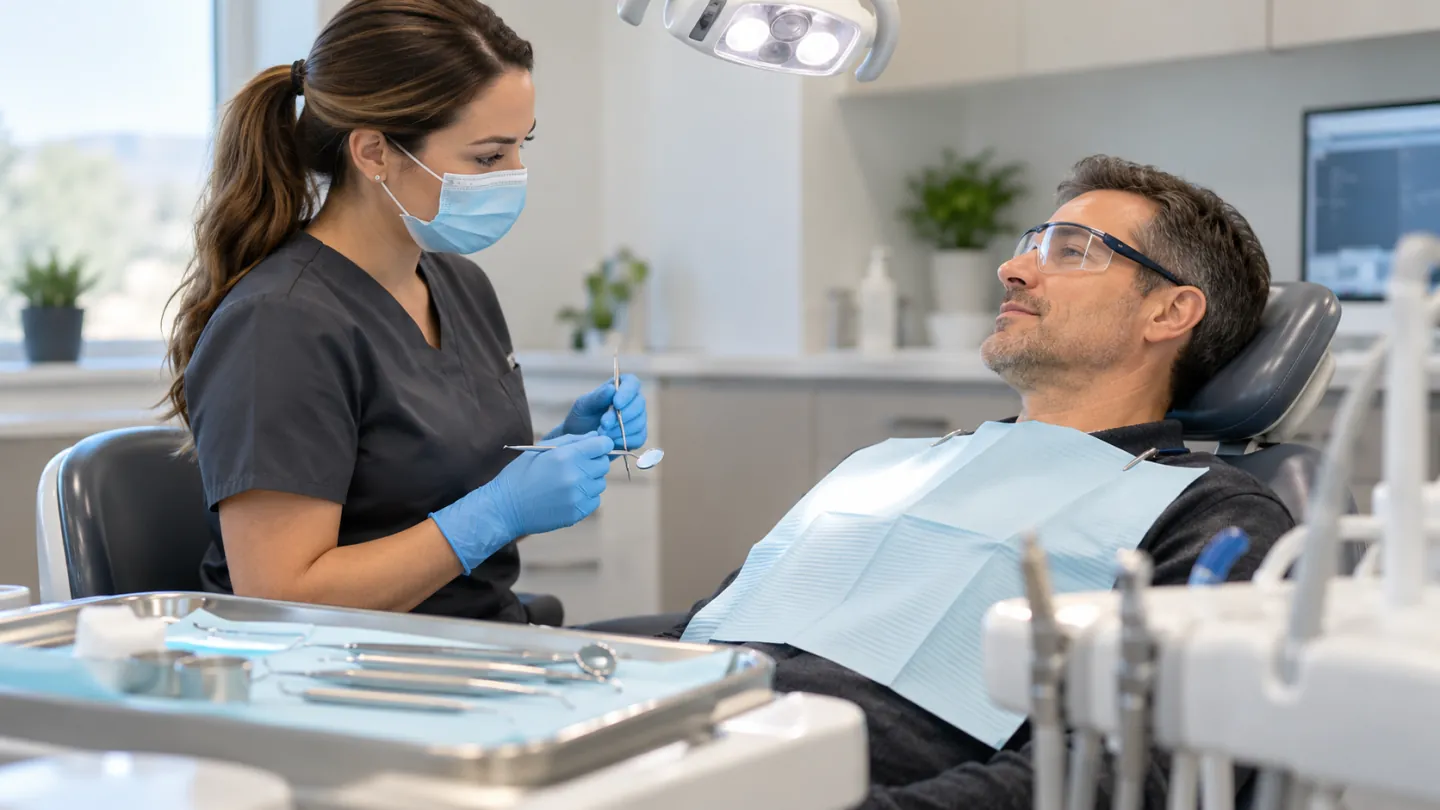
If you expected a routine cleaning and were told you need scaling and root planing, it is reasonable to want a clearer explanation. The phrase can sound technical, while “deep cleaning” can sound like an optional upgrade. The important question is what the examination found and why the proposed treatment fits those findings.
Scaling and root planing in Winnipeg is part of care for periodontal disease when deposits and inflammation below the gumline need treatment. The plan may involve local anaesthetic, more than one visit, changes to home care, and an appointment to measure the response. Understanding that sequence makes the recommendation easier to evaluate.
You should leave the discussion knowing which areas need treatment, what the team hopes to improve, and how they will check the result. Ask for the explanation again if the first conversation happened while you were distracted, numb, or concerned about the cost. These are reasonable questions about your health.
Begin with the diagnosis
Ask whether the clinician has identified gingivitis, periodontitis, or another issue. These terms describe different findings, so “your gums need attention” is not always enough detail to understand the plan. Request an explanation of the measurements and images that support the recommendation.
The National Institute of Dental and Craniofacial Research describes gum disease assessment using examination, pocket measurements, history, and X-rays when indicated. A periodontal probe measures the spaces around teeth; the clinician interprets those findings alongside bleeding, tissue support, and other information.
You do not need to learn how to diagnose a pocket yourself. Ask the team to identify the affected areas on a chart or show you a representative site. If you have had previous periodontal treatment, mention when and where. Earlier records can help the clinician understand the history instead of treating the current visit as an isolated snapshot. Our gum disease guide explains the broader terminology.
Understand what the cleaning is intended to do
Scaling and root planing addresses deposits on tooth and root surfaces, including areas below the gumline that you cannot clean adequately with ordinary brushing. The goal is to manage the periodontal problem and support healthier tissues, rather than simply polish visible staining.
The Canadian Academy of Periodontology’s nonsurgical treatment information describes removal of plaque and tartar from root surfaces along with personalized home-care instruction. It distinguishes this from surgery and notes that local anaesthetic and several appointments may be used.
Ask which areas will be treated and how the visits are divided. A plan for one region is different from a plan involving much of the mouth. If you have implants, crowns, bridges, or difficult-to-reach spaces, ask how those will be considered. The explanation should connect the treatment to your examination rather than relying only on the general idea that a deeper cleaning must be better.
Talk about comfort before the appointment starts
Tell the team about sensitivity, previous uncomfortable cleanings, jaw fatigue, or anxiety. Agree on a signal to pause and ask whether breaks are possible. Knowing how to stop briefly can make an unfamiliar appointment feel more manageable.
The American Dental Association’s scaling and root planing overview explains that local anaesthetic may be needed and treatment may take more than one visit. Ask what is planned for you, how long the appointment is expected to take, and whether any preparation is necessary.
If you have difficulty lying back, swallowing, hearing instructions, or keeping your mouth open, mention it when booking. These details can affect how the visit is organized. You do not have to wait until you are in the chair to raise them. If a previous appointment felt overwhelming, describe the specific part that was difficult so the team can discuss relevant adjustments rather than guessing.
Prepare around your ordinary day
Check whether you can eat normally beforehand and what to expect afterward. Instructions differ if sedation or another procedure is part of the visit. Do not fast or change prescribed medication without being told to do so by the appropriate clinician.
For a Winnipeg appointment between shifts or classes, allow time for travel and for any numbness to wear off before eating normally. Pack a suitable meal if you will be away from home. If your work involves speaking continuously, ask whether returning immediately is likely to be comfortable.
Bring an updated medication list and tell the team about changes in your health since the last examination. If you have diabetes, discuss how appointment timing fits your meals and medication. Our article on diabetes and dental care offers questions to bring to that conversation. The dental plan should fit your wider health needs rather than requiring you to improvise around them.
Expect an individual aftercare plan
Before leaving, ask how to clean the treated areas, what foods may be comfortable, and what symptoms should prompt a call. If your mouth is numb, follow the instructions about waiting to eat and avoiding burns or accidental biting.
The ADA’s patient guidance notes that temporary soreness, sensitivity, tenderness, and bleeding can occur after treatment. The course varies, so use the expectations your clinician gives you rather than comparing your recovery hour by hour with someone else’s.
Ask what to do if sensitivity makes brushing or eating difficult. Do not simply stop cleaning the area for a week or begin several new products at once. Contact the office about severe, increasing, or persistent symptoms, significant swelling, fever, or bleeding that concerns you. A short phone conversation can establish whether the experience fits the expected recovery or needs an examination.
Ask about changes in how the gums look
As inflammation settles, the spaces between teeth may look different. The Canadian Academy of Periodontology notes that healing gums can contract and reveal spaces, and that tooth sensitivity may occur. Ask about these possibilities before treatment if appearance is an important concern.
This does not mean that every new-looking space has the same explanation. If something seems different, have the clinician assess it rather than assuming it is damage or attempting to fill the area yourself. Photographs or measurements taken as part of care can help explain changes more clearly than memory alone.
If food catches more easily, ask which cleaning tool fits the space. A tool that suited your mouth before treatment may not be the best choice afterward. Have the team demonstrate it and watch you try it. That brief practice can reveal whether the angle, handle, or size is difficult before you buy supplies or struggle at home.
Make home care practical enough to repeat
A useful home-care plan should specify what to use, where to use it, and how to handle the difficult areas. “Clean better” is too vague if you already brush carefully but cannot reach behind a bridge or fit floss into a particular contact.
Ask for one or two priorities you can begin immediately. If hand arthritis, reduced vision, fatigue, or a busy caregiving schedule affects your routine, say so. The best tool on paper is not helpful if you cannot hold it or use it consistently. Bring the product you already own if you are unsure whether you are using it correctly.
Keep any prescribed rinse instructions separate from the brushing plan. Ask why it has been recommended, how long to use it, and whether there are side effects to watch for. Do not assume an ordinary mouthwash replaces the professional treatment or cleaning between teeth. If the routine feels unrealistic after a few days, contact the team for adjustments instead of abandoning the whole plan.
Know why the reassessment matters
The treatment result cannot be judged only by whether your teeth feel smooth when your tongue runs over them. The dental team needs to review the gums and compare the relevant findings after healing. This is how they decide whether the initial approach was sufficient or whether particular sites need more attention.
The Canadian Academy of Periodontology’s reevaluation guidance describes a review after the initial treatment phase to assess healing and plan additional care when needed. Your clinician will set the timing for your situation.
Book that visit while you know your schedule, and ask what will be measured. If you need to reschedule, explain that it is a periodontal reassessment so it is not mistaken for a routine appointment with a different purpose. Bring observations about bleeding, cleaning difficulties, sensitivity, and any changes in your health or medication since treatment began.
Plan for maintenance rather than a one-time reset
Periodontal care often continues after the initial treatment is complete. The American Academy of Periodontology explains that ongoing maintenance is commonly needed and that some patients require further treatment when nonsurgical care does not achieve adequate periodontal health.
Ask how often you should return and why that interval is recommended. Your schedule should reflect the condition of your gums and your risk factors, rather than automatically matching a friend or family member. If appointments are difficult to afford or attend, raise that early so you understand the implications and available options.
Request an estimate that distinguishes initial treatment, reassessment, and ongoing maintenance. Confirm benefits with your insurer if you have coverage. A clear financial plan can reduce the chance that you complete the first stage but miss the review because you did not realize it was part of the process.
Leave with a clear next step
Before agreeing to treatment, you should be able to explain the recommendation in your own words: what was found, which areas need care, and how the result will be checked. If any part is unclear, ask for a written summary or another conversation.
Scaling and root planing is most useful as part of a coordinated plan that includes diagnosis, comfortable treatment, realistic home care, and follow-up. If you have been advised to have a deep cleaning in Winnipeg or are concerned about bleeding gums, request an appointment for an assessment and discussion of your options. Bring any previous periodontal records and the questions you want answered so the visit can focus on your own situation.