
The day braces come off or the last active aligner is finished feels like a finish line. There are photographs, an unfamiliar smoothness to the teeth, and relief that the long sequence of appointments has paid off. Then comes a small appliance and a new set of instructions: the retainer.
Retainer care in Winnipeg is less dramatic than active orthodontic treatment, but it is part of protecting the result. The practical challenges are ordinary ones. A retainer gets wrapped in a lunch napkin, left at a relative’s home, or forgotten during exam week. A bonded wire becomes difficult to clean. A replacement is postponed because the old appliance still seems close enough.
The best routine is one that fits your actual day and includes a clear plan for problems. This guide explains what to ask your orthodontic provider, how to organize cleaning and storage, and why changes in fit deserve attention rather than home adjustments.
Your wear schedule should be specific to you
Retainers help maintain tooth positions after active treatment. The American Association of Orthodontists’ retention guidance explains that retention is a continuing commitment and that the type of retainer depends on individual circumstances. There is no universal online schedule that overrides the instructions from the clinician who treated you.
Before leaving the final active-treatment visit, ask for written wear instructions. Clarify what full-time wear means for meals, cleaning, and sports, and when any transition to nighttime wear should happen. If you have both removable and bonded retainers, make sure you understand the role of each.
If you have lost the original instructions, contact the treating office. Do not assume that a friend’s schedule applies because you had the same brand of aligners. Treatment goals, tooth movement, gum health, and the chosen appliance can differ even when the experiences look similar from the outside.
Know which appliance you have
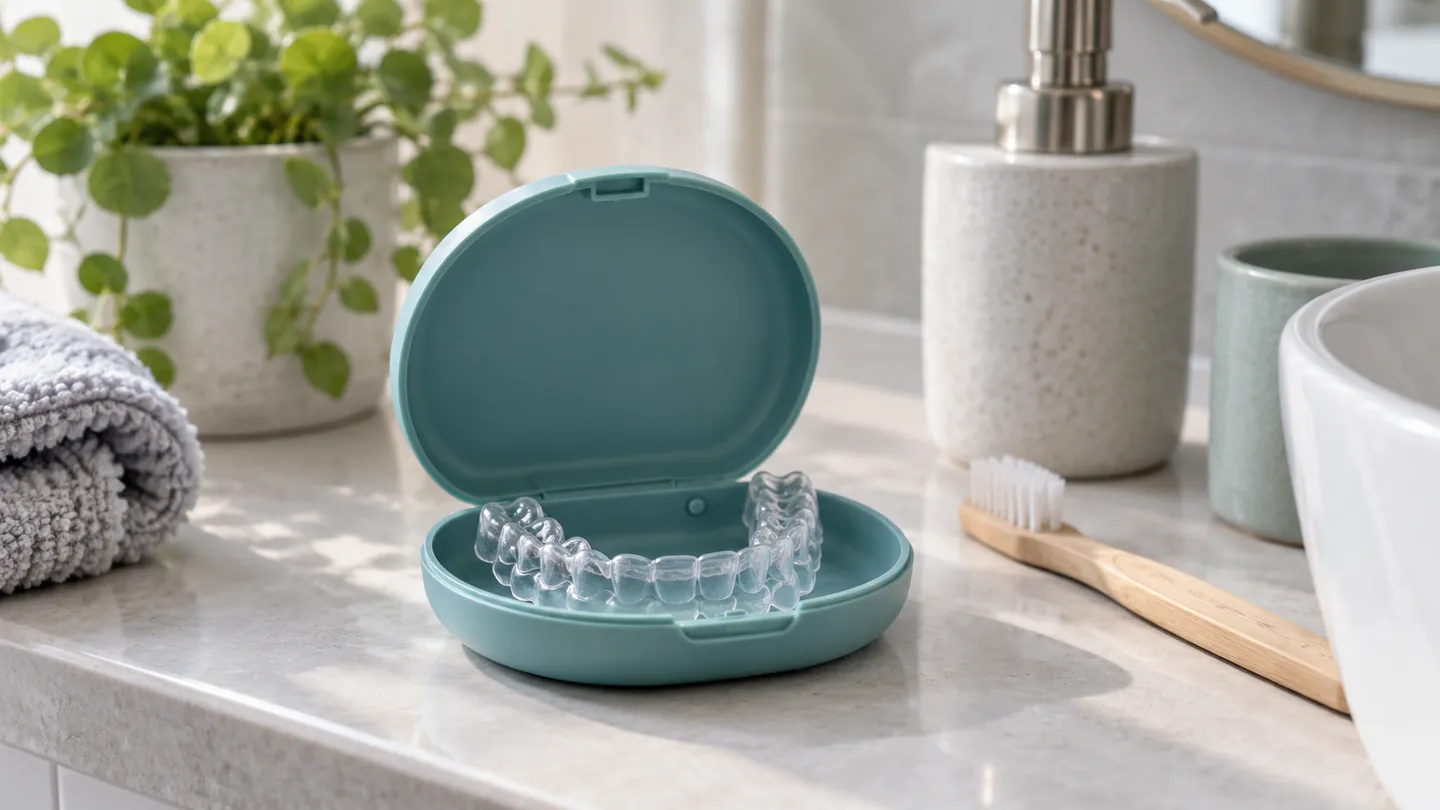
A clear removable retainer often resembles a transparent shell over the teeth. Another removable design uses acrylic and wire. A fixed retainer is bonded behind selected teeth. Each design creates different cleaning and storage questions, and some patients use more than one design together.
Ask the provider to name your appliance and show you how to handle it. Where should your fingers go when removing it? Should it be dry or in a particular solution when stored? Which cleaning products are compatible with the material? Those instructions are more useful than a generic recommendation to keep it clean.
It is also worth confirming whether an appliance is a retainer, an active aligner, or a night guard. They can look similar but serve different purposes. Do not substitute one for another without advice. If several appliances have been prescribed, ask for a coordinated schedule instead of trying to decide which one matters most.
Make cleaning part of removal
A simple cue can make a routine more reliable: whenever the retainer comes out for its daily cleaning, clean the storage case too. Set up the supplies together so you are not hunting for a brush while rushing to work or school.
The AAO’s retainer cleaning guide recommends gentle cleaning and cautions against methods that can damage an appliance, including heat and abrasive products. Follow your provider’s instructions for the specific retainer, and rinse away any approved cleaning solution before wearing it again.
A soaking tablet is not a reason to ignore visible deposits or skip the method you were taught. If the retainer remains cloudy, smells unpleasant, or has a rough area despite cleaning, bring it in. The team can determine whether it needs professional attention, a different care routine, or replacement.
Hot water is not a shortcut
People often associate hotter water with better cleaning. With a dental appliance, heat can be the wrong approach. Do not boil a retainer, put it in a dishwasher, or leave it where it can be heated excessively. A small change in shape can matter even when it is difficult to see.
For a Winnipeg family, storage habits also need to survive busy travel days. Keep the case in your bag rather than leaving it on a vehicle dashboard or loose in a sports bag. Before a weekend away, check that the case contains the appliance rather than assuming you packed it.
If heat exposure has occurred, ask the treating office what to do. Trying to soften the retainer again and reshape it over your teeth is not a safe repair method. The appliance needs to match the intended tooth positions accurately; a home experiment cannot establish that fit.
The case is part of the treatment routine
A napkin looks like a convenient temporary holder until the lunch tray is cleared. A pocket works until the retainer is crushed or sent through the laundry. Make a protective case the default destination whenever a removable appliance is not being worn.
Choose one consistent location at home and another in the bag you use most often. If you move between two households, discuss whether an extra case would reduce the chance of leaving the appliance behind. Label the case in a way that protects your privacy while making it distinguishable from everyone else’s belongings.
Pets may be interested in appliances that carry the smell of their owner. Keep the case out of reach rather than on a bedside table where it can be knocked down. This is a practical storage issue, not a reason to buy complicated equipment. A simple habit usually does more than an elaborate system you rarely use.
What if your retainer feels tight?
Describe the change to the treating office. Does the retainer seat fully? Is one side lifting? Is the pressure new, localized, or painful? Did the change follow missed wear, a new filling, an injury, or damage to the appliance? Those details are more useful than saying it feels wrong.
Do not force an appliance that will not seat, bite hard to push it into place, or bend wires yourself. Similarly, do not keep switching between old appliances in the hope that one will move the teeth back. Ask the clinician which appliance, if any, should be worn while you wait for assessment.
If the retainer has a sharp edge or causes a persistent sore, contact the office. Home trimming may change the appliance or make a replacement assessment harder. A photograph can help explain the problem when requested, but it does not always show whether the appliance fits correctly over the entire arch.
Fixed retainers need deliberate cleaning
A bonded retainer does not need to be remembered at bedtime, but it creates its own maintenance task. Ask the hygienist to show you how to clean around the wire and between the teeth without pulling on the bonding. The best aid depends on the available spaces and your ability to use it comfortably.
If floss catches in a new way, the wire feels different, or a tooth seems to be moving, arrange a check. Avoid repeatedly testing the wire with your tongue or fingers. A problem at one attachment point may not be obvious from a quick look in the mirror.
Your regular dental team should know about the retainer, and your orthodontic provider should know about relevant dental treatment. If a new filling or crown is planned, ask whether it could affect the appliance. Clear communication between appointments is easier than discovering afterward that the retainer no longer seats.
Lost or broken: have a plan before it happens
Save the treating office’s contact details and ask about its replacement process while everything is working well. Does the clinic keep a scan or model? Will a new impression be necessary? What should you do if a retainer breaks when the office is closed?
If a problem occurs, contact the provider promptly and describe it accurately. Keep broken pieces in a safe container if the office wants to inspect them. Do not glue the appliance or use a piece that has become sharp, loose, or unsafe to wear.
Replacement cost is worth discussing in advance, particularly for families budgeting for more than one child. Ask what was included in the original orthodontic fee and what is charged separately. A clear estimate prevents uncertainty from becoming the reason a necessary replacement is delayed for weeks.
Retainers during school, work, and travel
Plan around the moments when the appliance comes out. A student can keep the case beside the lunch container. A person working shifts can connect cleaning to their main sleep period instead of a conventional bedtime. Someone travelling can put the retainer supplies with their toothbrush before packing other toiletries.
If wear instructions are difficult to follow because of public speaking, music, disability, or another practical issue, explain the problem to the provider. Do not quietly invent a different schedule. There may be a manageable adjustment, but it should be discussed with the person responsible for retention.
For parents, reminders work best when they gradually become a shared routine rather than a nightly argument. Agree on where the case lives, what the child handles independently, and when an adult checks supplies. The aim is reliable care that continues when the child becomes more independent.
Regular examinations still matter
A retainer does not replace brushing, cleaning between teeth, or dental examinations. If it covers the teeth, the cleanliness of both the teeth and the appliance matters. Tell the dental team if the routine has become difficult or if you have changed products because of sensitivity or irritation.
Bring removable retainers to dental visits so the team can inspect them when relevant. If you are seeing a new dentist in Winnipeg, explain when orthodontic treatment finished and who provides retention follow-up. Do not assume that every office has the same records or that the responsibilities are automatically shared.
Our check-ups and cleanings information can help you prepare for routine care. If you are still comparing active treatment options, our Invisalign and braces guide provides background, including the importance of planning beyond the active stage.
Keeping the result manageable
Good retainer care is a collection of small, repeatable decisions: follow the prescribed wear schedule, use an appropriate cleaning method, protect the appliance when it is out, and report changes in fit. None of those steps requires a perfect lifestyle, but each benefits from a clear routine.
If you need help with oral hygiene around a retainer or are unsure whether a dental change needs attention, request an appointment at Winnipeg North Dental. For adjustments to retention or a replacement appliance, involve your treating orthodontic provider. Retainer care in Winnipeg works best when you know both what to do each day and whom to call when the routine is interrupted.