
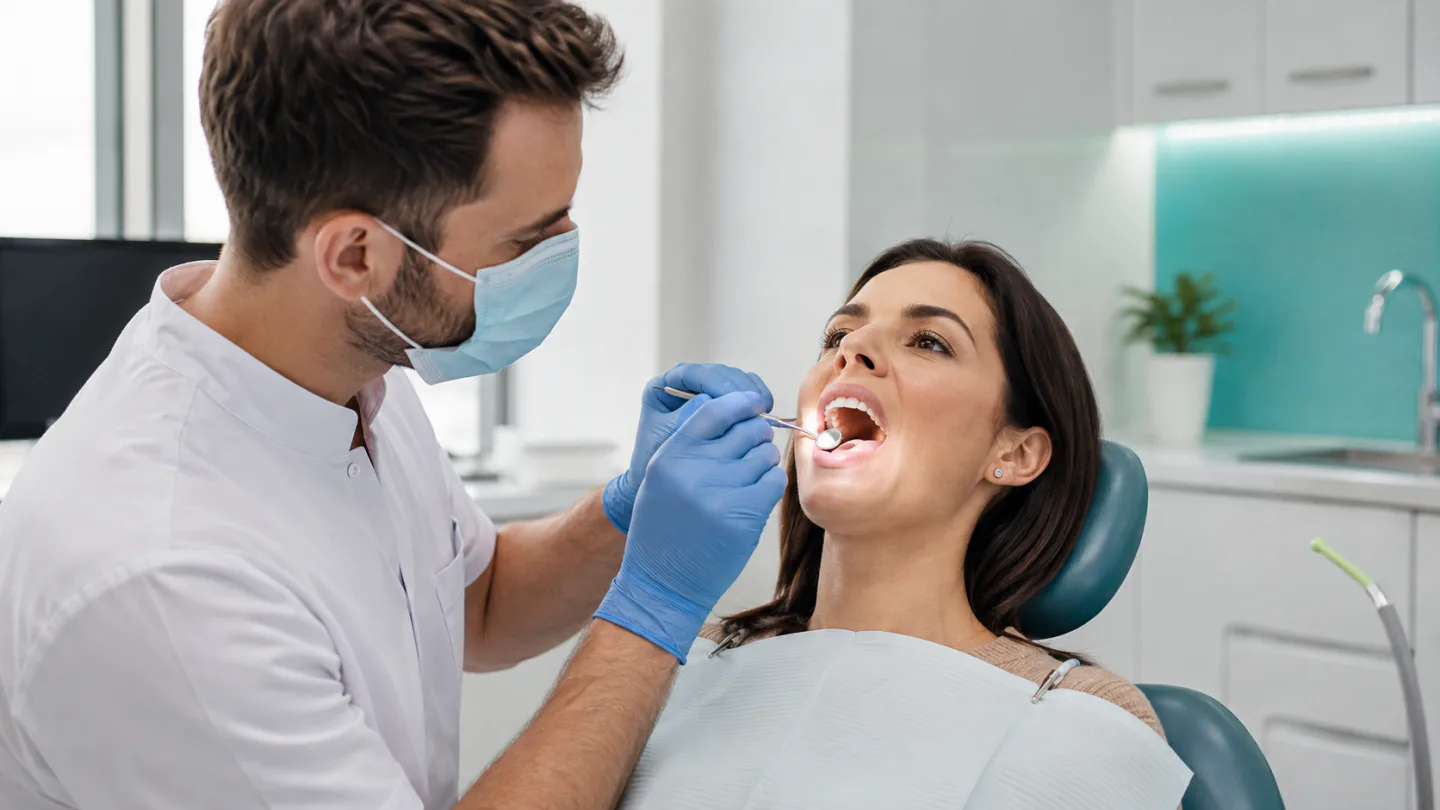
Most people expect a dental check-up to focus on cavities and gums. They may be surprised when the dentist asks them to move their tongue, checks the floor of the mouth, looks along the cheeks, or feels beneath the jaw. Those steps are part of looking after the tissues around the teeth, not just the teeth themselves.
An oral examination can identify sores, colour changes, lumps, and other findings that deserve attention. Most unusual spots in the mouth are not cancer. Bites, burns, canker sores, infections, and irritation from a rough tooth or denture are much more common. The important point is that a persistent change should not be diagnosed by appearance alone or ignored because it does not hurt.
If you are considering an oral cancer screening in Winnipeg, this guide explains what a routine check can and cannot do, which changes to report, and what happens when a dentist finds something unusual.
What is oral cancer?
Oral cancer can develop in tissues of the lips and mouth, including the tongue, gums, inner cheeks, floor of the mouth, and hard palate. Cancer may also occur farther back in the oropharynx, an area that includes the base of the tongue, tonsillar region, and soft palate. These neighbouring regions have overlapping symptoms but different patterns of risk and disease.
The most common oral cancers begin in the thin, flat squamous cells lining the mouth. A lesion may start as a persistent ulcer, patch, thickened area, or lump. Early changes can be painless and easy to overlook, particularly in areas that are difficult to see at home.
A screening examination does not confirm cancer. It identifies an abnormality that may require observation, removal of an irritant, referral, or biopsy. Only laboratory examination of tissue can make a definitive diagnosis.
Changes that should be checked
Contact a dentist or physician if a mouth change lasts about two weeks, returns repeatedly in the same place, or worries you. Arrange care sooner when symptoms are significant or worsening.
Changes worth reporting include:
- A sore or ulcer on the lip or in the mouth that does not heal
- A red, white, grey, or mixed-colour patch
- A lump, thickened area, or unexplained rough spot
- Persistent mouth or tongue pain
- Unexplained bleeding or numbness
- A tooth becoming loose without an obvious dental cause
- A denture that suddenly no longer fits
- Ongoing hoarseness, voice change, or earache
- Difficulty chewing, swallowing, speaking, or moving the tongue or jaw
- A persistent lump in the neck
These signs have many possible explanations. A cheek ulcer beside a jagged tooth may be traumatic. A white coating may be an infection. Jaw difficulty may come from a muscle or joint problem. The two-week guideline is not a reason to wait when a lesion is severe; it is a reminder not to let a seemingly minor change drift for months.
Who is at greater risk?
Anyone can develop oral or oropharyngeal cancer, but risk is not distributed evenly. Tobacco use in smoked or smokeless forms is a major risk. Alcohol also contributes, and using tobacco and alcohol together raises concern further. Risk generally increases with age and cumulative exposure.
Human papillomavirus, particularly certain high-risk types, is an important contributor to cancers in the oropharynx. HPV-related disease can occur in people who do not smoke and may present differently from cancers in the front of the mouth. Vaccination and safer sexual practices are broader health measures that can reduce HPV-related risk.
Other considerations include significant sun exposure for lip cancer, a previous oral or head-and-neck cancer, immune suppression, and certain patterns of betel quid or areca nut use. Tell your dental provider about these exposures without embarrassment. The information helps guide a thorough examination; it is not a moral judgment.
Absence of a known risk factor does not make a persistent lesion safe to ignore.
What happens during an oral cancer check?
The process is usually brief and can be included in a comprehensive or periodic dental examination. The clinician begins with questions about changes you have noticed, how long they have been present, and whether you have pain, swallowing difficulty, hoarseness, weight change, or swollen areas.
They inspect the face, lips, and visible skin, then look throughout the mouth using a bright light, mirror, and gauze. You may be asked to lift and extend your tongue so the sides and underside can be viewed. The gums, cheeks, palate, throat area, and floor of the mouth are examined. Dentures or removable appliances are taken out so the tissue beneath them can be seen.
The dentist may gently feel the tongue, floor of the mouth, cheeks, jaw, and neck. Palpation helps identify firmness, tenderness, asymmetry, or enlarged lymph nodes that may not be obvious by sight.
The examination should be systematic but is not painful. Tell the provider if any area is tender or if you have a strong gag reflex so they can adapt the sequence.
Does the dentist use a special light?
Some practices use light-based devices, dyes, or other adjuncts. These tools may be marketed as cancer detectors, but they do not replace a careful conventional examination or diagnose cancer. Normal tissue can look abnormal under an adjunct, and a concerning lesion still needs appropriate referral or biopsy regardless of how it appears under a light.
Ask what a device is intended to add, what evidence supports it, whether there is a separate fee, and what the next step would be if the result were “positive.” A clear visual and tactile examination, an accurate history, documentation, and timely follow-up remain central.
No screening method can guarantee that every cancer will be found. Symptoms arising between dental visits still deserve assessment.
Why a painless spot can matter
Pain is the body’s alarm for many conditions, but early oral cancer may not hurt. People naturally wait for a sore spot to settle, especially if it resembles a bite or canker sore. The delay becomes risky when weeks turn into months.
Location matters as well. The side and underside of the tongue and the floor of the mouth are not areas most people examine regularly. Denture wearers may assume a chronic red patch is simply part of wearing an appliance. Smokers may become accustomed to ongoing throat or mouth irritation.
The practical rule is simple: notice change, remove obvious minor irritation when safe, and make sure the tissue returns to normal. If it does not, arrange an examination.
What happens if something unusual is found?
The next step depends on appearance, history, location, and likely cause. If a new ulcer sits directly beside a sharp filling or denture edge, the dentist may correct the irritant and arrange a short follow-up to confirm healing. Photographs and measurements help determine whether the area changes.
A lesion that has no clear cause, looks concerning, feels firm, has persisted, or fails to improve may be referred to an oral medicine specialist, oral and maxillofacial surgeon, ear-nose-and-throat specialist, or another appropriate provider. Urgent referrals are used when findings warrant them.
Referral does not mean the dentist believes you definitely have cancer. It means the finding needs expertise or testing beyond observation. Attending promptly is important even if the spot becomes less noticeable.
Understanding biopsy
A biopsy removes a sample—or sometimes the entire small lesion—for examination by a pathologist. Local anesthetic is commonly used. The technique and recovery depend on the area and size.
The pathology report may identify inflammation, infection, a benign growth, a potentially precancerous change, cancer, or another condition. If further care is necessary, the result guides referral and treatment planning.
People sometimes worry that taking a biopsy will “spread” a cancer. A properly performed diagnostic biopsy is a standard step used to identify the condition accurately. Avoiding tissue diagnosis can delay the correct care.
Ask who will perform the procedure, how to prepare, when results are expected, and whom to contact if you have bleeding or pain afterward.
Mouth sores that are often not cancer
Many common conditions can look alarming. A canker sore is typically a round or oval ulcer with a pale centre and red border. A hot-food burn may leave a tender sloughing patch. Cheek biting creates a rough line near the teeth. Cold sores generally occur on or around the lips and follow a characteristic blistering pattern.
Fungal infections, immune conditions, reactions to products, medication effects, and gum or tooth infections can also alter oral tissues. The correct treatment is different for each. Applying random creams, aspirin, peroxide, or harsh mouthwash can irritate the tissue and obscure the pattern.
If you are unsure, take a clear dated photo in good light and book an examination. The photograph can show how the area started, but it cannot replace an in-person assessment.
A monthly self-check at home
A self-check helps you become familiar with your normal mouth. It is not a substitute for professional care and should not become a source of constant worry.
In bright light, look at the lips, front and sides of the gums, inner cheeks, roof of the mouth, and visible throat. Gently pull the tongue forward with clean gauze to view each side and lift it to see underneath. Notice new colour changes, ulcers, swelling, or asymmetry. Feel along the jaw and neck for a new persistent lump.
Compare both sides, but remember that normal anatomy is not perfectly symmetrical. Salivary-duct openings, veins under the tongue, taste buds, and small bony prominences can all be normal. When you find something new, do not scratch, squeeze, or repeatedly manipulate it. Note the date and seek advice if it persists or is concerning.
Tobacco, vaping, cannabis, and alcohol conversations
Give your dentist an honest picture of use, including cigarettes, cigars, pipes, chewing tobacco, vaping products, cannabis, and alcohol. Product type, frequency, duration, and combined exposure all provide context.
Quitting tobacco benefits the mouth and the rest of the body. If you are ready to reduce or stop, ask for support rather than relying on willpower alone. A dental office can reinforce the reason and direct you toward appropriate cessation resources; your physician or pharmacist can help with a broader plan.
Vaping should not be treated as harmless simply because it lacks smoke. Research continues to develop, and aerosols can irritate and dry oral tissues. Any persistent lesion deserves assessment regardless of the product you use.
Lip protection and everyday prevention
Use a lip balm with sun protection during Winnipeg summers, winter sports, and outdoor work. Reapply it as directed, especially after eating or wiping the lips. A wide-brimmed hat adds protection when practical.
Limit alcohol, avoid tobacco and areca nut, and consider HPV vaccination based on current Canadian guidance and discussion with your health provider. Maintain dental visits suited to your health and risk. These measures reduce risk but do not make screening unnecessary.
A varied diet, good oral hygiene, and well-fitting dentures support tissue health. They should not be marketed as cures or guarantees against cancer.
How often should screening happen?
There is no one interval that fits every person. Oral tissue assessment commonly forms part of a new-patient or recall dental examination. Someone with previous concerning findings, significant risk factors, or an active lesion may need a different schedule.
Do not wait for the next planned cleaning if you find a persistent sore, lump, or swallowing problem. A symptom-focused visit can be arranged sooner. Likewise, a dental check does not replace medical assessment for persistent throat symptoms, unexplained weight loss, or other concerns outside the dentist’s scope.
Booking an oral examination in Winnipeg
An oral cancer check is usually straightforward, but its value depends on careful examination and appropriate follow-up. Most findings turn out to be benign. The purpose is to avoid making that assumption before the tissue has been assessed.
Winnipeg North Dental includes soft-tissue health in appropriate dental examinations and can arrange referral when a finding needs further investigation. If you have a mouth sore, patch, lump, unexplained bleeding, or change that is not healing, request an appointment or call (204) 338-3003. Tell the team how long it has been present and whether it is changing so the visit can be prioritized appropriately.