
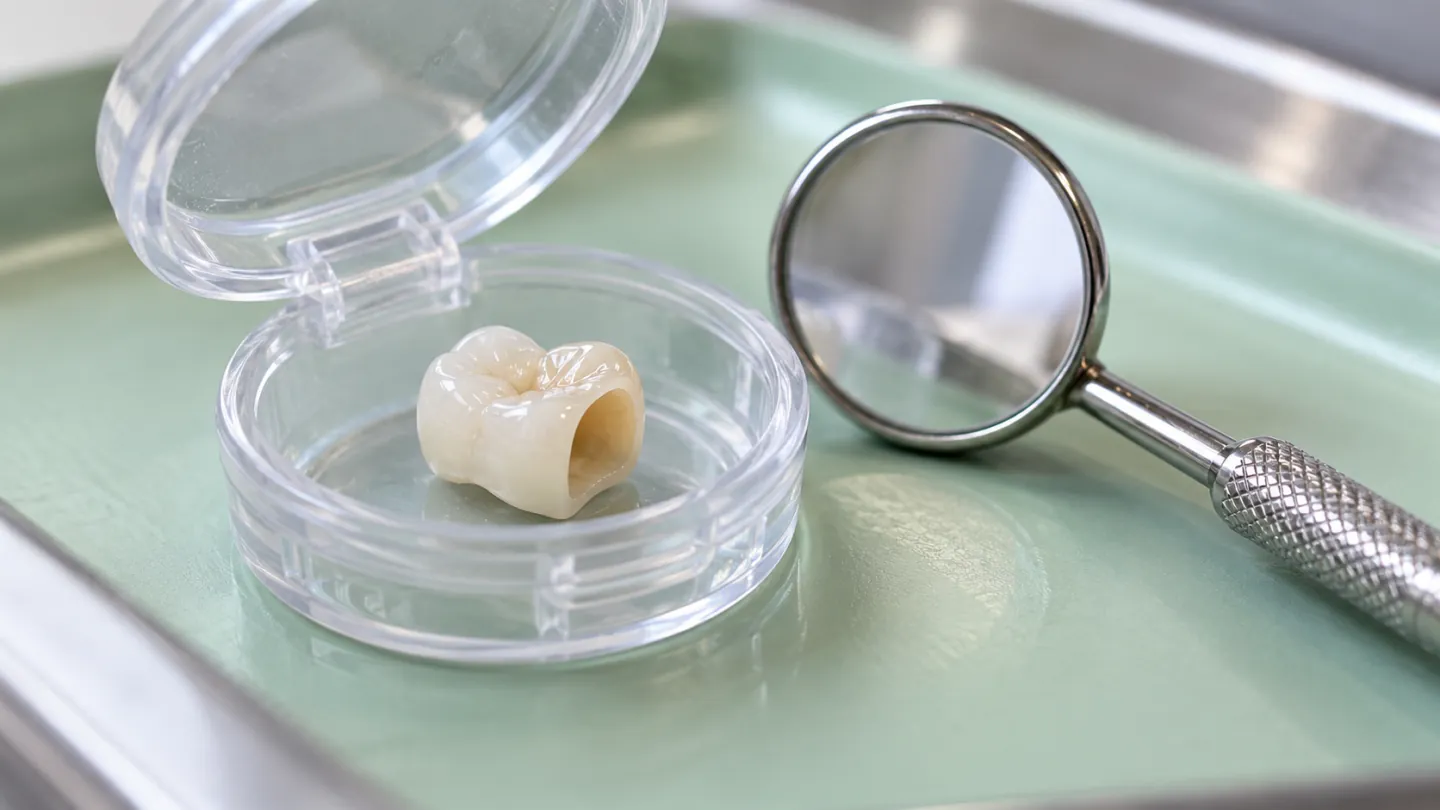
You notice something hard in your food, or your tongue suddenly finds a sharp space where the tooth felt smooth yesterday. A filling may have broken away, or a crown may have come off in one piece. Sometimes there is immediate sensitivity; sometimes the only clue is that the bite feels unfamiliar.
A lost filling or crown in Winnipeg is a reason to contact a dentist, even if the tooth is not painful. The remaining tooth and the restoration need assessment before anyone can say whether a simple repair is suitable. The urgency depends on symptoms, the amount of damage and whether there are other concerns such as swelling or injury.
The first tasks are straightforward: protect the area from further stress, save a recovered crown or fragment safely and describe the situation when calling. Avoid turning a surprising moment at the dinner table into an experiment with household glue or tools.
Identify what happened without forcing anything
A crown often looks like a tooth-shaped shell. A filling may come away as a smaller irregular piece, sometimes with tooth structure attached. You may not be able to distinguish the materials confidently, and that is fine. The dentist can examine what remains and any piece you recover.
If a loose piece is already free in your mouth, remove it safely rather than continuing to chew it. Put it in a clean container and keep it for the appointment. Do not repeatedly place a loose crown over the tooth to test its fit, especially while eating or preparing to sleep.
If part of a bridge, implant restoration or orthodontic appliance has moved, say that when you call. Those situations may involve different components and should not be treated as an ordinary lost filling. Avoid pulling on anything still attached.
You can take a photograph if it is easy and comfortable, but do not delay contacting the clinic while trying to obtain a perfect image of a back tooth.
Describe symptoms so the office can assess urgency
Tell reception whether you have pain, swelling, bleeding, a sharp edge, difficulty eating or a change in the way your teeth meet. Explain when the restoration came off and whether it followed a blow to the face or happened during normal eating.
The NHS Wales information on lost fillings and crowns recommends dental assessment and protecting the affected tooth from hard biting while care is arranged. A comfortable tooth still needs attention; lack of pain does not establish that the remaining structure is sound.
If there is severe swelling affecting breathing or swallowing, major facial trauma or uncontrolled bleeding, seek emergency medical care. If you suspect you inhaled a restoration, obtain urgent medical assessment, particularly after choking, coughing or breathing symptoms.
For other situations, call the dental office and follow its triage advice. An online booking form is useful for routine requests, but it may not be the best route when symptoms are progressing and you need timely guidance.
Keep the area clean and reduce chewing stress
Continue gentle oral hygiene rather than abandoning the whole side of your mouth. Avoid digging into the opening with pointed objects. If cleaning is painful or a sharp edge is injuring your tongue, ask the dental team how to manage the area until the appointment.
Choose foods that are comfortable and avoid biting hard or sticky items with the affected tooth. Do not test whether it is still strong by chewing ice, hard candy or crusty food. The fact that you can bite once without pain is not a useful strength test.
HealthLink BC’s information on broken teeth and appliances emphasizes that the depth and type of damage matter. What feels like a small missing piece may require a different repair from what you expect.
If pain relief is needed, ask a pharmacist or clinician what is suitable for your medicines and health history. Follow directions and do not place aspirin directly on the tooth or gums. Relief from pain should not replace assessment of the missing restoration.
A shop-bought repair kit is not the diagnosis
Temporary dental products exist, but they cannot tell you whether there is decay, a fracture or a problem with the bite. Before using one, ask a dentist whether it is suitable for your particular situation and follow the product instructions if advised.
Do not use household glue, nail products or other improvised adhesives. A crown that seems to sit in place can still be incorrectly oriented or interfere with the bite. Forcing it down may damage the tooth or make the situation more difficult to assess.
If a temporary product has already been used, tell the dentist its name and when it was applied. Keep the package if possible. That is useful information for the examination, not something to hide because you were trying to cope over a weekend.
Any temporary measure should have a follow-up plan. Feeling more comfortable does not mean the tooth has received a definitive repair. Keep the appointment and ask what still needs to be completed.
Why restorations sometimes come away
The explanation may involve the restoration, the tooth underneath, chewing forces or a combination. A restoration can loosen, a piece can fracture, or decay can develop around its margins. The last food you ate may have revealed an existing weakness rather than created the whole problem.
The ADA’s cavity information notes that decay can occur around filling margins. That is one reason a missing filling should not automatically be replaced without examining the surrounding tooth.
Avoid assuming that age alone answers the question. An old crown may still be serviceable in some circumstances, while a more recent restoration may need investigation for a specific problem. The relevant issue is what the examination shows now.
Tell the dentist if the area had been catching food, feeling loose or becoming sensitive before the restoration came away. Those earlier changes can help explain the sequence and inform the next treatment decision.
The examination looks beneath the missing piece
The dentist will assess the remaining tooth, restoration margins, bite and nearby tissues. Imaging may be recommended when it can help evaluate decay, the root or other concerns. A recovered crown can be inspected for damage, fit and material attached inside it.
If the tooth has had root canal treatment, mention that if you know. It still needs structural assessment even if temperature does not cause pain. The absence of a temperature response should not be taken as proof that the remaining tooth is undamaged.
Ask whether there is enough sound structure for the proposed repair and whether the pulp or surrounding tissues need further assessment. These questions help explain why the appointment may involve more than putting the old piece back.
If the findings are uncertain, ask what additional step could clarify them. Occasionally the full extent of damage becomes clearer only after old material is removed. The dentist should explain that possibility and obtain appropriate consent before proceeding.
Re-cementing a crown is one possible outcome
A recovered crown may sometimes be reused if it is intact, fits appropriately and the tooth underneath is suitable. In other cases, a new crown or another treatment is needed. The decision is about the condition of the whole restoration-tooth system, not simply whether the crown looks unbroken in your hand.
The Canadian Dental Association’s crown guidance explains the role of crowns in protecting damaged teeth and the steps involved in placing them. If the supporting tooth has changed, the original crown may no longer provide the intended fit or protection.
Ask why re-cementation is or is not appropriate in your case. If the crown has detached repeatedly, discuss the likely reason before accepting another identical short-term fix.
For an implant-supported restoration, the relevant issue may involve a screw, cement or another component. Contact the treating provider and avoid trying to tighten or manipulate it yourself. The approach differs from restoring a natural tooth.
A replacement filling may need a different design
When a filling is lost, the new restoration is not always the same size or type as the previous one. More tooth structure may have fractured, or decay may need removal. The dentist should explain what has changed and why a different option is being discussed.
The Better Health Channel’s filling information describes fillings as restorations for damaged tooth structure. Material choice and suitability depend on the clinical situation, including how much tooth remains.
Ask whether a direct filling is suitable or whether a restoration that covers more of the tooth would provide a better option. If root canal treatment or extraction is mentioned, request a clear explanation of the findings leading to that recommendation.
Our fillings guide and crown guide can help you prepare questions. They cannot determine the right choice for an individual tooth without the examination.
Make the cost discussion match the treatment
A brief emergency appointment, temporary repair and final restoration may involve separate fees. Ask what is included in the immediate visit and what further treatment is expected. If a specialist assessment may be needed, include that possibility in the planning conversation.
For insurance, clarify whether the office will submit an estimate and what information the plan may require. A replacement-frequency rule or benefit limit can affect reimbursement, but it does not establish which repair is clinically appropriate.
If cost affects your decision, explain that openly. Ask about suitable options, expected maintenance and the implications of delaying definitive treatment. A temporary restoration may have a role, but it should not quietly become the permanent plan without review.
Our insurance article explains common terms. Keep copies of the treatment estimate and insurer response so you can distinguish the recommended care from the amount the plan expects to reimburse.
Before leaving, know the next step
After repair, ask when normal eating can resume, how to clean the area and what sensations should prompt a call. Report a bite that feels uneven rather than hoping it will settle through repeated chewing. Follow any specific instructions for the material used.
If the repair is temporary, book the next stage and understand why it matters. Mention upcoming travel or a work schedule that could interfere with follow-up. A clear plan is easier to keep than an open-ended instruction to return sometime.
For a lost filling or crown in Winnipeg, contact Winnipeg North Dental through the telephone details on our emergency dentistry page or request an appointment for a non-urgent concern. Save the recovered piece, protect the tooth and let the examination determine the repair rather than the appearance of the missing crown alone.