
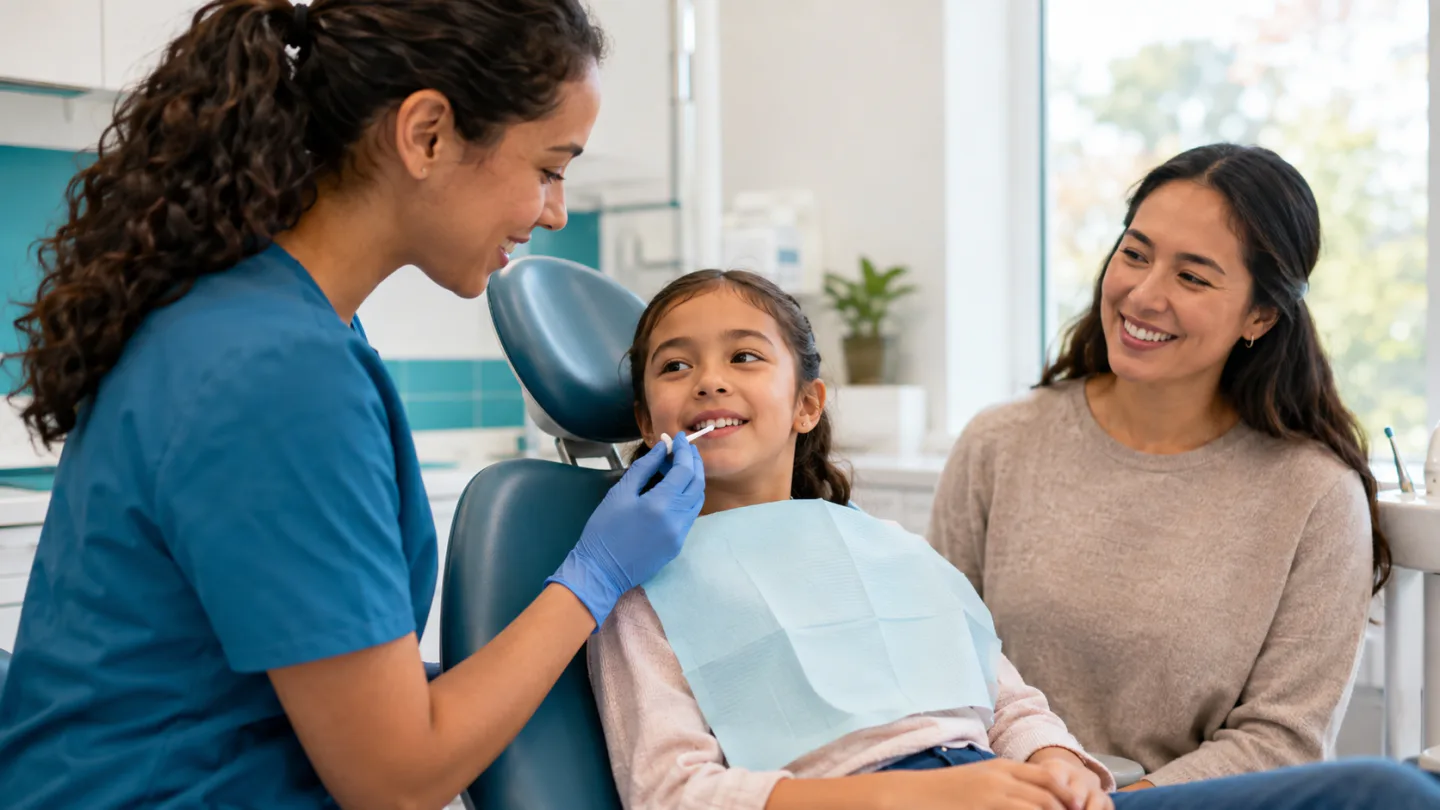
Brushing and flossing are the foundation of cavity prevention, but they do not make every tooth surface equally easy to protect. Deep grooves on new permanent molars can hold plaque even when a child brushes carefully. A person with dry mouth may develop decay despite years of good habits. Exposed roots, frequent snacking, braces, and a history of recent cavities can all raise risk.
Fluoride and dental sealants offer two different kinds of extra protection. Fluoride strengthens and repairs the mineral surface of teeth. Sealants form a thin physical barrier over pits and grooves where food and bacteria collect. Neither one replaces daily care, and neither should be applied simply because every patient receives the same package.
If you are comparing fluoride treatments or dental sealants in Winnipeg, this guide explains how they work, who may benefit, and the questions to ask about your family’s cavity-prevention plan.
How a cavity develops
Dental plaque contains bacteria that use sugars and other fermentable carbohydrates from food and drinks. These bacteria produce acids. Each acid episode pulls minerals from enamel in a process called demineralization.
Saliva helps neutralize acid and carries minerals back to the tooth. Fluoride supports that repair process and makes the rebuilt surface more resistant to future acid. A cavity develops when mineral loss repeatedly exceeds repair and the surface eventually breaks down.
That balance explains why cavity risk is not determined by brushing alone. The frequency of sugar and acid exposure, saliva flow, tooth shape, fluoride access, plaque control, medicines, health, and previous decay all matter.
What fluoride does
Fluoride is a naturally occurring mineral. In the mouth, an appropriate amount helps enamel resist acid and encourages remineralization of early weakened areas before a hole forms. It can also affect the activity of plaque bacteria.
Fluoride cannot rebuild a large cavitated tooth. Once the surface has collapsed and bacteria can shelter inside, a filling or another treatment may be needed. The opportunity is greatest at the early “white spot” stage, when the surface remains intact and risk factors can be changed.
Health Canada recognizes fluoridated toothpaste, optimally fluoridated water, professional varnish, and selected rinses as sources used to prevent tooth decay. More is not automatically better; age, swallowing ability, total exposure, and cavity risk guide safe use.
Fluoride toothpaste for adults
Most adults should brush twice daily with a fluoride toothpaste. Use a soft-bristled brush, angle it toward the gumline, and clean for about two minutes. Spit after brushing rather than rinsing vigorously with a large amount of water; leaving a thin fluoride residue gives the ingredient more time to work.
People at high risk may be prescribed a higher-fluoride toothpaste. This is a medication-strength product, not a general upgrade for everyone. Follow the prescription and keep it away from young children.
If a toothpaste causes irritation, bring the product name to your dental visit. Flavouring, detergents, or other ingredients—not fluoride alone—may be responsible, and an alternative formulation may help.
Fluoride toothpaste for young children
Young children need adult help because they may swallow toothpaste and cannot clean effectively on their own. Canadian guidance generally uses a very small smear about the size of a grain of rice for children three and under when fluoride toothpaste is recommended based on cavity risk. For children three and older, a small pea-sized amount is commonly advised, with supervision and encouragement to spit.
Advice should reflect the child’s age, ability, water source, and decay risk. Do not allow a child to eat toothpaste or apply a long stripe simply because the flavour is appealing. Store it out of reach.
Parents usually need to perform or finish brushing well into the early school years. Dexterity develops gradually; being able to tie shoes is a useful practical sign that more independent brushing may be possible, though supervision still matters.
Fluoride varnish at the dental office
Fluoride varnish is a concentrated product painted in a thin layer on tooth surfaces by a trained professional. It sets quickly in contact with saliva and remains for a period so fluoride can be released near the enamel.
Application is usually fast and does not require needles or drilling. Teeth may be gently dried, varnish is brushed on, and the patient receives instructions about eating, drinking, brushing, and when the coating can be removed. The teeth can feel slightly rough or look temporarily tinted depending on the product.
Frequency is based on risk. A patient with recent cavities, dry mouth, exposed roots, limited ability to clean, orthodontic appliances, or other risk factors may benefit more than someone with no history of decay and consistent fluoride exposure.
Who may benefit from professional fluoride?
Professional fluoride can be useful for children and adults. Age alone is not the deciding factor. Considerations include:
- Cavities or early mineral changes in the last few years
- Dry mouth from medicines, health conditions, or head-and-neck radiation
- Exposed root surfaces
- Braces or appliances that retain plaque
- Difficulty brushing due to dexterity, disability, or caregiving needs
- Frequent sugar or acid exposure
- A high-cavity-risk medical or social situation
- New permanent teeth with vulnerable surfaces
The dentist or hygienist should be able to explain your risk and how varnish adds to toothpaste, diet changes, sealants, or other care. If risk is low, routine home fluoride may be sufficient.
What are dental sealants?
A sealant is a thin resin or glass-ionomer-based coating placed in the pits and fissures of a tooth’s chewing surface. Back teeth naturally have grooves that can be narrower than a toothbrush bristle. Sealing them creates a smoother barrier that is easier to clean.
Sealants are most commonly placed on permanent molars soon after they erupt, when those teeth are new and cavity-prone. They may also be considered for premolars, selected baby teeth, or adult teeth with deep intact grooves.
A sealant does not cover the sides between teeth and cannot prevent every cavity. Flossing, fluoride, diet, and examinations still protect surfaces the sealant does not reach.
The dental sealant appointment
Sealant placement is usually comfortable and does not require freezing. The tooth is cleaned and kept dry. A conditioning gel prepares the enamel, the surface is rinsed and dried, and liquid sealant is flowed into the grooves. A curing light may be used to harden it.
Keeping the tooth dry is the technically demanding part. Saliva contamination can reduce retention, especially on a newly erupted molar partly covered by gum. In some cases, the dentist may wait, use a material more tolerant of moisture, or choose another preventive approach.
After placement, the bite is checked. The coating may feel slightly new to the tongue for a short time but should not leave the tooth striking heavily.
Can a sealant go over early decay?
Sealants work best on sound grooves or carefully selected early non-cavitated lesions. When an early lesion is completely sealed from the oral environment and monitored, the bacterial activity can be controlled. A true hole, softened structure, or more extensive decay may require a filling instead.
The distinction cannot always be made by looking at a dark line in the mirror. Dentists consider texture, visual changes, X-rays when appropriate, and the patient’s overall risk.
Ask whether the tooth is sound, has an early lesion being monitored, or needs restorative treatment. The follow-up plan should be clear because even a well-placed sealant must be checked over time.
How long do sealants last?
Sealants can protect teeth for years, but they are not permanent. Chewing wears them, and a small portion can chip or lift. During check-ups, the dentist looks for complete coverage, catches with an instrument, wear, and decay around the margins.
A partly lost sealant may be repaired or replaced if the tooth remains suitable. Its need for maintenance is not evidence that the original treatment was useless; protection during the high-risk years after eruption can still be valuable.
Grinding, tooth anatomy, material, moisture control, and chewing habits affect retention. Avoiding ice and non-food objects benefits both sealants and natural enamel.
Fluoride, sealants, or both?
The two treatments are complementary. Fluoride contacts many tooth surfaces and supports ongoing mineral repair. Sealants physically block deep grooves on selected teeth. A child with new grooved molars and a history of decay may benefit from both. An adult with medication-related dry mouth and smooth root-surface risk may benefit from fluoride but gain little from sealing already shallow chewing surfaces.
The plan should answer where this patient is developing cavities and why. Applying the same preventive procedure to everyone misses that distinction.
Winnipeg water and fluoride questions
Community water and private water sources can differ. Health Canada describes 0.7 milligrams per litre as the optimal fluoride concentration for community water. Municipal treatment information can change, and families using private wells should have water tested for safety and mineral content rather than guessing.
Bottled, filtered, and home-treatment systems vary in how they affect fluoride. If most of your drinking and cooking water comes from a non-municipal source, tell your dentist. Bring the product or filtration details if you are unsure.
Do not start fluoride supplements on your own. Total exposure and individual cavity risk should be reviewed by an oral health professional.
Is fluoride safe?
Fluoride has been studied for decades and is safe and effective for cavity prevention when used at recommended levels. The key is appropriate exposure. Swallowing excess fluoride while permanent teeth are developing can cause dental fluorosis, usually seen as faint white lines or flecks in mild cases.
Fluorosis occurs during tooth development; an adult cannot develop dental fluorosis from using fluoride toothpaste. Very high long-term systemic exposure can affect bones, but skeletal fluorosis is extremely rare in Canada under regulated conditions.
Keep products out of reach, supervise children, use the advised amount, and follow professional directions. If a child swallows a large amount of concentrated product, contact poison-control or emergency advice rather than waiting for symptoms.
What about fluoride-free toothpaste?
Fluoride-free products can freshen the mouth and help brushing remove plaque, but they do not provide the same proven anti-cavity benefit as fluoride toothpaste. Someone may choose one because of preference, irritation, or misinformation; the decision should be made with a clear understanding of cavity risk.
If you stopped fluoride because a particular paste caused ulcers or burning, ask about formulations without the suspected irritant. If fear comes from something read online, bring the claim to your dentist or physician and ask for evidence specific to normal dental use.
The goal is an informed choice, not an argument. Your history and total exposure matter more than a social-media slogan.
Food timing still matters
Fluoride and sealants cannot fully compensate for sipping sweet drinks or grazing on fermentable carbohydrates throughout the day. Each exposure can start another acid episode. Frequency often matters more than whether a food is described as natural, organic, or sticky.
Keep water as the usual drink between meals. Serve sweets with a meal rather than through the day. Be alert to sports drinks, sweetened coffee, juice, dried fruit, crackers, and gummy vitamins that repeatedly contact teeth.
After acidic food or drink, rinse with water and wait before brushing so softened enamel is not scrubbed immediately. Saliva needs time to neutralize the mouth.
Costs and coverage in Winnipeg
Fluoride-varnish and sealant fees depend on the number of teeth, product, and visit. Private plans may limit coverage by age, tooth, risk, or frequency. The Canadian Dental Care Plan may cover eligible preventive services subject to its current rules, co-payments, and authorization requirements.
Ask why the treatment is recommended and what your plan is expected to pay. Coverage is not the same as necessity: a useful procedure can be excluded, while a covered procedure may offer little benefit to a very low-risk person.
Prevention should also include the habits and follow-up that make the investment effective.
Building a cavity-prevention plan in Winnipeg
Fluoride strengthens vulnerable tooth surfaces; sealants protect selected deep grooves. Their value is greatest when they are targeted to the places and periods of actual risk.
Winnipeg North Dental provides check-ups and cleanings for children and adults and can assess whether professional fluoride, sealants, prescription toothpaste, or changes at home fit your needs. If your family has had recent cavities, uses well water, or has new permanent molars coming in, request an appointment for a personalized prevention discussion. The best plan is one you understand and can carry into everyday life.