
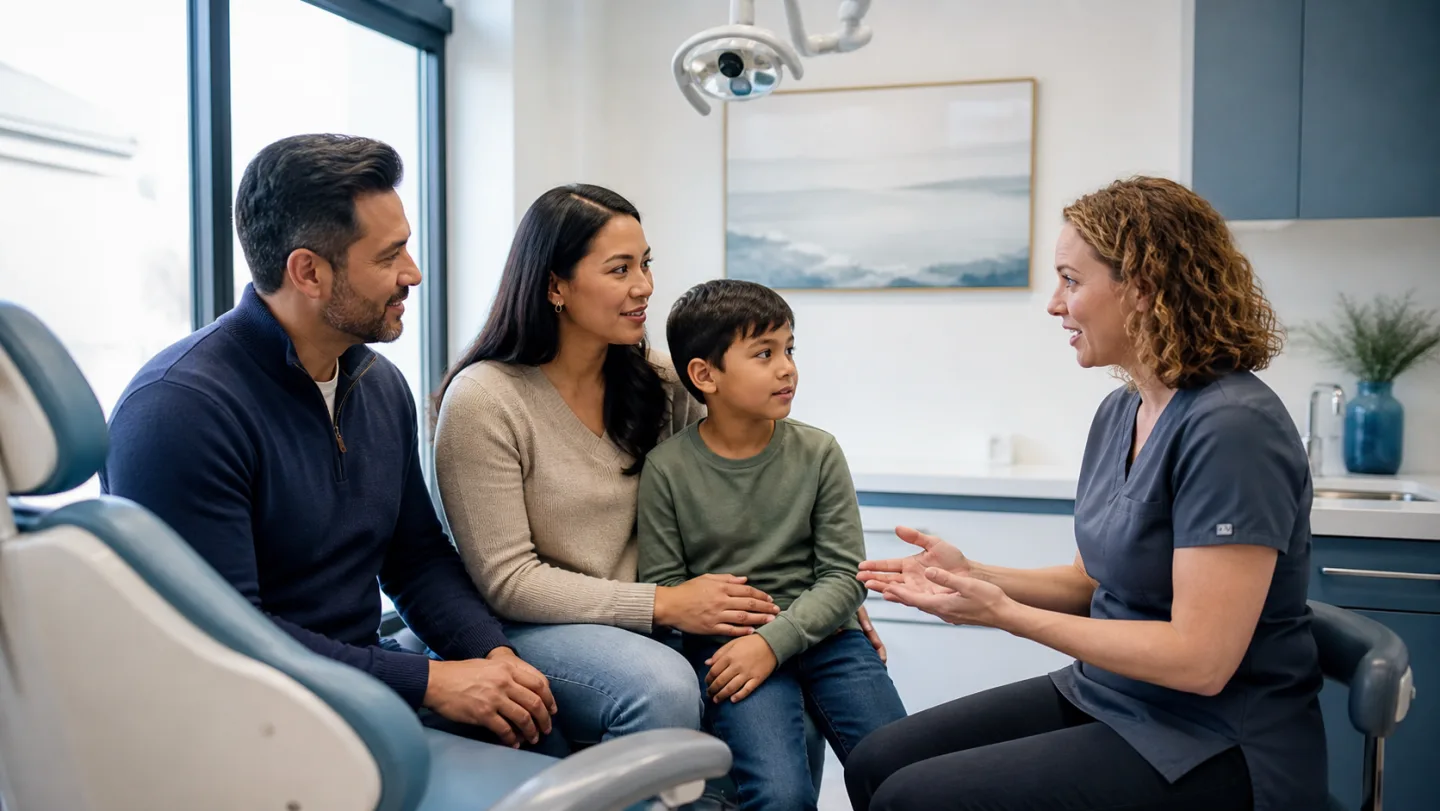
Choosing a family dentist is a small decision that becomes important over time. You may begin with a cleaning, then need help with a cracked tooth. A child may have a first visit. A parent may start asking about dentures. Someone in the family may develop an emergency on a day when the calendar is already full.
The clinic that looked convenient on a map becomes a place where people know your history, understand what makes you nervous, and can see how your oral health changes from one year to the next.
If you are searching for a family dentist in north Winnipeg, it helps to look beyond a list of services. The right fit should combine clinical care, clear communication, accessibility, and a relationship you can realistically maintain. This guide offers a practical way to compare your choices and prepare for a first appointment.
What does “family dentist” mean?
A family dental clinic provides care for people at different ages and stages of life. That may include young children learning how to sit for an examination, teenagers in orthodontic treatment, adults managing old fillings, and seniors adapting to dentures, implants, dry mouth, or changing health conditions.
Family dentistry does not mean every person receives the same schedule or treatment. It means care can be coordinated within one familiar clinic while recommendations remain individual.
A family practice may provide:
- Dental examinations and X-rays
- Professional cleanings
- Fillings and tooth-coloured restorations
- Emergency assessment
- Root canal treatment
- Tooth extractions
- Crowns, bridges, and veneers
- Gum disease treatment
- Children’s dentistry
- Dentures and implant options
- Cosmetic treatment
- Invisalign or braces
No clinic performs every procedure in every situation. A dentist may refer complex care to a specialist. What matters is whether the team can recognize what you need, explain the options, provide appropriate care, and coordinate referrals when necessary.
Start with location—but do not stop there
Convenience is a legitimate part of health care. A dental office close to home, school, work, or a regular route is easier to visit for preventive care and follow-up. In winter, distance and transportation become even more real for Winnipeg families.
When comparing locations, ask:
- Is the address easy for your household to reach?
- Can you identify the correct unit and entrance?
- Is the clinic near a route you already use?
- Will getting there remain practical for repeat visits?
- Can family appointments be coordinated when scheduling allows?
Winnipeg North Dental is located at Unit 5, 2358 Mcphillips Street in north Winnipeg. Our Location page includes the exterior, map, directions, and arrival details so new patients know what to look for.
An office can be beautiful and still be the wrong fit if every visit requires a complicated trip. Choose a location that supports consistency.
Look for care that fits more than today’s problem
Many people search for a dentist because something specific happened: a tooth hurts, an old crown broke, or a child is due for a first examination. Addressing the immediate need matters. It is also worth asking whether the clinic can support what may come next.
For example, a toothache might lead to a filling, root canal, crown, or extraction depending on the diagnosis. A missing tooth may raise questions about a bridge, denture, or implant. Bleeding gums may need more than a routine cleaning.
A clinic with a broad service range can often keep more care in one familiar setting. That does not mean you should choose the office with the longest menu. Ask how the team assesses problems, discusses alternatives, and decides when specialist involvement is appropriate.
You should hear explanations that make sense, not pressure to choose the most complex option.
Pay attention to how the team communicates
Communication is part of dental care. A procedure may be technically excellent, but the experience can still feel poor if you leave confused about why it was recommended or what happens next.
During your first contact, notice:
- Does the team listen before offering an answer?
- Are fees and coverage described honestly?
- Do they distinguish an appointment request from a confirmed time?
- Can they explain what information to bring?
- Do they give clear instructions for urgent concerns?
- Are your questions treated as reasonable?
Inside the treatment room, you should be able to ask what the dentist sees, whether a problem is urgent, what alternatives exist, and what each option involves. Informed consent is an ongoing conversation, not a signature at the bottom of a form.
Language can also affect comfort. Winnipeg North Dental has a multicultural team that offers service in English, Punjabi, Hindi, and Tagalog. For some families, being able to discuss health in a familiar language reduces stress and helps important details come forward.
What a first dental visit may include
A new-patient appointment is an opportunity to build a baseline. The exact visit depends on your concern, age, health history, and available records.
The team may review:
- Medical conditions and previous surgeries
- Current medications and allergies
- Past dental experiences
- Pain, sensitivity, or areas of concern
- Gum health and home-care routine
- Existing fillings, crowns, bridges, implants, or dentures
- Jaw comfort and bite
- Cosmetic or functional goals
- Tobacco, vaping, diet, and other risk factors
The dentist may perform a clinical examination and recommend X-rays based on your needs. A hygienist may assess the gums and determine what type of cleaning is appropriate. If several issues are found, the team can help organize them by urgency.
You may not complete every procedure at the first visit. That is normal. A careful diagnosis and clear plan are often more valuable than rushing into treatment without enough information.
What to bring to your first appointment
Arriving prepared saves time and helps the dental team care for you safely. Bring:
- Government-issued photo identification
- Current private insurance, CDCP, or NIHB information
- A complete medication and allergy list
- The name of your physician or relevant specialists
- Any recent dental X-rays or records you can access
- Details about previous dental treatment
- A list of questions or concerns
If another person is the policy holder for your insurance, bring the information needed for claim submission. If you use the Canadian Dental Care Plan, have your member details available and ask about any estimated patient portion.
For a child, share medical information, oral habits, feeding concerns, previous dental experiences, and anything that helps the child feel comfortable.
Family dentistry should still feel individual
It is convenient when several family members visit one clinic, but no one should feel like a copy of the person booked before them.
A child’s visit may focus on development, cavity risk, brushing help, fluoride, sealants, and creating a positive experience. An adult may need periodontal assessment, restoration of worn teeth, or a discussion about missing teeth. An older adult may have dry mouth caused by medications, root cavities, denture concerns, or difficulty cleaning around dental work.
Even recall schedules differ. The familiar idea of “every six months” is not the right interval for everyone. Your dentist and hygienist should recommend a schedule based on cavity risk, gum health, medical conditions, home care, and treatment history.
Continuity helps the team notice patterns. A filling that has not changed for years may be monitored. A gum measurement that worsens between visits may need action. A child’s bite can be watched as permanent teeth arrive.
How the clinic approaches dental anxiety
Dental anxiety is common, and it can come from many places: a painful past visit, embarrassment about the condition of your teeth, sensitivity to sounds, fear of needles, difficulty feeling numb, or simply not knowing what will happen.
You do not need to hide it. Tell the team when booking and again at the appointment. Useful requests may include:
- Explaining each step before it happens
- Agreeing on a signal when you need a pause
- Sitting more upright during conversation
- Scheduling extra time when possible
- Starting with an examination before treatment
- Discussing freezing and comfort concerns openly
A supportive team will not shame you for how long it has been since your last visit. The purpose of the appointment is to understand where things are now and help you move forward.
Emergencies and after-hours expectations
Ask a potential family dentist how urgent calls are handled. An emergency policy should tell you to call rather than rely on an online form when there is significant pain, swelling, trauma, or bleeding.
Same-day availability cannot always be guaranteed. The team should still assess the information and explain the soonest appropriate next step. For severe facial swelling, serious facial or jaw injury, uncontrolled bleeding, difficulty breathing, or another potentially life-threatening issue, emergency medical care may be necessary.
It is also helpful when a clinic can see an existing patient’s emergency with the benefit of previous X-rays and history. That continuity is one quiet advantage of having a dental home before a problem occurs.
Insurance, direct billing, CDCP, and NIHB
Coverage is part of planning, but it is not the same as diagnosis. A dentist recommends treatment based on oral health. Your benefit provider decides what the plan will reimburse.
Ask the clinic:
- Does it submit claims directly to my insurance provider?
- Does it accept eligible CDCP patients?
- Can it work with NIHB dental benefits?
- Will I receive an estimate for larger treatment?
- How are co-payments and non-covered balances handled?
- Does a service require preauthorization?
Direct billing reduces paperwork but does not guarantee full payment. Deductibles, annual maximums, frequency limits, alternate-benefit rules, co-payments, and fee differences may leave a patient balance.
A clear office will explain what it can estimate and what remains subject to the plan administrator’s final decision.
Questions to ask when choosing a family dentist
You do not need to conduct an interview with a clipboard, but a few practical questions reveal a lot:
- Are you accepting new patients of all ages?
- How do you handle dental emergencies?
- Which services are provided in the clinic?
- When do you refer to specialists?
- Do you offer direct insurance billing?
- Do you welcome CDCP and NIHB patients?
- Which languages does the team speak?
- How are treatment estimates explained?
- What should we bring to a first visit?
- How can we request appointments for several family members?
The answers should be specific enough to be useful. “We care about patients” is nice; “Call us directly for swelling so we can assess urgency” is actionable.
Signs that a clinic may be a good fit
A good fit often feels less dramatic than advertising suggests. It may look like:
- The team remembers what made your last visit easier
- The dentist explains an X-ray without rushing
- A hygienist adjusts home-care advice to what you can actually do
- Your child is spoken to, not only spoken about
- Costs are discussed before treatment
- Alternatives are presented without pressure
- Follow-up instructions are clear
- Questions are welcomed
Trust grows through small, consistent experiences. You should not expect perfection from any human team, but you should expect respect, transparency, and appropriate care.
Building a long-term dental home
Once you choose a clinic, make the relationship useful. Update your medical history. Mention new medications. Complete recommended follow-up. Ask when something is unclear. Call when a temporary restoration breaks instead of hoping it will last.
At home, brush regularly with fluoride toothpaste, clean between teeth, and pay attention to changes such as bleeding, swelling, sensitivity, or a persistent sore. Preventive care works best as a partnership between what happens in the clinic and what happens every day.
If your family has different needs, the clinic can help create a schedule rather than trying to fit everyone into the same pattern.
Looking for a family dentist in north Winnipeg?
Winnipeg North Dental welcomes new patients, families, dental emergencies, eligible CDCP members, and patients using NIHB benefits. Our clinic provides a broad range of general, restorative, periodontal, cosmetic, implant, denture, and orthodontic services.
Meet our multicultural dental team, explore our dental services, or request your first appointment. We are located at Unit 5, 2358 Mcphillips Street, Winnipeg.
Choosing a dentist is ultimately about finding a place you can return to—not just when something hurts, but when you want to keep small concerns small. That is what turns a nearby clinic into a dental home.