
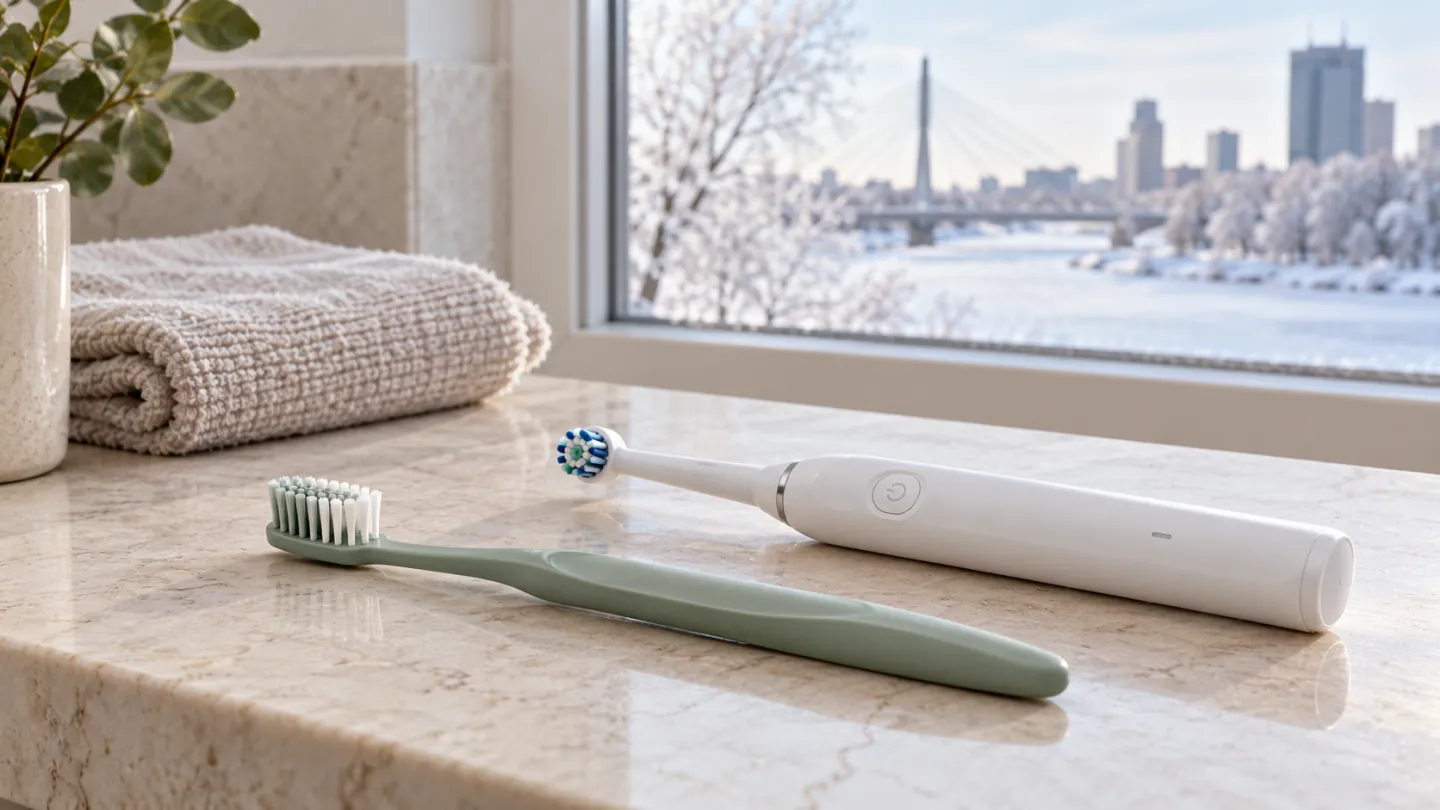
The toothbrush aisle can turn a simple replacement purchase into a surprisingly complicated decision. One package promises advanced cleaning, another has several brushing modes, and a third costs less than a replacement head for the first. Meanwhile, your real concern might be much smaller: reaching the last molar without gagging, remembering to brush long enough, or holding the handle comfortably when your fingers are stiff.
Choosing between electric and manual toothbrushes in Winnipeg starts with those practical details. The right purchase should solve a problem you actually have. A brush that fits your mouth and your routine is more useful than one chosen because its box lists the most features.
There is no need to treat this as a test of how seriously you take your health. Both types can belong in a good home-care routine. What matters is understanding their differences, using the chosen brush properly, and checking whether your technique reaches the areas that tend to get missed.
Start with the job the brush needs to do
A toothbrush helps disturb plaque on accessible tooth surfaces. It needs to reach the outside, inside and chewing surfaces, including the area where teeth meet gums. A powerful motor cannot compensate for skipping the tongue side of the lower teeth, just as a careful choice of manual bristles cannot compensate for a ten-second brushing session.
The American Dental Association’s toothbrush guidance states that both manual and powered brushes can work effectively. It recommends soft bristles, brushing twice daily for two minutes, and replacing brushes or heads approximately every three to four months, sooner when bristles are frayed.
Before shopping, identify your main obstacle. Is it time, pressure, limited movement, discomfort or a particular area you cannot reach? Write that concern down. It becomes a much better buying checklist than an advertising claim about a professional clean at home.
When a manual brush makes sense
A manual toothbrush is inexpensive, light and easy to keep in more than one location. It needs no charger, travel adapter or replacement battery. For someone who brushes comfortably and thoroughly, these are meaningful advantages. There is no automatic requirement to upgrade simply because an electric model exists.
Look beyond the colour of the handle. Consider whether the head is small enough to reach your back teeth without forcing your mouth open widely. Check whether the grip feels secure when wet. Someone with a small mouth may prefer a compact head even if the packaging appears aimed at a different age group.
A useful trial is to brush in front of a mirror and notice where movement becomes awkward. If your cheek blocks the brush near the back molars, opening wider may not help. Your hygienist can demonstrate an angle that works with your anatomy. Changing technique can sometimes solve the problem without changing the brush.
What an electric brush can add
An electric toothbrush supplies some of the brushing movement. Features such as a timer or pressure warning may help people who rush or press hard without realizing it. A larger handle may also be easier for some users to hold, although its weight and vibration will not suit everyone.
Treat each feature as a proposed solution. If you lose track of time, a timer has an obvious purpose. If you already use a separate timer reliably, that feature may be less valuable. If your main issue is gripping a narrow handle, compare the handle shape before comparing the number of cleaning modes.
An app is useful only if you will use it. Consider whether opening your phone twice daily would support your routine or make it more complicated. You can have a sensible brushing routine without recording scores, maintaining a streak or uploading information from your bathroom.
The movement changes when the brush changes
People sometimes bring their familiar vigorous scrubbing motion to a new powered brush. That can make the experience uncomfortable and defeats the purpose of letting the device supply the movement. The instructions for your particular model matter because brush heads do not all move in the same way.
The Western Australian Dental Health Services electric toothbrush guide describes guiding the brush systematically around the mouth and using a built-in timer to divide attention between sections. The practical lesson is to move deliberately instead of assuming that vibration means every surface has been covered.
Try a slow rehearsal without toothpaste first if the new movement feels unfamiliar. Work out how the head reaches the inner surfaces and back corners. Then follow the manufacturer’s cleaning instructions with toothpaste. At your next dental appointment, bring the brush or a photograph of its head and ask for a brief technique demonstration.
Soft bristles do not mean ineffective cleaning
A firm brush can feel satisfying, especially if you associate scrubbing with cleanliness elsewhere in the house. Teeth and gum margins call for a different approach. Harder pressure is not a reliable way to judge whether you have cleaned well, and a stinging gumline should not be the goal.
The Ontario Dental Association’s brushing guidance emphasizes gentle technique and warns against hard scrubbing. If your bristles spread outward quickly, bring the worn brush to your hygienist. It can be a useful clue when discussing pressure and motion.
A pressure sensor may provide feedback, but it cannot examine your gums or diagnose the cause of tenderness. If brushing repeatedly causes pain, do not simply keep reducing pressure indefinitely and hope the problem disappears. Explain where it hurts, when it started and whether there is bleeding or sensitivity outside brushing times.
Compare the cost of keeping the brush usable
The purchase price is only part of the decision. Check the cost and availability of replacement heads, how many are included, and whether local stores carry them. A discounted handle becomes less attractive if compatible heads are difficult to obtain when you need one.
For a Winnipeg household buying several brushes, write down a simple annual estimate. Include replacements for each person, any batteries, and the likely need for a travel case. Use current prices from the products you are considering rather than assuming that all powered brushes have similar ongoing costs.
Avoid stretching the life of an obviously worn head just because replacements feel expensive. It may be more practical to use a manual brush consistently than to buy an electric model whose upkeep does not fit your budget. Dental care decisions are easier to sustain when the maintenance costs are comfortable from the beginning.
Grip, sound and sensation deserve attention
Someone with hand pain may value a thick handle. Someone with a tremor may prefer a particular weight. A person sensitive to noise or vibration may find a manual brush far easier to tolerate. These are legitimate selection criteria, even when they do not appear on a comparison chart.
If you need assistance with brushing, include the person helping you in the discussion. The best position for them, your comfort and your ability to signal a pause all matter. Ask the dental team to demonstrate a setup that both of you can repeat safely at home.
Do not assume that difficulty means you need more willpower. A smaller head, different grip, quieter brush or shorter stages within a complete routine may make the task more manageable. Explain the specific barrier. “The vibration makes me stop after twenty seconds” gives the team more useful information than “I am bad at brushing.”
Keep travel and shared bathrooms practical
Your toothbrush should fit the places where you actually use it. If you regularly stay with family outside Winnipeg, work overnight or split time between homes, a simple backup brush may prevent gaps when your main handle is charging elsewhere. It need not match the model you use every day.
Rinse the brush after use and allow it to air dry. Keep individual brushes identifiable and avoid sharing them. A travel cover is useful in a bag, but putting a wet brush away permanently is different from protecting it briefly during transport.
In a crowded bathroom, assign each person a clear storage spot. For electric brushes, keep charging arrangements consistent with the manufacturer’s electrical and water-safety instructions. Small practical decisions can prevent the routine from failing because a handle is missing, a charger has moved or nobody remembers whose replacement head is whose.
A brush does not cover every part of home care
Changing toothbrushes may help, but it does not remove the need to clean between teeth. Those spaces often require floss, interdental brushes or another suitable aid. The best choice depends on the spacing, dental work and your ability to use the tool comfortably.
Our guide to flossing and water flossers explains how to compare those options. If you have a bridge, implant restoration or orthodontic appliance, ask for a demonstration around that specific area. A general video cannot show the exact access points in your mouth.
Keep the whole routine realistic. Buying an advanced brush while abandoning interdental cleaning because the routine now feels too complicated is an unhelpful trade. It is often better to build a few reliable steps, then adjust the tools when a clear difficulty appears.
Judge success at the next appointment
The most useful feedback is not whether the brush feels impressive on the first night. It is whether you can use it comfortably over time and whether the areas previously missed are cleaner. Ask your hygienist to point out one or two specific places to focus on before your next visit.
At follow-up, describe what changed. Perhaps the timer helped, but the head still feels too large behind one molar. Perhaps a manual brush works well, but the handle slips when your hand is sore. That information lets the team refine the routine instead of repeating general advice.
If you are comparing electric and manual toothbrushes in Winnipeg, bring your current brush to a check-up and cleaning or request a visit at Winnipeg North Dental. A short discussion about fit, pressure and access can make your next purchase more useful than choosing the longest feature list.