
Being told to eat soft foods sounds straightforward until you open the refrigerator. Is rice soft enough? Can soup be hot? Does a smoothie count as a meal? After a tooth extraction, the most helpful food plan is one that supports your dentist’s instructions while still being practical for your appetite, budget, and household.
For patients recovering in Winnipeg, planning ahead can save an uncomfortable grocery trip after the appointment. A few familiar foods, prepared in suitable textures, are often more useful than an elaborate recovery menu. You do not need to live on ice cream or purchase special products simply because you have had a tooth removed.
This guide focuses on organizing meals, not prescribing a universal recovery schedule. The extraction site, number of teeth removed, use of sedation, and your medical needs can change the advice. Follow the instructions from the team that performed your procedure, and ask them about anything that conflicts with your usual eating routine.
Ask about eating before you leave
Confirm when you may first drink and eat, what to do while your mouth is numb, and which restrictions apply to your procedure. If gauze is in place, ask when it should be removed and how that relates to meals. Do not try to eat while holding a loose piece of gauze in your mouth.
The Oral Health Foundation’s extraction advice cautions against hot foods and drinks while the mouth is numb. Reduced sensation can make it difficult to judge temperature or notice that you are biting your cheek. A drink that usually feels comfortably warm may not be easy to assess immediately after treatment.
Write down the instructions if you are likely to forget them. If someone is helping you at home, let them read the same sheet rather than relying on a hurried retelling. A shared understanding avoids well-intended offers of crunchy toast or piping hot soup when neither fits the plan.
Choose texture first, then think about variety
Soft food should be easy to manage without forceful chewing. A food’s name does not always tell you how it will behave: a smooth soup and a soup full of firm vegetables are quite different, as are soft scrambled eggs and an egg on hard toast.
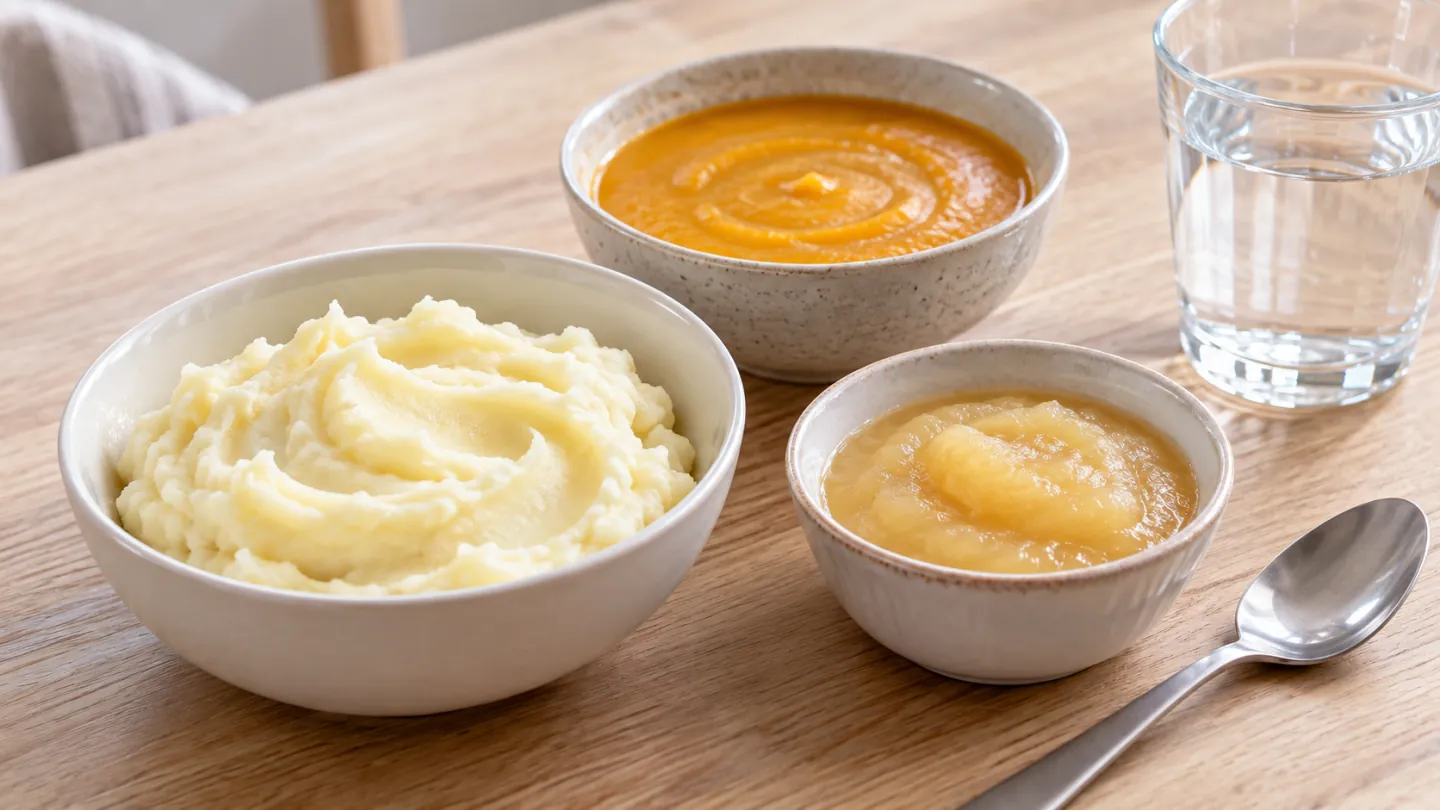
University College London Hospitals suggests soft foods, including mashed potato, scrambled eggs, pasta, and soup, during the first few days after extraction. Your own instructions may be more specific. Let foods cool to an appropriate temperature and adapt the consistency to what your clinician has advised.
For shopping, picture the finished meal rather than collecting items labelled healthy or high protein. Can you make it smooth? Does it contain sharp edges or hard pieces? Will it require repeated chewing near the wound? This approach helps you adapt foods you already enjoy, including familiar family dishes, instead of trying to follow someone else’s exact grocery list.
Build a small menu before the appointment
Choose two breakfast options, two lunches, and a few dinner components. That is usually enough variety to avoid feeling trapped by the same food at every meal. Smooth yogurt without crunchy additions, a suitably prepared porridge, soft eggs, mashed vegetables, or a smooth blended soup may be options if they fit your instructions and dietary needs.
Prepare small portions. You may prefer a modest meal when your jaw is tired, and a small container is easier to reheat and cool evenly. Label prepared food so a family member can find it without asking you to explain everything after treatment.
Keep convenience in mind. If you live alone, choose meals that require little chopping or standing at the stove. If your household usually eats something crunchy or chewy, set aside a softer portion before adding toppings or changing the texture. A separate pot of plain mashed potato is less work than making an entirely different dinner at the last minute.
Include more than dessert
Ice cream may be easy to eat, but it does not have to become the centre of every meal. Think about how you can include foods that ordinarily contribute protein, energy, and variety in a manageable form. Depending on your diet, that might mean soft eggs, smooth yogurt, blended beans, or smooth tofu prepared without hard additions.
The goal is not to design a perfect nutritional programme during recovery. It is to avoid arriving at the end of the day having had only a few spoonfuls of something sweet because every other option seemed difficult. If your usual meals are substantial, plan more than one small pudding cup as the alternative.
People with swallowing difficulties, diabetes, kidney disease, food allergies, or prescribed diets need advice that fits those conditions. A generic list of soft foods can include items unsuitable for an individual medical plan. Ask the appropriate clinician or dietitian about adjustments rather than changing that plan on the basis of a dental blog.
Look for hidden hard pieces
A meal can appear soft while still containing components that are awkward around a healing socket. Smooth yogurt with granola, soup with croutons, and a soft muffin with nuts illustrate the problem. Remove the hard additions rather than assuming the whole dish has a suitable texture.
The NHS wisdom tooth removal guidance advises avoiding hard or crunchy foods and foods such as seeds that may get stuck in the wound. That page addresses wisdom teeth specifically, so follow your dentist’s advice for your own extraction.
When ordering takeaway, read beyond the dish name. A blended soup may arrive topped with toasted seeds, and a soft dessert may include a biscuit base. Ask for additions separately or choose a simpler dish. You do not need a restaurant to understand your full dental history; a clear request for a smooth texture without crunchy toppings is usually easier to communicate.
Make drinking uncomplicated
Have water available in a cup that is easy to lift and use. Follow your clinician’s instructions about straws, rinsing, alcohol, and the timing of drinks. If you are considering a smoothie, ask whether its consistency and ingredients fit the instructions, and use the drinking method your team recommends.
Do not turn a drink into a way of testing the wound. Swishing forcefully to clear a sensation, creating suction at the socket, or repeatedly checking the area with your tongue adds unnecessary manipulation. If something feels caught, use the aftercare method you were given or call the office for advice.
For someone who normally drinks coffee during a Winnipeg commute, the change can be as much about habit as thirst. Prepare an alternative routine for the first trip home. Keep your aftercare sheet handy rather than relying on the temperature or cup style you usually prefer. If medicines have been prescribed, check any food or drink instructions on the label with the pharmacist.
Match meals to your household schedule
Recovery meals become harder when everyone else is eating at a different time or you are responsible for feeding children. Before the appointment, identify who will shop, prepare dinner, and handle the cleanup. Even one ready portion can make the evening less demanding.
If you return to work while still choosing softer textures, pack food you can manage at the workplace. Check whether you have a refrigerator, microwave, spoon, and enough time to eat slowly. A container of appropriate food is only helpful if you can actually store and eat it during your shift.
Budget planning can be simple. Start with foods already in your kitchen that can be cooked softer or blended appropriately. Buy small quantities of anything unfamiliar. There is little benefit in purchasing a week’s supply of a recovery drink that you dislike or cannot tolerate. If cost or food access is a problem, tell the care team so their advice takes that reality into account.
Return to firmer foods according to your recovery
There is no single calendar day when every patient should test a crusty roll. Ask the treating clinician how to increase texture and whether the location or complexity of your extraction changes the plan. Comfort matters, but so does protecting a wound that is still healing.
When you do resume more varied foods, avoid making the first meal a challenge. Choose something manageable, take small bites, and stop if it produces pain or disturbs the area. If the only way you can eat is by avoiding nearly everything, ask for advice instead of continuing a highly restricted diet without review.
If multiple teeth were removed or chewing on the other side is not possible, mention that explicitly. Standard advice to use the opposite side may not fit your mouth. Our broader tooth extraction guide explains questions to discuss before treatment, including how the procedure may affect the first part of recovery.
Know when food problems need a phone call
Contact the treating office if pain is worsening, you cannot drink adequately, or you are unsure how to clean the area without disturbing it. Increasing swelling, fever, persistent significant bleeding, or a new unpleasant taste with worsening pain also deserves prompt assessment. Trouble breathing or swallowing requires urgent emergency medical care.
Do not assume that every uncomfortable meal means you caused damage. Equally, do not keep pushing through severe pain because you were told some discomfort is possible. Give the team a simple account of what you tried, when symptoms started, and whether you can manage fluids.
The best meal plan is flexible enough to fit your household and specific enough that you are not making every decision while sore. Prepare a few suitable foods, keep the aftercare instructions visible, and ask for help when recovery changes course. If you are planning an extraction in Winnipeg and want to discuss preparation, request an appointment. If you already had the procedure, contact your treating team directly about new or worsening symptoms.