
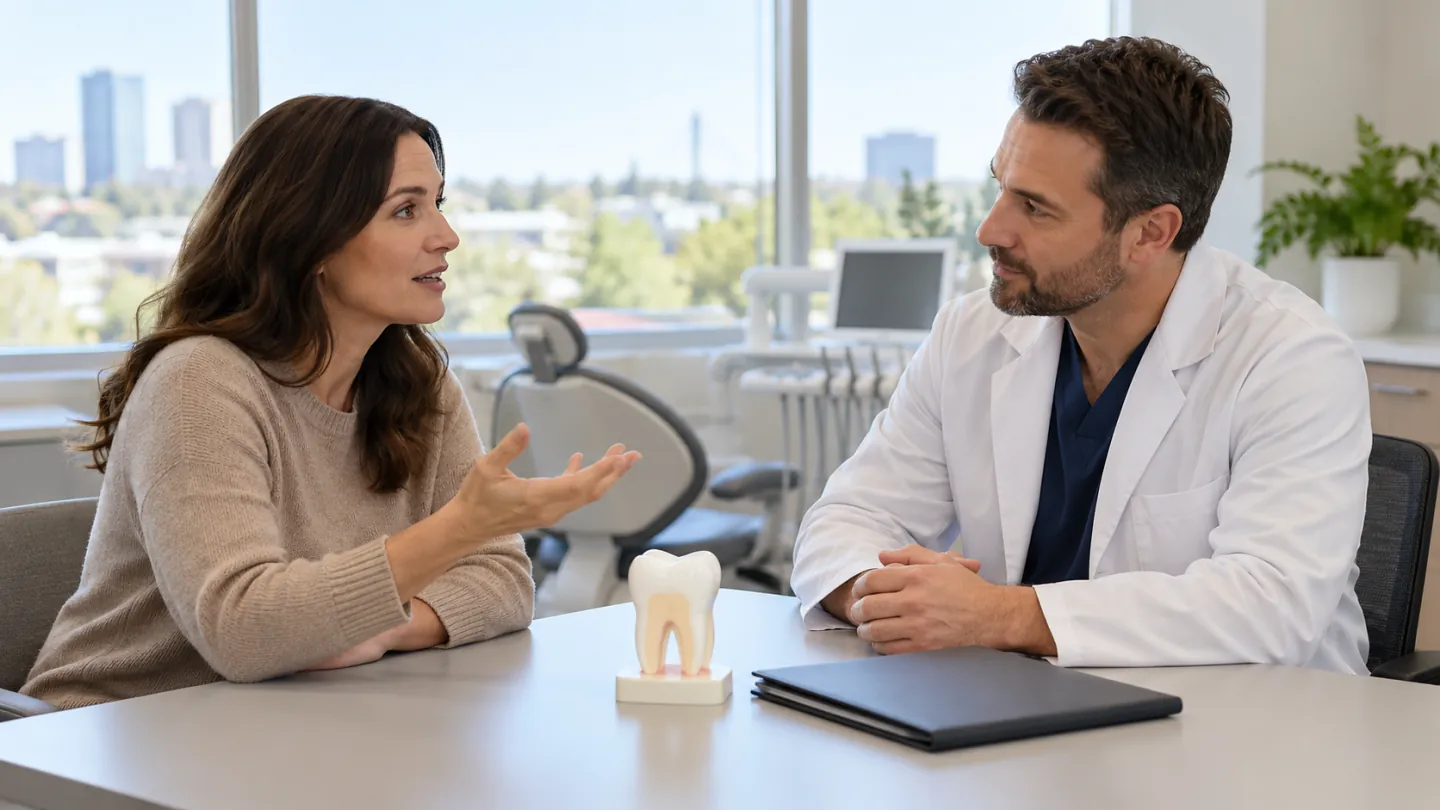
A recommendation for a crown, extraction, implant, or several restorations can leave you with questions after the appointment is over. You may understand the general idea but remain unsure about timing, alternatives, or why one option was recommended. A second opinion can help you examine those questions more carefully.
Getting a dental second opinion in Winnipeg does not have to begin with a disagreement. You may trust your dentist and still want more information before a significant decision. The most useful consultation focuses on the clinical findings, the reasoning behind the options, and what matters to you.
Preparation makes a difference. Bring the relevant records, explain the question you want answered, and ask how urgent the situation is. A second opinion should leave you better able to make a decision, rather than simply holding two estimates with different totals and no clear explanation of why they differ.
Identify the question you want answered
Start with the part of the recommendation that remains unclear. Are you unsure whether a tooth can be saved, why a crown is preferred to a filling, whether gum treatment should happen first, or whether a procedure can safely wait? Those are more focused questions than asking whether an entire treatment plan is good or bad.
Write down the original recommendation as accurately as you can. Include the tooth or area involved, the proposed procedure, and any explanation of urgency. If you do not know the tooth number, use a plain description and ask the first office for a written summary.
The Canadian Dental Association encourages patients to ask questions about recommended treatment, alternatives, cost, and timing, and notes that another opinion can help when uncertainty remains. You can return to the original dentist with questions first; a clearer explanation may resolve the issue or help you define what you want the second clinician to assess.
Check whether anything needs attention now
Ask the original clinician how long it is reasonable to take to consider the decision. The urgency of treating a painful infection is different from the timing of an elective cosmetic change. Do not assume that all recommended care can be postponed while you collect opinions.
If you have increasing pain, swelling, fever, or a rapidly changing problem, seek prompt advice. Trouble breathing or swallowing, or rapidly spreading facial or neck swelling, requires urgent medical care. A second-opinion appointment booked weeks away is not a plan for managing an acute problem today.
If temporary treatment has been placed, ask how to care for it and when it needs review. Explain that you are seeking another opinion so the interim plan is clear. Our temporary crown care guide illustrates why a temporary stage has its own instructions and follow-up needs, even when the final treatment decision is still being discussed.
Choose the kind of consultation you need
When contacting another office, say that you are seeking a second opinion and describe the issue. Ask whether the clinician assesses that type of concern and whether a specialist consultation may be more appropriate. A broad treatment-plan review differs from a focused question about a root canal, advanced gum disease, or a complex surgical procedure.
Confirm what the appointment includes. Will it involve a clinical examination, review of existing images, additional records if needed, and a written recommendation? Ask about the consultation fee before booking and whether an estimate for further diagnostic work can be provided.
For a Winnipeg appointment, consider travel and follow-up as well as the first visit. If you would need several trips or a support person, mention that early. The purpose is to arrange a consultation capable of answering your question, rather than choose an office solely because its first available time is convenient.
Arrange relevant records before the visit
Ask the new office which records it needs and how the original office should send them securely. These may include X-rays, photographs, examination notes, gum measurements, and the proposed treatment plan. Follow the offices’ authorization process and allow time for the transfer.
Keep your own copy of the recommendation and estimate if available. Bring a medication list, medical history updates, and the dates of recent treatment. If symptoms changed after the original examination, note that too; the second clinician may be looking at a situation that is no longer identical.
Avoid sending sensitive records through an informal channel without checking the office’s process. Also avoid assuming that attaching one screenshot of an X-ray provides everything needed. Image quality, viewing tools, clinical findings, and history all contribute to interpretation. Confirm receipt before the appointment so the consultation does not begin with a search for missing information.
Ask how existing images will be used
Tell the second dentist when images were taken and arrange access where possible. Health Canada’s dental X-ray guidance recommends considering previous X-ray information rather than automatically taking new images when a patient changes dentists, with imaging based on clinical need.
This does not mean new images are never appropriate. The available views may not answer the current question, the condition may have changed, or the images may be inadequate for diagnosis. Ask what additional information a proposed image would provide and how it affects the decision.
Our dental X-ray guide explains the purpose of different records. You should understand why a new test is recommended without having to decide its technical necessity yourself. The useful conversation is about the diagnostic question and available evidence, rather than automatically accepting or refusing all additional imaging.
Give both clinicians the same priorities
Tell the second dentist what matters to you: retaining a natural tooth when feasible, minimizing treatment visits, managing anxiety, controlling costs, or choosing an option you can maintain with limited hand movement. These preferences can affect how reasonable options are compared.
Be equally clear about constraints. If you cannot attend several appointments close together or will be away from Winnipeg, say so. If an estimate is unaffordable, discuss that directly rather than asking only for the cheapest procedure without explaining the concern.
Try not to present the consultation as a request to confirm the answer you prefer. Explain the original recommendation and ask for an independent assessment of the findings and options. A useful opinion may confirm the first plan, suggest a different approach, or explain that more information is needed. Each can help if the reasoning is clear.
Compare diagnoses before comparing procedures
If one dentist recommends a filling and another recommends a crown, first ask whether they agree about the condition of the tooth. Are they seeing the same crack, decay, existing restoration, or amount of remaining structure? A difference in diagnosis is not the same as a difference in how to manage an agreed problem.
Ask each clinician to explain what evidence supports the recommendation and what uncertainty remains. Some conditions cannot be fully assessed from a single image or visual examination. Ask whether findings during treatment could change the plan and how that would be discussed with you.
This approach is useful for decisions such as root canal treatment versus extraction. The relevant question is not which procedure is generally better, but whether the particular tooth is treatable, restorable, and suitable for the proposed long-term plan. A comparison becomes clearer when both opinions address the same clinical question.
Ask about the consequences of each option
For every reasonable option, ask what it is intended to achieve, what its main risks are, and what ongoing care it requires. Include the option of waiting or monitoring if the clinician considers that reasonable. Ask what could happen if the condition progresses before treatment.
Avoid relying on a single promised lifespan. Restorations and teeth are affected by the starting condition, home care, bite, health, and other factors. Ask what makes the outlook more or less favourable in your case and what future treatment might still be needed.
If a plan involves several stages, understand the sequence. An extraction with a possible replacement later is different from a complete replacement plan with confirmed next steps. Similarly, an implant estimate may not include every related procedure. You should be able to describe what will happen first, what depends on healing or further findings, and what completes the proposed care.
Compare estimates on the same basis
Request itemized estimates and check whether they cover the same work. Differences may involve examination, imaging, build-up material, laboratory work, sedation, temporary restorations, or follow-up. A lower total may reflect fewer included steps rather than a lower fee for the identical plan.
Ask which parts are definite and which are conditional on findings. Clarify how changes would be communicated before additional treatment. If insurance is involved, ask your insurer about coverage and limits rather than treating a preliminary estimate as a guarantee of payment.
Our dental insurance guide offers questions about benefits and estimates. Keep the financial comparison alongside the clinical one. The option that costs least today may not meet your goals, while a more extensive plan still needs a clear explanation of its benefit. You are entitled to understand what each proposed expense is for before deciding.
Resolve disagreement through explanation
When opinions differ, ask the second clinician to identify the specific point of disagreement. Is it the diagnosis, the urgency, the treatment method, or the expected outcome? Request an explanation that you can take back to the original dentist.
With your permission, communication between clinicians may clarify a missing record or a difference in interpretation. You do not have to carry a debate between offices using only your memory of technical terms. Ask for written summaries and consider a relevant specialist opinion when a complex issue remains unresolved.
Avoid deciding solely by counting how many people support each option or by searching for an online answer that resembles your tooth. The quality and relevance of the assessment matter. A useful consultation should explain its limits as well as its recommendation, so you can see what is known and what remains uncertain.
Finish with a clear responsibility for the next step
Once you decide, confirm which provider will deliver care, who will monitor any untreated area, and what happens if symptoms change before the appointment. If you return to the original dentist, share the second opinion and any new records through the appropriate process.
If you are still considering the options, agree on a review date rather than leaving the plan open indefinitely. Keep temporary-treatment instructions and urgent contact details available. The purpose of another opinion is to support a decision and continuity of care, not leave you between two offices with neither aware of your next step.
To request a dental second opinion in Winnipeg, contact the clinic through the booking page and describe the recommendation you want reviewed. Ask which records to arrange before attending. A focused question, a complete history, and a clear comparison can turn uncertainty into a decision you understand.