
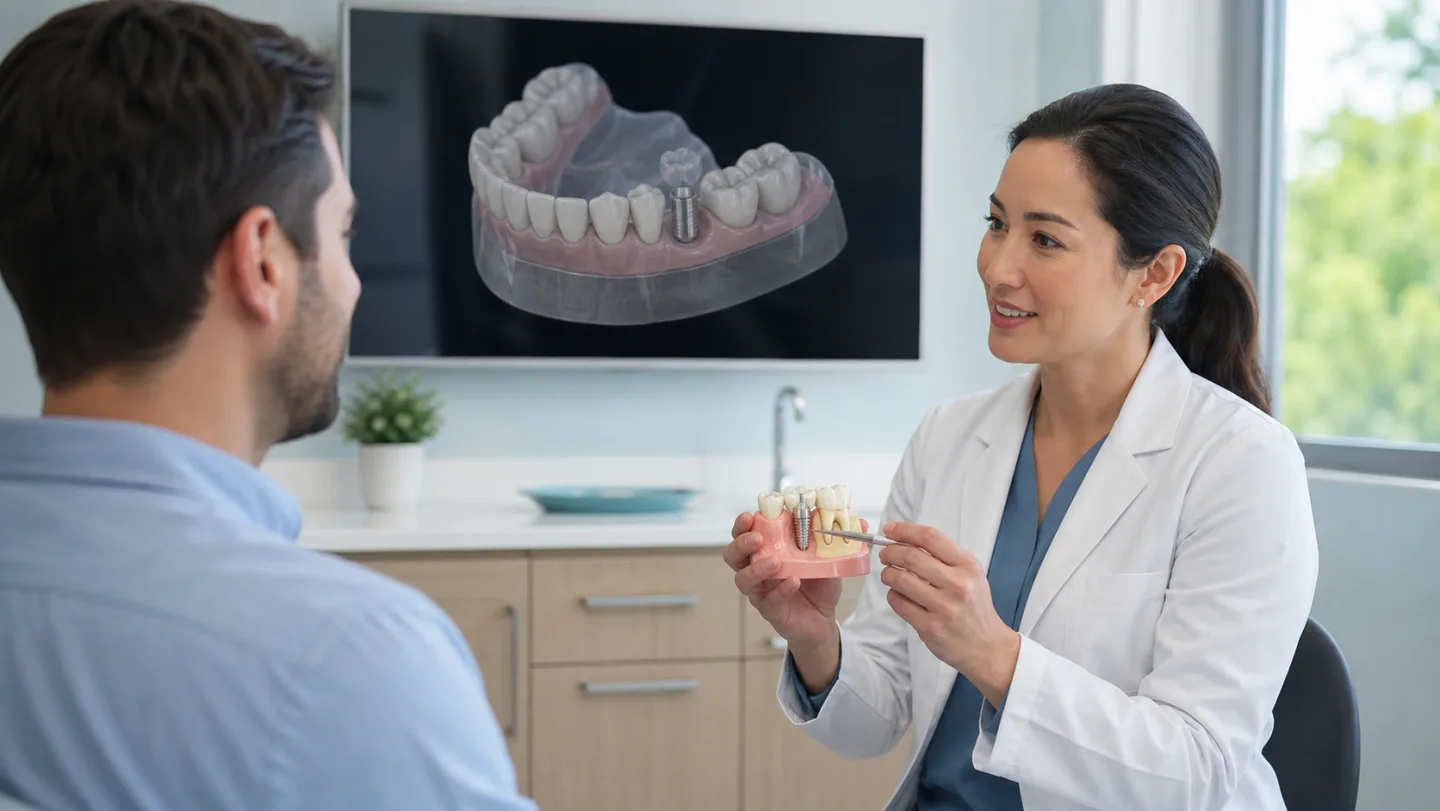
Losing a tooth can change more than a smile. It may change how you chew, how carefully you speak, or which side of your mouth you use without even thinking about it. For some people, the gap is visible. For others, the daily frustration matters more than appearance.
Dental implants are one way to replace missing teeth. They can support a single crown, a bridge, or a larger restoration for several missing teeth. They are also a topic surrounded by polished before-and-after images and promises that make the process sound almost instant.
Real implant care is more thoughtful than that. It involves diagnosis, planning, healing, restorative design, and long-term maintenance. This guide explains what patients considering dental implants in Winnipeg should know before making a decision.
What is a dental implant?
A dental implant is an artificial tooth root, commonly made from titanium, that is placed into the jawbone. After the implant becomes stable within the bone, it can support a replacement tooth.
The completed restoration usually has three parts:
- The implant: the portion placed in the jawbone.
- The abutment: a connector between the implant and replacement tooth.
- The crown or prosthesis: the visible restoration used for chewing and appearance.
People often use “implant” to describe the whole tooth, but the implant itself is only the foundation. The design of the crown, bridge, or denture attached to it matters just as much for comfort, cleaning, bite, and appearance.
Unlike a traditional bridge, a single implant does not usually require shaping the neighbouring teeth to hold a replacement. Unlike a conventional removable denture, an implant restoration receives support from the jawbone. Those differences can be valuable, but they do not automatically make an implant the best choice for every person.
Who may be a candidate for dental implants?
The Canadian Dental Association notes that implants may be an option for people in good general health who have healthy gums and enough jawbone to support the implant. A full assessment is necessary because candidacy is about the whole person, not just the empty space.
Your dentist will consider factors such as:
- The amount and shape of available bone
- Gum health and history of periodontal disease
- The location of nerves and sinus spaces
- The condition of nearby teeth
- How your upper and lower teeth meet
- Smoking or vaping
- Diabetes and other medical conditions
- Medications that affect healing or bone metabolism
- Oral hygiene habits
- Grinding or clenching
- Expectations for appearance, timeline, and maintenance
Having a health condition does not always rule out implants. It may change the plan, require medical coordination, or make another option more predictable. Be open about medications, previous surgeries, and habits. Details that seem unrelated can affect healing.
Active gum disease and untreated decay generally need attention before implant placement. An implant cannot get a cavity, but the gum and bone around it can still become inflamed or infected. A healthy foundation matters.
What happens during implant planning?
Planning begins with a conversation. Which tooth is missing? How long has it been gone? What bothers you most? Are you looking for a fixed solution, or would a removable option work? Is there a deadline, such as an event, or is long-term function the priority?
The clinical assessment may include:
- Examination of the teeth, gums, bite, and jaw
- Dental X-rays
- Three-dimensional imaging when needed
- Photographs or digital scans
- Models of the teeth
- Review of medical history and medications
- Discussion of replacement choices
Three-dimensional imaging can help the provider evaluate bone width and height and understand nearby anatomy. Digital scans or impressions help plan the restoration and how it will fit within your bite.
The final plan should work backward from the tooth you need. The implant must be placed where it can support a functional, cleanable, natural-looking restoration. Successful planning is not simply finding any available patch of bone.
The stages of dental implant treatment
Every case is different, but implant treatment often follows several stages.
1. Preparing the site
If a damaged tooth is still present, it may need extraction. Sometimes an implant can be placed at the same appointment; other situations benefit from healing first. Infection, bone condition, gum tissue, and implant stability all influence timing.
If the jawbone is too narrow or has changed after tooth loss, bone grafting may be recommended. A graft adds material to help create a more suitable foundation. Some grafts are completed with implant placement, while larger grafts may need a separate healing period.
2. Placing the implant
The area is numbed, and the implant is positioned in the planned location. The gum may be closed over it or shaped around a small healing component. Your provider will give instructions for eating, cleaning, and managing the site after surgery.
3. Healing and integration
Bone gradually forms a close connection with the implant surface, a process called osseointegration. The Canadian Dental Association notes that this healing can take several months. The exact timeline depends on the site, implant stability, bone quality, grafting, and individual healing.
Some patients receive a temporary tooth during this phase. Whether it is fixed or removable—and whether it can be used for chewing—depends on the plan. “Same-day teeth” does not always mean the final restoration is placed or that normal chewing can begin immediately.
4. Creating the final restoration
Once the implant is ready, the dentist records the implant and surrounding teeth with a scan or impression. The laboratory and dental team create a crown, bridge, or denture designed for the space. Shade, shape, bite, speech, and cleaning access are checked before completion.
5. Follow-up and maintenance
The final tooth is not the end of care. Follow-up allows the dentist to check healing, bite, gum health, and implant stability. Regular professional care and good home cleaning help protect the tissues around the implant.
One missing tooth, several teeth, or a full arch
Implants can support different types of restorations.
Single implant crown
A single implant and crown can replace one missing tooth without using adjacent teeth as bridge supports. The available space, bone, gum shape, and bite must allow a properly sized restoration.
Implant-supported bridge
When several teeth are missing together, a bridge can sometimes be supported by fewer implants than the number of teeth being replaced. The design depends on bite forces, bone, location, and the length of the gap.
Implant-supported or snap-in denture
Implants can help stabilize a removable denture. The denture still comes out for cleaning but connects to attachments for improved retention. Patients often call this a snap-in denture or overdenture.
Fixed full-arch treatment
Fixed full-arch options, including treatment commonly described as All-on-4, use multiple implants to support a larger fixed prosthesis. The number and position of implants are planned for the person’s anatomy and restorative needs. “Four” is not a universal rule for every jaw.
Full-arch treatment is more than implant surgery. It includes removing unsalvageable teeth when necessary, designing the bite, managing a temporary restoration, allowing healing, and making the final teeth. Ask what is temporary, what is final, and what maintenance or future replacement may involve.
Do dental implants hurt?
Implant placement is performed with local anesthetic, so the surgical area is numbed. Afterward, soreness, swelling, and bruising can occur. The amount varies with the procedure, grafting, number of implants, and individual response.
Your provider will explain how to care for the area and which pain-management options are appropriate for your health history. Follow those instructions rather than comparing your recovery with someone else’s social media story.
Call the office if pain or swelling is worsening rather than improving, if bleeding is difficult to control, if you develop fever or feel unwell, or if anything about healing concerns you. For severe swelling, difficulty breathing, uncontrolled bleeding, or another potentially life-threatening symptom, seek emergency medical care.
How long do dental implants last?
There is no honest single-number promise. Implant longevity depends on health, home care, professional maintenance, bite forces, smoking, gum disease history, implant position, and restoration design.
The implant in the bone and the visible restoration also have different maintenance lives. A crown, attachment, screw, denture tooth, or full-arch prosthesis can wear or require repair even when the implant remains integrated.
You can support long-term health by:
- Brushing thoroughly around the restoration
- Cleaning between implants and under bridges as instructed
- Attending recommended examinations and hygiene visits
- Managing gum inflammation early
- Wearing a night guard when prescribed for grinding
- Avoiding tobacco
- Reporting looseness, bleeding, discomfort, or bite changes
Implants do not get cavities, but the surrounding tissues can develop peri-implant disease. Bleeding during cleaning is not something to ignore.
Dental implant risks and limitations
Implant treatment has a strong history of use, but no surgery is risk-free. Possible complications include infection, bleeding, nerve injury, sinus involvement, gum recession, bone loss, damage to nearby structures, or failure of the implant to integrate.
Some challenges appear later. A crown may chip. A screw may loosen. Food may collect around a poorly shaped restoration. Gum levels can change. Heavy bite forces may damage components.
Discuss the risks that apply to your location and health. Ask who will place the implant, who will make the restoration, and how the two parts of treatment are coordinated. Complex cases may involve a periodontist, oral and maxillofacial surgeon, prosthodontist, or other provider.
What affects dental implant cost in Winnipeg?
Online prices are often incomplete because “one implant” can describe very different care. The total investment may include:
- Examination and diagnostic imaging
- Tooth extraction
- Bone grafting or sinus augmentation
- Implant placement
- Temporary tooth replacement
- Abutment and final crown
- Laboratory materials
- Sedation when appropriate
- Additional implants for a bridge or full arch
- Follow-up and maintenance
The brand of implant is only one factor. Complexity, material selection, anatomy, and restorative design also matter. A written plan should identify which stages are included and whether any parts are estimates.
Private insurance coverage varies. The 2026 Canadian Dental Care Plan guide lists implants and implant-related procedures as exclusions, although other eligible non-implant services may be covered. Confirm current rules before treatment because programs can change.
Implants compared with bridges and removable dentures
An implant is not the only way to replace a tooth.
A traditional bridge uses neighbouring teeth for support and can be a practical fixed option, especially when those teeth already need crowns. It generally avoids implant surgery but requires preparation of the supporting teeth.
A removable partial denture can replace several teeth and may be easier to modify if oral conditions change. It comes out for cleaning and may feel less stable than a fixed option.
A complete denture replaces all teeth in an arch. It relies on the gum and jaw shape for support unless implants are added.
Choosing among them involves health, bone, remaining teeth, cleaning ability, timeline, cost, and personal preference. The best plan is the one that makes clinical sense and that you can realistically maintain.
Questions to ask at an implant consultation
Bring a written list. Useful questions include:
- What other tooth-replacement options do I have?
- Is there enough bone, and how was that evaluated?
- Will I need an extraction or graft?
- Who places the implant and who restores it?
- What can I wear while the area heals?
- How long is the expected process in my case?
- Which costs are included in the estimate?
- How will I clean the final restoration?
- What could make this implant less predictable?
- What happens if the implant does not integrate?
Good treatment planning welcomes these questions.
Considering dental implants in north Winnipeg?
Winnipeg North Dental provides dental implants, dentures, snap-in dentures, and other tooth-replacement options. The first step is not committing to surgery. It is understanding the condition of your mouth and comparing realistic choices.
Learn more about dental implants, dentures, or snap-in dentures. You can also request a consultation at our clinic on Mcphillips Street.
Missing a tooth can feel personal. The conversation about replacing it should feel personal too—clear, unhurried, and built around how you want to eat, smile, and care for your mouth in the years ahead.