
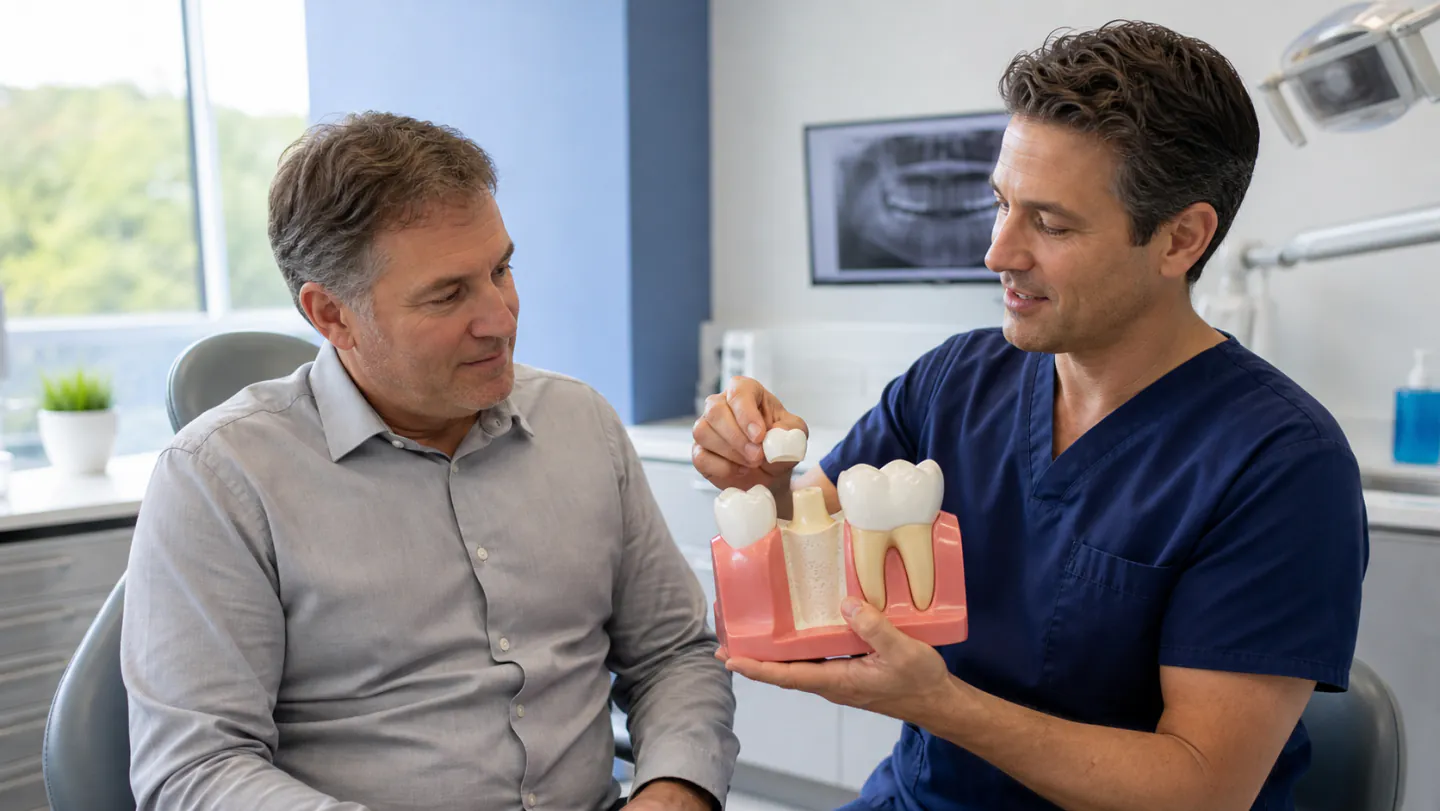
When a dentist says that a tooth needs a crown, many patients have the same first thought: Why can’t it just have another filling? A filling sounds smaller, quicker, and more familiar. A crown can feel like a much bigger commitment.
The difference is not simply the amount of decay. A dentist must consider whether the remaining tooth can hold a filling and withstand everyday biting. A heavily repaired tooth may look acceptable from above while its walls are thin, cracked, or no longer well supported. Adding more filling material does not always solve that structural problem.
A dental crown is a custom cover that protects the visible part of a damaged tooth. It can restore shape, chewing contact, and appearance while holding weakened areas together. If you are considering dental crowns in Winnipeg, this guide explains why one may be recommended, what the appointments involve, and how to decide whether the plan makes sense for you.
What is a dental crown?
A crown, sometimes called a cap, fits over a prepared tooth. It replaces the outer shape of the tooth above the gumline and is cemented or bonded in place. Unlike a removable denture, you do not take it out for cleaning.
The tooth and crown work as one unit, but the natural foundation remains important. A crown cannot rescue every tooth. There must be enough healthy tooth or a suitable build-up to hold it, the root must have a reasonable outlook, and the supporting gum and bone must be considered.
The Canadian Dental Association describes crowns as a way to cover a damaged tooth and protect it from further damage. That protection is valuable, but it is not permanent armour. The crowned tooth still needs daily cleaning and regular assessment.
Common reasons a crown may be recommended
A crown may be discussed when:
- A large filling has left only thin walls of natural tooth
- A cusp or major section of the tooth has broken
- A crack places the tooth at risk during biting
- Decay is too extensive for a predictable direct filling
- The tooth has received root canal treatment and needs protection
- A worn tooth needs its shape and height rebuilt
- A dental implant requires a visible replacement tooth
- The colour or shape of a severely damaged tooth needs correction
These are broad reasons, not automatic rules. A front tooth after root canal treatment may have different needs than a heavily loaded back tooth. A small fracture may be repaired with bonding or an onlay. A deep crack extending into the root may make a crown unsuitable.
Ask which part of your tooth is weak and what the crown is expected to accomplish. “It needs a cap” is a conclusion; you are entitled to understand the reason behind it.
Crown or filling: what is the difference?
A filling sits within a prepared area and replaces a limited amount of missing tooth. It relies on the remaining tooth to support it. A crown covers the chewing surface and surrounds much of the visible tooth, allowing biting forces to be distributed across the restoration.
Imagine a cardboard box with one small hole in the lid. Patching the hole may be enough. If most corners and walls are torn, adding a larger patch inside does not make the box strong again. A cover around the outside may provide better support. Teeth are more complex than boxes, but the comparison explains why “one more filling” can sometimes leave fragile cusps unprotected.
That does not mean crowns are always better. Preparing a crown requires removing tooth structure, costs more, and may involve more than one visit. When a conservative filling or onlay can provide a predictable result, preserving more natural tooth is valuable.
How does a dentist decide if a tooth can be crowned?
The decision starts with diagnosis. Your dentist may examine the tooth, take X-rays, test the nerve, inspect the gums, and assess the bite. Important questions include:
- How much sound tooth remains above the gumline?
- Is there active decay below an old filling or near the root?
- Does the tooth have a crack, and how far does it extend?
- Is the nerve healthy or already infected?
- Is the root supported by enough bone?
- Can the edge of the crown be kept clean?
- Will the tooth carry unusually heavy bite forces?
- Does the overall treatment plan justify preserving this tooth?
Sometimes an old restoration must be removed before the full condition is visible. The dentist should explain that uncertainty before treatment. If the tooth proves less restorable than expected, the plan may need to change.
Does a crowned tooth need a root canal first?
Not automatically. Many teeth receive crowns while their nerves remain healthy. Root canal treatment is used when the pulp inside a tooth is irreversibly inflamed, infected, or no longer alive—not merely because a crown is planned.
A tooth may need root canal treatment before a crown if it has deep decay, prolonged pain, infection, or nerve damage. In other cases, a previously root-treated tooth receives a crown because it has lost significant structure and needs protection from fracture.
There is also a possibility that a living tooth may need root canal treatment later. A history of deep decay, cracks, trauma, and extensive previous work can affect nerve health. Report lingering temperature pain, spontaneous aching, swelling, or biting pain before the final crown is made.
What happens at the first crown appointment?
The tooth is usually numbed with local anesthetic. Any decay and failing restorative material are removed. If a large part of the tooth is missing, the dentist may place a build-up to create a sound foundation.
The tooth is then carefully shaped to make room for the crown and create a form that can hold it securely. The amount removed depends on the material, tooth position, and existing condition.
A digital scan or traditional impression records the prepared tooth, neighbouring teeth, and bite. Shade information may be collected when appearance matters. These records guide the dental laboratory or in-office system used to make the crown.
If the final crown will not be placed that day, a temporary crown is made. It protects the tooth and helps maintain spacing while the custom restoration is produced. The temporary is intended for short-term use and is usually held with weaker cement so it can be removed.
Living with a temporary crown
A temporary crown needs gentler treatment than the final restoration. Avoid very sticky foods and do not use that tooth to crack hard items. Brush normally but carefully around the edge.
Follow the clinic’s instructions for flossing. You may be asked to slide floss out through the side instead of lifting it upward, which can dislodge the temporary. If the crown comes off, keep it and contact the office. Do not leave the tooth uncovered without advice, because it may become sensitive or shift.
Some temperature or gum sensitivity can occur after preparation. Call if the bite feels high, the temporary moves, pain is significant or increasing, or swelling develops. The temporary stage is useful because it reveals comfort and bite issues that should be discussed before final placement.
What happens when the final crown is placed?
At the placement visit, the temporary crown is removed and the tooth is cleaned. The dentist tries in the final crown and checks:
- How closely the edges fit the tooth
- Contact with neighbouring teeth
- The way the crown meets the opposing bite
- Shape and appearance
- Shade, when visible
- Your comfort with the result
Adjustments may be made before cementation. You may be asked to bite in several positions because a crown that feels normal while tapping can still interfere during chewing or side movements.
Once the crown is accepted, it is bonded or cemented according to the material. Excess cement is removed and the bite is checked again. Do not hesitate to say if one spot feels heavier after the numbness fades. A high contact is usually easier to correct promptly than to live with.
What are dental crowns made from?
Crowns can be made from ceramics, metal alloys, combinations of metal and porcelain, and other restorative materials. There is no single best material for every tooth.
Tooth-coloured ceramics are popular where appearance matters. Different ceramics have different strengths, thickness needs, and visual qualities. Metal crowns can be very durable and may require less space in selected situations, but their colour makes them less desirable for visible teeth. Porcelain fused to metal combines a metal base with a tooth-coloured surface, though the appearance and wear pattern differ from all-ceramic options.
Your dentist considers the tooth’s position, how much space exists, grinding forces, the amount of remaining structure, appearance, allergies, and cost. Ask why the recommended material fits your case and whether another option would change preparation, appearance, or expected maintenance.
How long does a dental crown last?
A crown does not have a fixed expiry date. Some serve for many years, while others fail sooner because of decay, fracture, bite forces, gum changes, or problems with the tooth underneath.
Factors that influence longevity include:
- Daily cleaning at the crown’s edge
- Cavity risk and dry mouth
- Grinding, clenching, and chewing habits
- Crown material and thickness
- The amount and quality of supporting tooth
- Gum and bone health
- Whether the tooth has a post or large build-up
- Regular examinations and timely repairs
Avoid using crowned teeth to open packages or chew ice and hard objects. If you grind, a protective night guard may be recommended. A crown can withstand normal function, but no restoration is indestructible.
Can a crowned tooth still get a cavity?
Yes. The crown material itself cannot decay, but the natural tooth at or below its edge can. Plaque can collect where the crown meets the tooth, especially if the area is difficult to brush or floss.
Decay at a crown margin may require a new restoration. If it extends deeply beneath the gum or into the root, the tooth can become difficult to save. That is why home care matters even when a tooth looks completely covered.
Brush twice a day with fluoride toothpaste and clean between the crowned tooth and its neighbours daily. Interdental brushes, floss threaders, or water flossers may be helpful around bridges, but ask which tool fits the design. Report floss that suddenly shreds, a bad taste from one area, a loose crown, or new sensitivity.
Alternatives to a dental crown
Depending on the tooth, alternatives may include:
- A direct filling for a smaller area
- An inlay or onlay that replaces or covers selected parts
- Bonding for a limited front-tooth repair
- Monitoring when no active treatment is yet needed
- Extraction when the tooth cannot be predictably restored
Extraction removes the immediate tooth problem but creates a space that may affect chewing or tooth position. Replacement with a bridge, implant, or removable option adds separate treatment and cost. Saving a tooth is valuable when its outlook is reasonable, but keeping a severely compromised tooth at any price is not always the healthiest plan.
Ask for the advantages, limits, and likely maintenance of each realistic choice.
Dental crown costs and coverage in Winnipeg
The cost of a crown depends on the material, laboratory work, tooth condition, and whether a build-up or other treatment is required. Examination, X-rays, root canal treatment, and temporary care may be separate items.
Some private benefit plans contribute to crowns after deductibles, annual limits, waiting periods, and frequency rules. The Canadian Dental Care Plan may help with eligible crowns when its clinical criteria and authorization requirements are met. Neither type of plan guarantees that the full office fee will be covered.
Ask the clinic for a written estimate and whether information should be sent for a predetermination or preauthorization. An estimate is helpful, but the insurer or plan administrator makes the final coverage decision. If you need time to budget, ask whether delaying is clinically reasonable and what could happen to the tooth while you wait.
Questions to ask before agreeing to a crown
Useful questions include:
- Can you show me the weak or damaged part of the tooth?
- Why is a filling or onlay not the preferred option?
- Is the nerve healthy?
- Are there cracks that change the outlook?
- Which material are you recommending, and why?
- Will I wear a temporary crown?
- What risks or uncertainties should I understand?
- What happens if I delay treatment?
- What will my estimated cost be after expected coverage?
The goal is not to challenge every recommendation. It is to leave with a clear picture of the problem, the proposed solution, and the alternatives.
Planning a dental crown in Winnipeg
A crown is most useful when it solves a specific structural problem and is supported by a healthy, maintainable foundation. Good planning matters as much as the material. The dentist should assess the nerve, cracks, gums, bite, and long-term role of the tooth before treatment begins.
Winnipeg North Dental provides custom dental crowns and other restorative options. If you have a broken tooth, a very large filling, or a crown recommendation you would like to understand, request a visit for an assessment and a plain-language discussion of your choices.