
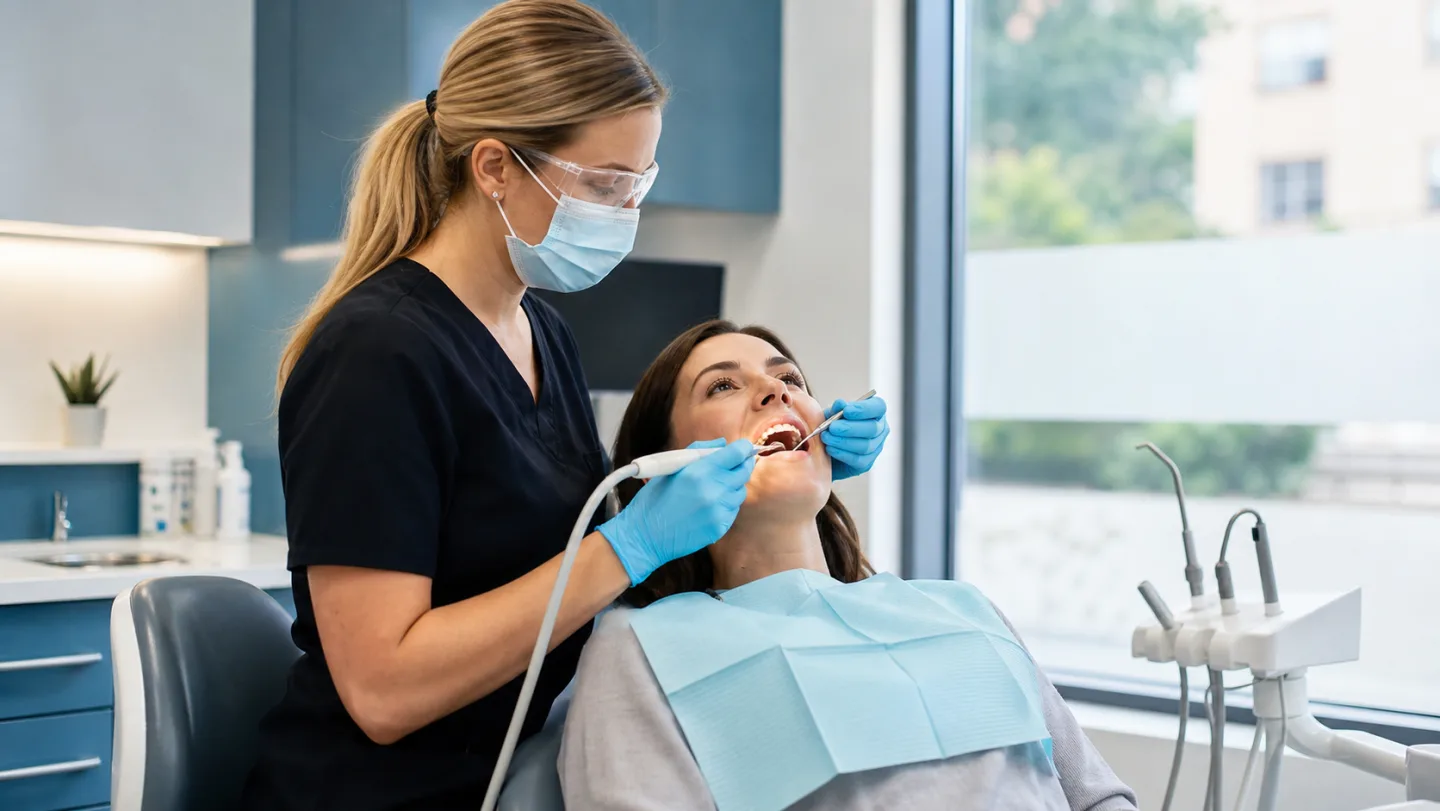
“I’m just here for a cleaning” is one of the most common things patients say at a dental office. It sounds straightforward, but a preventive visit can include several different parts: reviewing your health, examining the teeth and soft tissues, measuring the gums, taking appropriate X-rays, removing deposits, polishing, and discussing what to do next.
The purpose is not to search for treatment to sell. It is to understand what is healthy, identify changes early, and help you maintain your teeth with as little intervention as reasonably possible.
If it has been six months or six years since your last appointment, knowing what to expect can make the visit feel easier. This guide explains how dental check-ups and cleanings work in Winnipeg and why the right schedule is personal.
Is a dental check-up the same as a cleaning?
No. The two are often booked together, but they serve different purposes.
A dental examination is a diagnostic appointment. The dentist reviews findings, looks for disease or damage, assesses changes, and recommends care when needed.
A professional cleaning is preventive and therapeutic care usually provided by a dental hygienist. It removes plaque, tartar, and stains that daily brushing and flossing cannot fully manage. The hygienist also evaluates gum health and helps you improve home care.
Some people need an examination but not a cleaning at that visit. Others need several hygiene appointments because gum disease requires more extensive care than a routine cleaning. A child’s first visit may focus on examination and comfort. An emergency visit may deal only with pain.
The schedule should match the clinical need rather than forcing every patient into the same appointment type.
What happens before the examination?
The team begins with your health history because your mouth is connected to the rest of you. Update the clinic about:
- New medical diagnoses or surgeries
- Medications, supplements, and allergies
- Pregnancy
- Changes in smoking, vaping, or alcohol use
- Sleep apnea or breathing concerns
- Joint replacements or heart conditions
- Previous reactions to dental treatment
- Changes in insurance or CDCP information
Mention symptoms even if they seem minor: sensitivity, bleeding gums, jaw clicking, dry mouth, a rough edge, food trapping, headaches, bad breath, or a sore that has not healed. Small details can guide the examination.
If dental visits make you anxious, say so before treatment starts. The team can explain each step, agree on a pause signal, and avoid surprises.
What the dentist checks
A complete or recall examination may include the teeth, gums, bite, jaw, existing dental work, and soft tissues of the mouth. The exact scope depends on the appointment and your history.
The dentist may look for:
- Tooth decay
- Cracks, wear, or erosion
- Leaking or broken fillings
- Problems around crowns, bridges, implants, or dentures
- Gum inflammation and bone support
- Tooth mobility
- Bite changes
- Jaw-joint or muscle concerns
- Signs of infection
- Changes in the tongue, cheeks, lips, palate, or other soft tissue
Not every finding needs immediate treatment. A stained groove can be healthy. A small area may be monitored with photographs or X-rays. A worn filling may remain stable. Ask the dentist which issues are active, which are preventive concerns, and which can be watched.
Why dental X-rays are recommended
X-rays reveal information that cannot be seen directly. They may show decay between teeth, bone levels around teeth, infection near roots, impacted teeth, or the condition beneath existing restorations.
The type and frequency of X-rays should be based on need. A new patient with unknown history may require different imaging than a person with stable oral health and recent records. A child whose teeth are changing quickly has different considerations than an adult with implants.
Tell the dental office if you recently had X-rays elsewhere. The team may be able to request them if the images are current and suitable. You can also ask why a particular image is recommended and what the dentist expects to learn from it.
Modern digital dental X-rays use low levels of radiation, but they should still be prescribed thoughtfully. Share pregnancy information and any concerns so the team can discuss appropriate precautions and timing.
What a dental hygienist evaluates
A cleaning is not simply scraping visible tartar. The hygienist assesses the tissues that hold your teeth in place.
This may include:
- Looking at gum colour, shape, and swelling
- Checking for bleeding
- Measuring spaces between the gums and teeth
- Reviewing bone levels on X-rays
- Identifying recession
- Assessing plaque and tartar deposits
- Checking areas that are difficult to clean
- Reviewing home-care tools and technique
Healthy gums fit closely around teeth. In gum disease, inflammation and loss of attachment can create deeper spaces, or pockets, where bacteria and tartar collect. Measurements help the team identify patterns and compare changes over time.
If you hear several numbers being called out, you can ask what they mean. The goal is not to pass or fail. The numbers help build a map of gum health.
What happens during professional teeth cleaning?
The hygienist removes soft plaque and hardened tartar from tooth surfaces and around the gumline. Hand instruments and ultrasonic devices may be used. An ultrasonic scaler uses controlled vibration and water to loosen deposits.
The teeth may then be polished to remove surface stains and leave smooth surfaces. Fluoride may be recommended based on cavity risk, sensitivity, age, or other factors.
If deposits are heavy or the gums are inflamed, the cleaning can take longer or require more than one appointment. Scaling and root planing for periodontitis is different from a routine preventive cleaning. It focuses on deeper deposits and affected root surfaces, often by section of the mouth.
The amount of treatment does not reflect a person’s worth or effort. Tartar formation, crowding, saliva, health conditions, medications, dexterity, access to care, and previous instruction all play a role. A useful hygiene visit meets you where you are.
Will a dental cleaning hurt?
Many cleanings feel like pressure, vibration, water, and scraping rather than pain. Sensitivity can occur when gums are inflamed, roots are exposed, tartar is heavy, or teeth are already sensitive.
Tell the hygienist if an area hurts. Options may include changing the instrument, adjusting water temperature, taking breaks, using a sensitivity product, or discussing local anesthetic when deeper cleaning is needed.
Do not assume you have to endure discomfort silently. Feedback helps the clinician adapt while still completing effective care.
Some tenderness or temperature sensitivity can occur after extensive scaling. Follow the instructions provided. Contact the office if pain is severe, swelling develops, or symptoms do not settle as expected.
How often should you have a dental check-up and cleaning?
There is no schedule that fits everyone. “Every six months” is a familiar starting point, and many people benefit from it, but the Canadian Dental Association advises that you and your dentist decide visit frequency based on oral health needs.
You may be advised to attend more often if you have:
- Active gum disease or a history of periodontitis
- Frequent cavities
- Heavy tartar accumulation
- Dry mouth
- Braces or complex dental work
- Diabetes or other conditions affecting oral health
- Tobacco use
- Difficulty cleaning effectively
- Pregnancy-related gum changes
- A recent pattern of broken or failing restorations
Someone with stable health, excellent home care, and low disease risk may need a different interval. Examination and cleaning schedules can also be different from each other.
Insurance frequency limits should not be mistaken for a clinical recommendation. A benefits plan is a financial contract. Your dental schedule should be discussed based on health, with coverage considered as part of planning.
Why cleanings matter even when nothing hurts
Many dental conditions develop quietly. Early cavities may not cause pain. Gum disease can progress with little discomfort. A crack can remain subtle until a larger piece breaks.
Preventive visits create a chance to:
- Remove tartar that cannot be brushed away
- Find early changes
- Compare gum measurements and X-rays over time
- Repair small problems before they become more complex
- Review cleaning technique
- Discuss diet, dry mouth, grinding, or tobacco use
- Check the condition of restorations and appliances
Pain is a poor schedule for prevention. By the time a tooth wakes you at night, the choices may be more limited than when the problem was first visible.
What if it has been years since your last visit?
Start without apologizing. Life, cost, fear, caregiving, work, health, and past experiences can all interrupt dental care. The team needs accurate information, not a defence.
At the first visit back, you can say, “It has been a long time and I’m nervous. I want to understand what needs attention first.” That gives the team a clear goal.
The dentist may identify several concerns. Ask for them to be organized:
- Urgent problems involving pain, infection, or risk of fracture
- Active disease that should be treated soon
- Preventive care and stabilization
- Optional cosmetic or long-term improvements
You do not have to complete an entire plan in one day. A phased approach can make care more manageable.
Dental cleanings for children
Children’s visits are adapted to age, development, and comfort. A first visit may be short and focused on looking, building familiarity, and teaching caregivers. As children grow, professional cleaning, X-rays, fluoride, and sealants may be recommended based on risk and development.
The Canadian Dental Association recommends an infant assessment within six months of the first tooth or by 12 months of age. Early visits allow parents to ask about brushing, fluoride, feeding, thumb sucking, pacifiers, and tooth development before a problem occurs.
Avoid using a parent’s appointment interval as the child’s automatic schedule. Children’s mouths change quickly, and cavity risk varies.
How to keep the clean feeling at home
A professional cleaning resets the surface, but daily care determines what happens between visits.
General habits include:
- Brush twice daily with fluoride toothpaste
- Angle bristles toward the gumline
- Clean between teeth every day with floss or another recommended tool
- Clean around bridges, implants, braces, and retainers as instructed
- Limit frequent exposure to sugary drinks and snacks
- Drink water regularly, especially if your mouth feels dry
- Replace a worn toothbrush or brush head
- Avoid tobacco
The best tool is one you can use effectively and consistently. If standard floss is difficult, ask about floss holders, interdental brushes, water flossers, or specialized threaders.
Insurance, CDCP, and cleaning coverage
Many private plans include examinations, X-rays, scaling, polishing, and fluoride, but frequency limits vary. Direct billing does not guarantee that a service will be paid in full.
The Canadian Dental Care Plan includes eligible diagnostic and preventive services such as examinations, X-rays, scaling, fluoride, and sealants within program rules. Co-payments, established fees, frequency limits, and additional charges may apply.
Bring current coverage details and ask the clinic for an estimate when possible. The dental team can explain the clinical recommendation; the plan administrator makes the final coverage decision.
When not to wait for a routine check-up
Call sooner if you notice:
- Significant tooth pain
- Facial or gum swelling
- A broken or loose tooth
- Uncontrolled bleeding
- A sore or patch that does not heal
- Sudden bite changes
- A crown or filling that has fallen out
- Persistent gum bleeding or bad taste
Routine online booking is not the best path for a time-sensitive concern. Call the dental office and describe the symptoms.
Book a dental cleaning and check-up in north Winnipeg
Winnipeg North Dental provides check-ups and cleanings for children, adults, seniors, and families. We welcome new patients, offer direct insurance billing, and accept eligible CDCP and NIHB patients.
You can request an appointment online or call (204) 338-3003. Our clinic is located at Unit 5, 2358 Mcphillips Street.
A preventive visit is not about chasing a perfect score. It is a chance to understand what is happening, remove what you cannot remove at home, and leave with a realistic plan for keeping your smile healthy.