
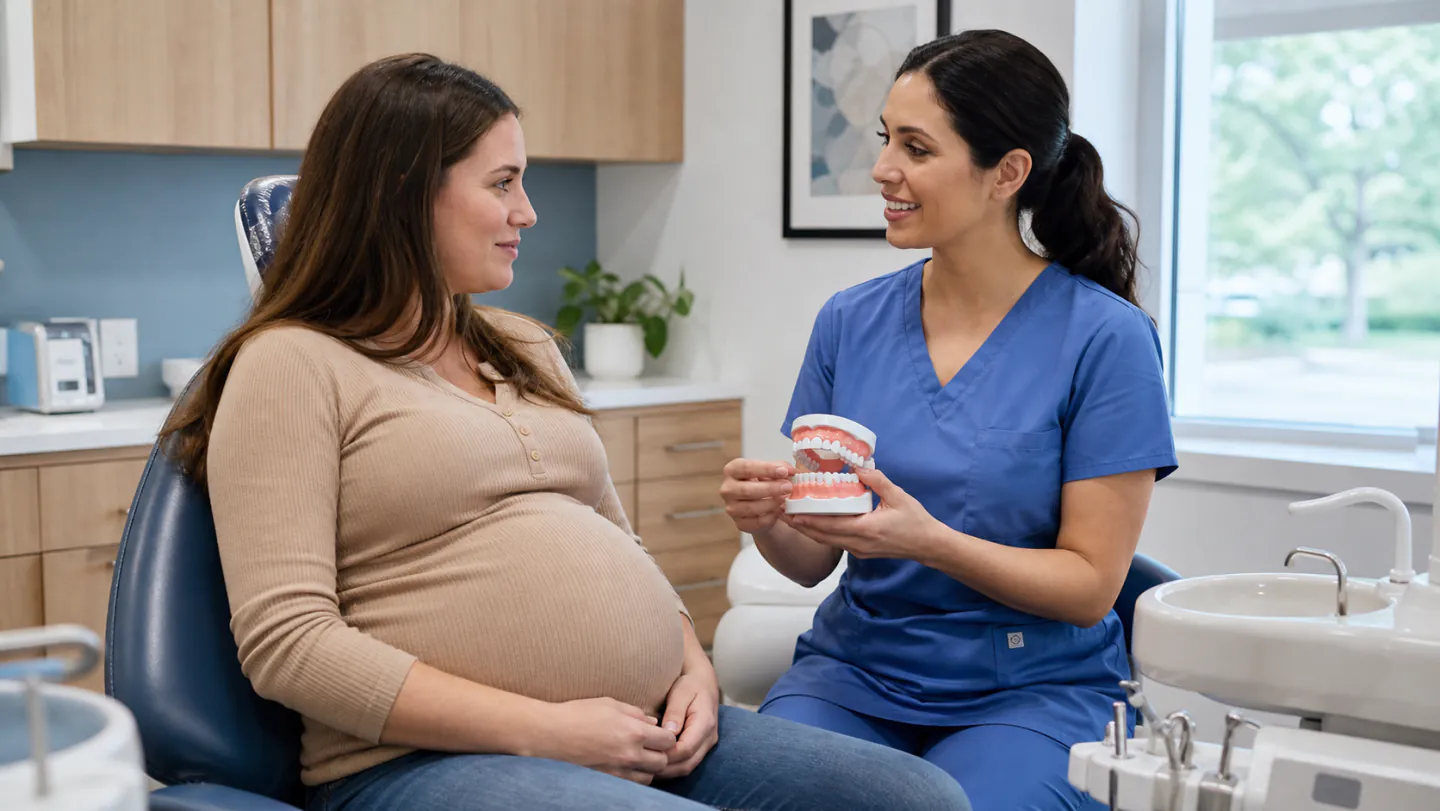
Pregnancy can change routines, appetite, energy, and the way your mouth feels. Gums may bleed more easily. Morning sickness can expose teeth to stomach acid. Frequent snacks may become the only way to manage nausea. At the same time, patients often hesitate to book because they are unsure which dental care is safe.
Routine oral health should not disappear for nine months. Dental problems can become harder to manage when care is delayed until pain or swelling is severe. The safest plan is individual: tell the dental team that you are pregnant, share your due date and health information, and allow the dentist and prenatal provider to coordinate when needed.
If you are looking for dental care during pregnancy in Winnipeg, this guide answers common patient questions without replacing advice from your own dentist, physician, or midwife.
Why pregnancy can affect the gums
Hormone changes can make gum tissue respond more strongly to plaque. Gums may look red or puffy and bleed during brushing or flossing. This is often called pregnancy gingivitis.
Bleeding is not a reason to stop cleaning. Plaque left along the gumline can make inflammation worse. Use a soft brush, gentle technique, and daily cleaning between teeth. A professional cleaning can remove tartar that home tools cannot.
Pregnancy does not automatically cause gum disease, and not every bleeding area is “just hormones.” Persistent swelling, recession, bad breath, pus, or loose teeth needs assessment. Existing gum disease may require closer maintenance during pregnancy.
When should you have a dental check-up?
The Public Health Agency of Canada encourages pregnant patients to have their oral health checked and cleaned early in pregnancy and to tell the dental professional they are pregnant.
If you are planning a pregnancy, a check-up beforehand can address active cavities, gum inflammation, and overdue care. If you are already pregnant and have not seen a dentist, you can still book. The appointment can be adapted to your stage, comfort, and needs.
Bring a current medication and supplement list. Share pregnancy complications, blood pressure concerns, gestational diabetes, nausea, and advice from your prenatal provider. These details help the dentist plan positioning, medication, and treatment timing.
Is dental treatment safe during pregnancy?
Necessary dental care can often be provided during pregnancy with appropriate planning. Leaving significant pain or infection untreated may create its own risks. The decision considers urgency, stage of pregnancy, procedure, medication needs, and your health.
The second trimester is often a comfortable time for non-urgent treatment because early nausea may have improved and lying back may still be easier. That is a scheduling preference, not a rule that emergencies must wait.
Elective cosmetic care, such as whitening, can usually be postponed until after pregnancy. For a cavity, broken tooth, infection, or gum concern, speak with the dentist rather than delaying automatically. Your prenatal provider may be consulted for complex health situations.
Dental freezing during pregnancy
Local anesthetic is used to numb a treatment area and reduce pain and stress. Dentists choose the type and amount according to the procedure and patient’s health.
Tell the dentist that you are pregnant before any medication is given. If you have a history of reactions or difficulty becoming numb, explain what happened. Do not assume that avoiding anesthetic is safer; untreated pain and an incomplete procedure are not desirable outcomes.
Ask which anesthetic is planned and why. The dentist can discuss benefits and considerations for your situation and coordinate with your prenatal provider when appropriate.
What about dental X-rays?
Dental X-rays are used when information beneath the surface is needed to diagnose decay, infection, bone changes, or injury. They are not taken simply because a calendar says they are due.
Health Canada explains that dental X-rays help identify conditions that are difficult to see and that health professionals should use the lowest exposure needed to obtain useful information. Tell the dental team if you are pregnant or may be pregnant so they can consider timing and precautions.
Routine images that are not currently needed may be deferred. When pain, swelling, trauma, or another concern requires diagnosis, a necessary image may be safer than treating without enough information. Ask what the X-ray will show and whether an existing image is still useful.
Morning sickness and tooth enamel
Vomiting brings strong stomach acid into the mouth. Brushing immediately can rub that acid against softened tooth surfaces.
After vomiting:
- Rinse gently with water.
- Wait about 30 minutes before brushing.
- Brush with fluoride toothpaste once the mouth has had time to recover.
The federal oral-health guidance for pregnancy recommends rinsing first and waiting before brushing. If vomiting is frequent or severe, tell your prenatal provider. Your dentist may suggest additional fluoride or other protection based on your risk.
Avoid brushing harder to remove the taste. A bland rinse and water can be kinder to enamel and gums.
Frequent snacking and cavity risk
Small, frequent meals may help nausea, but repeated carbohydrate and sugar exposure gives mouth bacteria more opportunities to produce acid. The frequency can matter as much as the total amount.
Choose balanced snacks when possible and make water your regular drink. Cheese, plain yogurt, nuts when safe, vegetables, and other low-sugar options may be easier on teeth than slowly sucking candies or sipping sweet drinks throughout the day.
If you need lozenges for nausea or dry mouth, ask whether a sugar-free option is suitable. Rinse with water after snacks and keep twice-daily fluoride brushing as the foundation.
Pregnancy cravings and pica
Cravings are common. Some patients also feel an urge to chew ice or non-food items such as clay or starch, a pattern known as pica. Chewing ice can crack teeth and dental work. Non-food cravings may be connected to nutritional concerns.
Tell your prenatal provider about unusual cravings rather than feeling embarrassed. Do not use teeth to crush hard items. If a tooth chips or becomes painful, contact a dentist.
For sour cravings, limit prolonged acid contact and rinse with water. Sour candy combines acid and sugar, making frequent use especially hard on enamel.
A pregnancy tumour on the gum
Some pregnant patients develop a small overgrowth of gum tissue that bleeds easily. Despite the alarming name sometimes used for it, this is usually a non-cancerous response to irritation and hormonal changes.
Do not try to cut, pop, or treat a gum growth at home. Any new lump, persistent sore, or bleeding area should be examined. The dentist can identify likely causes, improve plaque control around the area, and decide whether monitoring or treatment is appropriate.
Many pregnancy-related gum changes improve after birth, but an area that remains needs follow-up.
Tooth pain or swelling during pregnancy
Do not wait for a routine postpartum visit if you have severe pain, swelling, drainage, fever, trauma, or a broken tooth. Call a dentist and say that you are pregnant.
Dental pain can come from decay, a crack, an irritated nerve, gum infection, grinding, or other causes. Diagnosis determines whether you need a filling, root canal, extraction, gum care, or temporary management.
Rapidly spreading facial swelling, trouble breathing or swallowing, uncontrolled bleeding, or feeling seriously unwell requires emergency medical care. Pregnancy does not change the need to respond to those warning signs.
Pain medicine and antibiotics
Do not take leftover antibiotics or someone else’s pain medication. Products available without a prescription are not automatically safe at every stage of pregnancy, and combination medicines may contain ingredients you do not realize you are taking.
Tell the dentist about all prescriptions, supplements, and over-the-counter products. The dentist and prenatal provider can consider the diagnosis, trimester, allergies, and health before recommending medication.
Antibiotics are not needed for every toothache or dental procedure. When an infection requires medication, it should still receive definitive dental follow-up because antibiotics alone usually do not remove the source inside a tooth.
Feeling comfortable in the dental chair
As pregnancy progresses, lying flat for a long period may feel uncomfortable or light-headed. Tell the team immediately rather than trying to tolerate it. The chair can be adjusted, appointments can be shorter, and positioning can be changed.
Use the washroom before treatment, bring water, and ask for breaks. Morning appointments may be difficult if nausea is strongest then; another time may suit you better.
If smells trigger nausea, let the clinic know before the visit. Simple planning can make a cleaning or treatment much easier.
Oral care after the baby arrives
Newborn care can push your own routines aside. Keep a toothbrush and floss where they are easy to use, and accept help that gives you two quiet minutes at night.
If gums remained inflamed or treatment was postponed, arrange follow-up. Continue sharing medication and feeding information when it affects care.
Avoid sharing spoons or cleaning a pacifier with your mouth. Cavity-causing bacteria can pass through saliva. When your baby’s first tooth appears, begin cleaning it and plan an early dental visit—within six months of the first tooth or by the first birthday.
Dental coverage and pregnancy
Private plans do not automatically add benefits because of pregnancy, although your needs and visit schedule may change. The Canadian Dental Care Plan, NIHB, and other programs have their own eligibility and service rules.
Ask for an estimate before planned treatment and confirm any coverage requirements. Do not base urgency only on what a plan pays. If cost is a barrier, tell the clinic so the dentist can explain which care is urgent, which can be staged, and which is elective.
Questions to ask your dentist while pregnant
- Are my gums showing signs of pregnancy-related inflammation or gum disease?
- Do I need an X-ray today, and what will it help diagnose?
- Is treatment urgent, or can it comfortably wait?
- Which trimester or appointment position would be easiest?
- Are the proposed medications appropriate with my health history?
- How can I protect teeth from morning sickness?
- Should my cleaning or fluoride plan change?
Bring your prenatal provider’s contact information if coordination may be helpful.
Finding dental care during pregnancy in Winnipeg
Pregnancy is a reason for thoughtful dental planning, not automatic avoidance. Prevention, early assessment, and timely treatment of pain or infection support your comfort through a demanding stage of life.
Winnipeg North Dental provides general and preventive dental care for patients before, during, and after pregnancy. Request an appointment and let the team know your due date, symptoms, and comfort needs so the visit can be planned around you.