
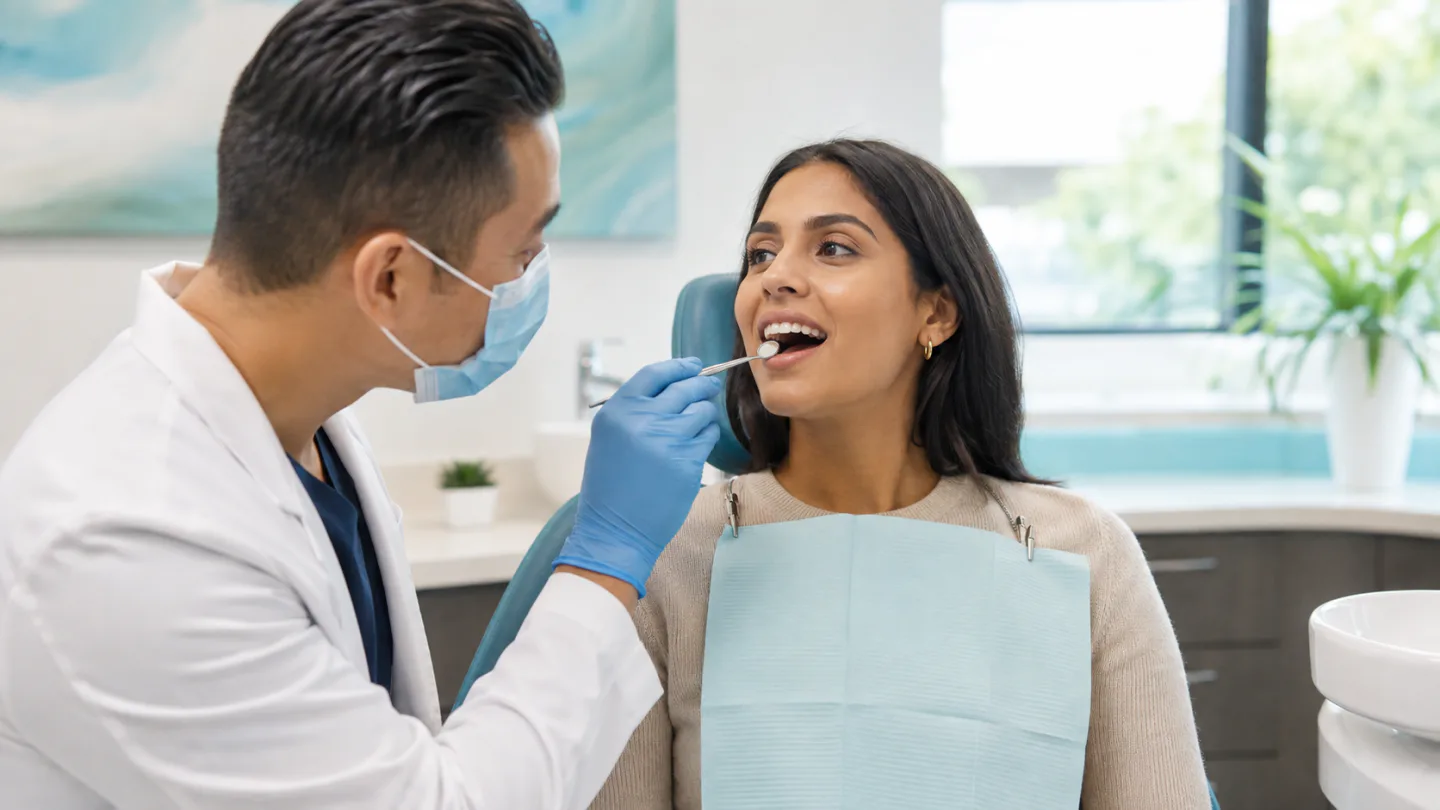
A chipped tooth can happen during a hockey game, over a restaurant meal, or while doing something as ordinary as biting a piece of toast. The surprise is often followed by a quick check with your tongue and an anxious look in the mirror. Is the damage only cosmetic? Has the tooth cracked below the surface? Can the piece be put back?
The size of the missing corner does not always tell you how serious the injury is. A shallow enamel chip may feel sharp but need only a small repair. A tooth that looks almost normal can contain a deeper crack, while a larger break may expose the sensitive inner layers. That is why a new chip or fracture deserves a dental assessment even when the pain is mild.
If you have chipped or broken a tooth in Winnipeg, this guide explains what to do in the first few minutes, which symptoms need prompt attention, and how a dentist may rebuild the tooth.
First steps after a tooth breaks
Pause and check what happened before trying to carry on with your day. Rinse gently with lukewarm water so you can see the area. If the lip, cheek, or gum is bleeding, hold clean gauze against it with steady pressure. A cold pack wrapped in cloth can be placed on the outside of the face for short intervals if there is swelling.
Look for the broken piece. If you find it, pick it up carefully, rinse away obvious dirt without scrubbing, and keep it in a clean container. A dentist cannot always reattach a fragment, but bringing it provides another option to consider. Do not use household glue or a repair kit on the tooth.
Until you are assessed:
- Avoid chewing on that side
- Choose soft foods that are not very hot or cold
- Do not test the tooth by biting repeatedly
- Cover a sharp edge temporarily with dental wax or sugar-free chewing gum if it is cutting the tongue
- Use over-the-counter pain medicine only as directed and only if it is normally safe for you
Do not place aspirin on the tooth or gum. It will not treat the cause and can irritate the tissue.
When is a broken tooth an emergency?
Call a dental office promptly when a permanent tooth breaks. The person answering the phone can help determine whether you should be seen the same day based on the injury, pain, and other symptoms.
Seek urgent dental care for:
- Strong, persistent, or increasing pain
- A large piece missing from the tooth
- A pink, red, or bleeding point visible inside the break
- A tooth that is loose, displaced, or pushed into the gum
- Swelling of the gum, face, or jaw
- Fever, a bad taste, drainage, or other signs of infection
- A fracture caused by a significant impact to the face
- Difficulty bringing your teeth together normally
Go to a hospital emergency department for severe facial swelling, trouble breathing or swallowing, uncontrolled bleeding, loss of consciousness, a suspected jaw fracture, or other serious head and facial injuries. Dental offices treat teeth; hospitals are the right setting when the injury may threaten breathing or involve broader trauma.
Minor chips without pain may not require an after-hours visit, but they should not be ignored indefinitely. A rough edge can irritate the tongue, and a weakened area may break further under pressure.
Why some chips hurt and others do not
A tooth has several layers. Enamel is the hard outer covering. Beneath it is dentin, a more porous yellowish layer that can transmit temperature and pressure toward the centre of the tooth. The pulp contains nerves and blood vessels.
A chip limited to enamel may feel rough without being painful. When dentin is exposed, the tooth may react to cold air, drinks, sweets, or chewing. A break that reaches the pulp can cause intense pain, bleeding from the centre of the tooth, or sensitivity that lingers after the trigger is gone.
Pain is useful information, but no pain does not guarantee a shallow injury. A crack can travel into areas you cannot see, and a tooth with a damaged nerve may become less responsive rather than more painful. An examination and appropriate dental images help reveal the actual extent.
Common reasons teeth chip or fracture
Some breaks result from one clear event, such as a fall or sports collision. Others are the final step in a process that has weakened the tooth over time.
Common contributors include:
- Biting ice, hard candy, popcorn kernels, bones, or non-food objects
- A large filling that leaves thin walls of natural tooth
- Untreated decay beneath or around a restoration
- Teeth grinding or clenching
- Using teeth to tear packages or hold tools
- A bite that concentrates force on one area
- Changes in a root-canal-treated tooth
- Repeated exposure to acids that soften enamel
- A direct blow during recreation, work, or a motor-vehicle collision
Finding the reason matters. Repairing the visible corner without addressing grinding, decay, or a heavy bite can set the tooth up to break again.
How a dentist examines a broken tooth
The visit begins with the story. Your dentist will want to know when it happened, what struck the tooth, whether it reacted to temperature, and whether your bite feels different. Mention any head injury symptoms and all health conditions or medicines relevant to treatment.
The examination may include checking the tooth under bright light and magnification, feeling its edges, testing movement, evaluating the gum, and comparing the bite. The dentist may gently tap the tooth or assess its response to cold. Dental X-rays can show the root, surrounding bone, existing fillings, and some fracture patterns, although very fine cracks do not always appear on an image.
The goal is to answer three questions: How much healthy tooth remains? Is the nerve likely to recover? Does the crack extend into the root or below the gumline? The treatment plan follows from those answers.
Repairing a small enamel chip
Very small chips may only need smoothing and polishing when enough enamel remains and the change does not affect appearance or bite. This conservative approach removes the sharp point without adding a restoration that will need maintenance.
If the corner is visible or larger, tooth-coloured composite bonding may be added. The dentist conditions the surface, applies an adhesive, builds the missing shape with composite resin, hardens it with a curing light, and polishes it. Bonding can often be completed in one appointment and usually requires little removal of healthy tooth.
Composite is useful, but it is not indestructible. It can stain, wear, or chip, especially when placed on an edge that receives heavy force. Avoiding nail biting, package opening, and ice chewing helps protect it.
Treating a larger broken tooth
When more tooth structure is missing, a small bonded corner may not be strong enough. A larger direct restoration, an inlay or onlay, or a dental crown may be considered depending on the location and remaining walls.
A crown covers the visible part of a tooth and redistributes biting forces. It is more involved than bonding because the tooth must be shaped, an impression or scan is taken, and a custom restoration is made. A temporary crown may protect the tooth between appointments.
The most extensive option is not automatically the best one. Dentists try to preserve sound tooth structure, but a repair must also survive normal chewing. The right balance depends on the individual fracture rather than a fixed rule about chip size.
What if the nerve is exposed?
A deep fracture can open the pulp chamber or damage the nerve even when it is not visibly exposed. In some teeth, protective treatment may allow the pulp to heal. In others, root canal therapy is needed to remove infected or irreversibly inflamed tissue before the tooth is restored.
Root canal treatment addresses the inside of the tooth; it does not rebuild the broken outside. A filling, onlay, or crown is often still required afterward. The dentist will explain the order and whether the tooth can be predictably restored.
If a crack extends far down the root, splits the tooth into separate sections, or leaves too little healthy structure above the gum, saving it may not be realistic. Extraction and replacement choices are then discussed. This decision should follow a proper assessment, not an assumption made from a mirror photo.
Is a cracked tooth the same as a chipped tooth?
Not quite. A chip removes a piece from the surface. A crack is a line running through tooth structure, and it may exist with or without a missing piece. Cracked teeth commonly hurt when biting or when pressure is released. The pain can be intermittent and difficult to locate.
Some fine lines in enamel are superficial and need only monitoring. Deeper cracks may require a crown, root canal treatment, or extraction depending on their direction and extent. Because a crack can flex during chewing, delaying care may allow it to travel farther.
Try to notice which foods and motions trigger the feeling, but do not keep recreating the pain to prove it is there. Tell the dentist exactly when it occurs.
A chipped baby tooth
Children frequently bump their mouths while learning to walk, playing, or participating in sports. A baby tooth should still be assessed because an injury can affect the tooth, gum, and developing permanent tooth below it.
Call promptly if the child has pain, bleeding that does not settle, a loose or displaced tooth, a deep break, or difficulty biting. Do not attempt to reposition or reinsert a baby tooth that has been knocked out. That can injure the permanent tooth developing underneath.
After any meaningful impact, watch for colour change, swelling, a gum bump, fever, or new discomfort in the following days and weeks. A tooth can initially appear stable and later show signs that its nerve was damaged.
Broken fillings and crowns
Sometimes what feels like a chipped tooth is actually a lost filling or a piece of crown. Keep any fragment you find and arrange an appointment. The exposed tooth may be sensitive and structurally vulnerable even when it does not hurt.
Temporary filling materials sold in pharmacies may protect an area briefly when professional care is not immediately available, but they are not a substitute for diagnosis. Do not force a loose crown back into place, use superglue, or chew on it. The dentist must check for decay, fracture, and fit before deciding whether it can be recemented or needs replacement.
Cost and insurance questions
The cost of repairing a broken tooth in Winnipeg varies because “a chip” can describe anything from a brief polish to root canal treatment and a custom crown. Ask for the diagnosis, recommended treatment, reasonable alternatives, and written estimate before proceeding when the situation allows.
Dental benefit plans may cover part of a necessary repair but apply deductibles, percentages, annual maximums, or rules about replacement timing. Cosmetic reshaping of an otherwise healthy tooth may be treated differently. An office can submit a predetermination, but only the insurer can confirm payment.
Urgency should still guide timing. Waiting for an insurance response is not appropriate when there is swelling, uncontrolled pain, trauma, or a risk that a restorable tooth will worsen.
Preventing another fracture
Not every accident can be prevented, but risk can be reduced. Wear a properly fitted mouthguard for sports with collision, falls, flying objects, or sticks. Ask about a night guard if you grind your teeth. Treat decay and failing fillings before thin tooth walls give way.
Keep hard objects out of your mouth and use scissors instead of your front teeth to open packaging. If you have a repaired front tooth, bite firm foods with awareness and cut unusually hard items into smaller pieces.
Regular examinations matter because a dentist may spot cracks, wear patterns, and weakened restorations before you feel them. Prevention is usually simpler than rebuilding a tooth after the fracture expands.
Getting help for a chipped tooth in Winnipeg
A small chip, a deep break, and a cracked root can look surprisingly similar at home. The safest next step is an assessment that considers pain, nerve health, the bite, and how much solid tooth remains.
Winnipeg North Dental provides emergency dental care and restorative options for damaged teeth. If a tooth has just chipped or broken, call the clinic at (204) 338-3003 or request an appointment. Describe how the injury happened and any pain, swelling, bleeding, or movement so the team can help arrange the appropriate visit.