
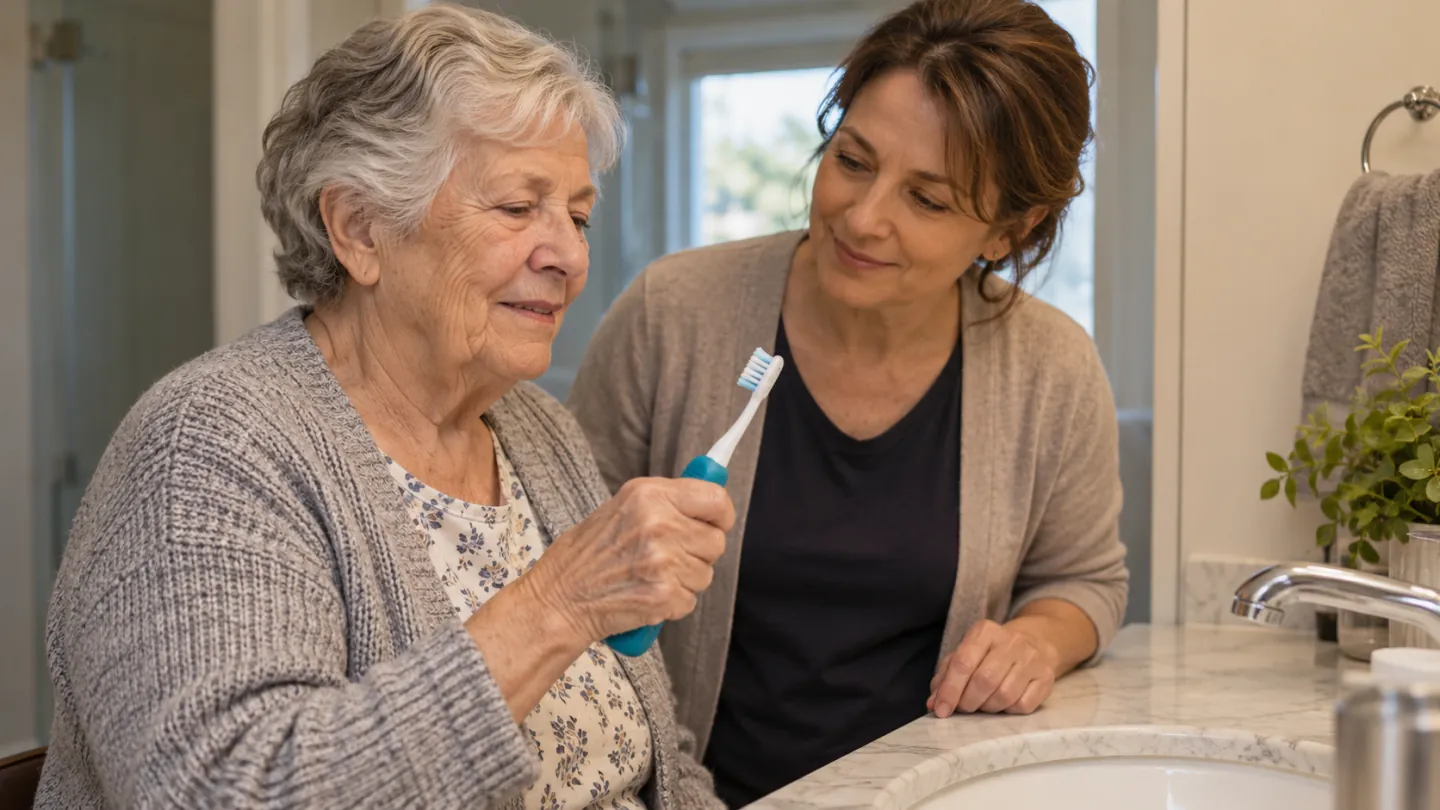
Helping another adult brush their teeth can feel unexpectedly personal. You may know how to organize meals, medicines, and appointments, yet feel unsure where to stand, how much help to offer, or what to do when the person turns away. A good routine begins with that person’s comfort, preferences, and remaining abilities.
Caregiver-assisted brushing in Winnipeg may be needed temporarily after an injury or for longer because of arthritis, disability, illness, or changes in memory. The amount of help can vary from setting out supplies to providing direct care. Needing assistance does not mean that someone should lose control of every part of the task.
Ask the person’s dental team for a demonstration tailored to their mouth and health. This guide can help you prepare questions and organize the routine, but it cannot determine safe positioning or products for someone with swallowing problems, complex medical needs, or difficulty tolerating care.
Find out which part of brushing is difficult
Start by watching and asking, with the person’s agreement. Is the problem opening the toothpaste, holding the brush, remembering the sequence, reaching back teeth, or tolerating the sensation? These are different barriers and may need different solutions.
Someone who cannot twist a cap may still brush thoroughly once the paste is applied. Another person may hold the brush comfortably but miss one side because of reduced movement. A third may know what to do yet become too tired to finish. Describe these details to the clinician rather than using a broad statement such as “they cannot brush.”
NIDCR’s information for caregivers discusses support ranging from reminders to direct help and adapted toothbrushes. Use that range as a starting point for a personal plan. Offer the least assistance that allows effective care, then review whether it is working. The appropriate level can change over time without requiring you to take over the entire routine immediately.
Keep the person involved in the choices
Ask which toothpaste flavour they prefer, whether they like to sit or stand when safe, and what time feels least rushed. Explain what you are about to do before approaching the mouth. Adults deserve ordinary, respectful conversation during personal care, including time to respond.
Agree on a way to pause. A spoken word, hand movement, or another familiar signal may work, depending on communication abilities. If the person withdraws, closes their mouth, or becomes distressed, stop and reassess rather than treating the task as something to finish at any cost.
If there are questions about decision-making ability or consent, involve the healthcare team and clarify the appropriate care plan. A family relationship alone does not answer every question about providing treatment or sharing information. For day-to-day support, pay attention to the person’s preferences and response, and seek professional guidance when routine care cannot be provided comfortably and safely.
Set up a space that makes the task easier
Gather the recommended brush, toothpaste, towel, and any other prescribed supplies before starting. Put them within comfortable reach. A cluttered counter and repeated trips to another room can interrupt concentration and leave both people frustrated.
Consider lighting and visibility. A mirror may help some people follow the routine, while others find it confusing or distracting. Ask what they prefer and discuss any difficulty with the care team. Use a stable position and follow professional advice about posture, particularly if balance, head control, breathing, or swallowing is affected.
For a household sharing a small Winnipeg bathroom, a labelled storage container can keep the person’s supplies together without mixing brushes. Keep products separate from household cleaners and follow storage instructions. If different caregivers help on different days, organize the area consistently so each person does not invent a new setup that the adult receiving care must learn again.
Try reminders and demonstrations before taking over
A brief prompt may be more useful than a long explanation. Offer one step at a time and allow enough time for the person to act. Repeating several instructions quickly can make it harder to know what comes next.
The National Institute on Aging’s caregiving guidance suggests demonstrating toothbrushing step by step and letting the person do as much as possible. That approach is especially relevant when memory or sequencing is difficult, although the right communication style remains individual.
If modelling the action helps, brush your own teeth alongside them using separate supplies. If they welcome hand guidance, ask the dental team to demonstrate a gentle technique rather than moving their arm unexpectedly. The purpose is to support the movement, not force it. Record which cues work well so another caregiver can use the same clear language instead of starting from scratch.
Choose equipment around ability and tolerance
A larger handle, smaller brush head, or powered brush may help some people, but each changes how the tool feels. A powered brush is useful only if its weight, vibration, sound, and controls are manageable. A familiar manual brush may remain the better option for someone who dislikes vibration.
Bring the current toothbrush to a dental visit and explain the difficulty. Ask whether the clinician can recommend a secure adaptation or another design. Avoid loose homemade attachments that could slip off during use. If occupational therapy is involved in the person’s care, coordination may help with grip and positioning.
Do not buy several products at once unless there is a clear reason. Trying one appropriate change makes it easier to see whether it helps. Keep the person’s preference in the decision. Our comparison of electric and manual toothbrushes discusses general differences, while a caregiver demonstration can address the practical movements needed for this particular mouth.
Get hands-on instruction for direct assistance
If you need to brush for someone, ask a dentist or dental hygienist to show you a safe position, how to see the tooth surfaces, and how much pressure to use. Practise under their guidance when possible. Cleaning your own mouth does not automatically teach you how to work comfortably in someone else’s.
The Alzheimer’s Society’s mouth-care guidance emphasizes a regular routine, supporting independence, clean hands, and gentle assistance. Its dementia-specific advice should still be adapted to the individual rather than applied mechanically to every adult who needs help.
Never pry the mouth open with a household object or place your fingers between the teeth. Ask for professional help if biting, restricted opening, involuntary movement, or distress prevents safe cleaning. Specialist devices require assessment and instruction. The goal is a routine both people can tolerate, not a technique that depends on physical force or leaves the caregiver at risk of injury.
Treat swallowing concerns as a separate care need
Tell the dental team if the person coughs during mouth care, struggles to spit, has a prescribed swallowing plan, or receives nutrition through a tube. Do not assume that an ordinary amount of toothpaste, a cup of rinse, or a water flosser is suitable.
Health Education England’s mouth-care resource discusses adapted positioning and non-foaming toothpaste for people with swallowing difficulties. The person’s dentist, nurse, and speech-language pathologist can help determine the specific method and products. A general recommendation cannot replace their individual swallowing guidance.
If coughing, choking, or breathing difficulty occurs, stop care and respond according to the person’s medical plan; an immediate breathing emergency needs emergency assistance. New swallowing problems also warrant medical assessment. Do not continue experimenting with larger amounts of water to make brushing easier. Ask for a written approach that everyone involved in care can follow consistently.
Remember the spaces between teeth and any dentures
Ask how to clean between the teeth safely and which tool fits the person’s abilities. Floss holders or interdental brushes may be useful in some mouths, but size, access, and tolerance matter. Have the team demonstrate rather than guessing which gap a brush should fit.
If the person wears removable dentures, clarify the cleaning and storage routine for that appliance. Label the denture container and keep it in a predictable location. Do not assume that ordinary toothpaste or any household cleaning product is appropriate for the denture material. Our denture care guide covers questions to discuss with the dental team.
Include appliances in the written care plan so they are not overlooked during a change of caregiver or a hospital stay. Record which pieces are removable and who normally helps with them. If a denture becomes painful or difficult to insert, arrange an assessment rather than pressing it into place or attempting to reshape it at home.
Notice discomfort that is expressed indirectly
Some people cannot easily describe tooth pain. Watch for changes such as refusing favourite foods, chewing on one side, touching the face, resisting mouth care that was previously comfortable, or sleeping poorly. These observations do not identify the cause, but they are worth reporting.
The Alzheimer’s Association’s dental-care advice highlights mealtime signs such as wincing, discomfort, or refusal to eat as possible indicators of mouth pain. Avoid assuming every change is simply part of dementia or a behavioural problem.
Keep a brief record of what changed and when. Mention swelling, bleeding, broken teeth, sores, or appliance problems if you notice them. Significant swelling, fever, or worsening pain needs prompt advice; trouble breathing or swallowing requires urgent medical attention. You do not need to complete a thorough inspection yourself before contacting the person’s dentist.
Share a simple plan between caregivers
Write down the recommended products, the help the person prefers, useful cues, and any specific precautions. Include the dental office’s contact details and the date of the next visit. Keep sensitive health information in an appropriate place with access limited to those involved in care.
For family members balancing work, transport, and home-care visits in Winnipeg, clarity about who helps in the morning and evening can prevent accidental gaps. If a paid caregiver is involved, confirm which oral-care tasks are included in the agreed care plan and whether additional instruction is needed.
Review the routine when health, dexterity, memory, or tolerance changes. Caregiver-assisted brushing works best as a shared plan that preserves dignity and adapts to real abilities. To discuss an adult’s oral-care needs, request an appointment and explain the support required when booking. With the person’s permission, bring the caregiver who usually assists so the advice can be practised together.