
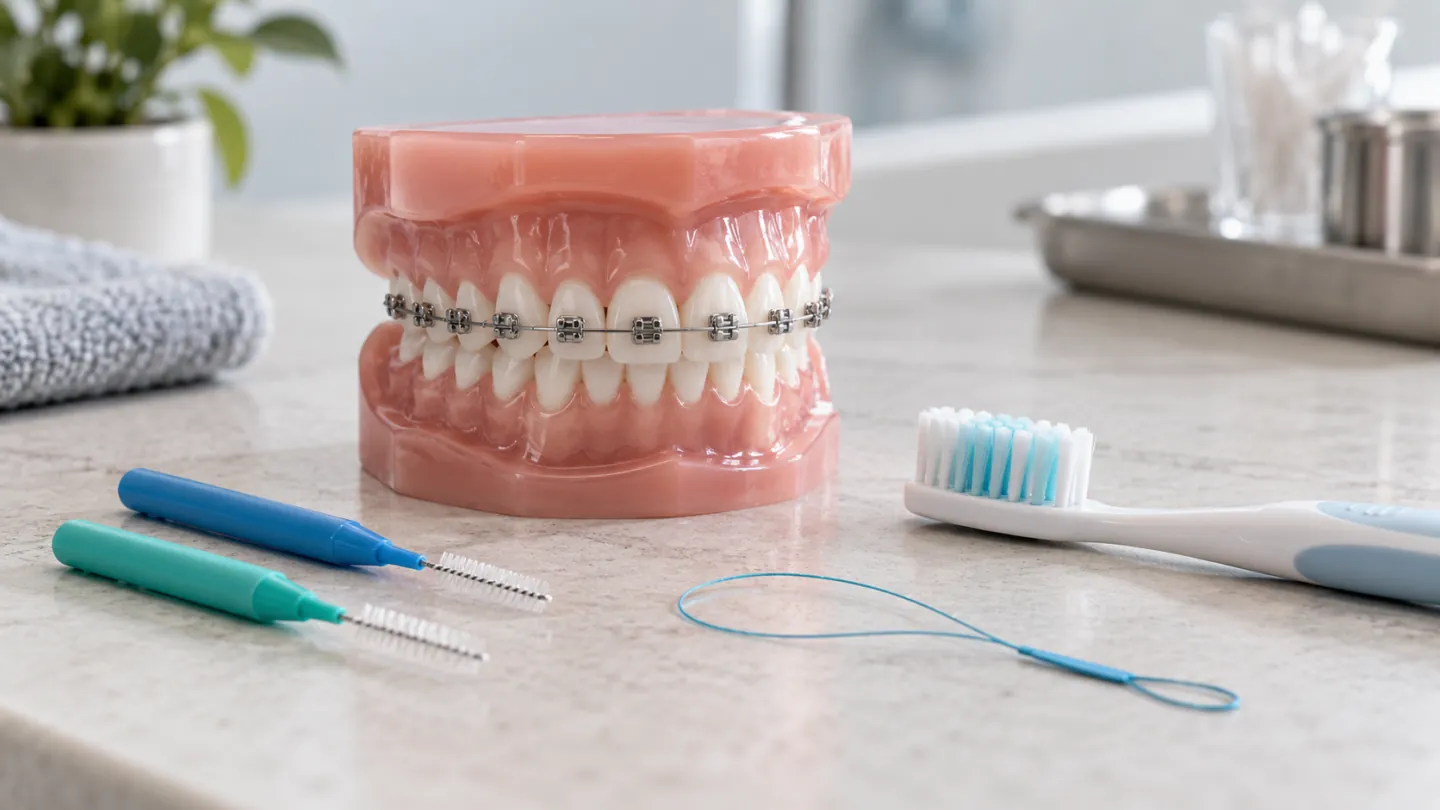
The first few days with braces bring a new awareness of almost everything in your mouth. Food catches in unfamiliar places, the brush seems to bump into brackets, and a quick glance in the mirror no longer tells you whether you have cleaned thoroughly. A routine that once felt automatic now needs a little more attention.
Cleaning around braces in Winnipeg is not about brushing with extra force. It is about reaching surfaces that the appliance makes harder to access, choosing tools you can actually use and checking the result before putting the brush away. The approach should become easier with practice rather than turning every evening into a long struggle.
Fixed braces also create two related responsibilities: the orthodontic team manages tooth movement and appliance adjustments, while your general dental team continues to assess teeth and gums. Knowing whom to ask, and what each visit covers, helps keep those responsibilities connected throughout treatment.
Learn the route around your own appliance
Before leaving the fitting appointment, ask someone to demonstrate cleaning on your braces. Watching a generic animation is helpful background, but it may not show the bands, hooks or crowded areas that are difficult in your mouth. A mirror and a short hands-on demonstration can make the instructions much more concrete.
Ask where plaque is most likely to remain and how the brush should approach the gumline, the area above the brackets and the area below them. Remember the inner surfaces and chewing surfaces too. It is easy to spend so much attention on visible metal that the backs of the teeth receive very little cleaning.
Repeat the movement yourself while the team watches. That gives them a chance to correct an awkward angle before it becomes your daily habit. If a handle is uncomfortable or you cannot see the area clearly, say so.
The goal is a route you can repeat in the same order. A systematic route makes missed surfaces easier to notice than brushing wherever the mouth happens to feel rough.
Understand why white spots matter
Plaque left around brackets can contribute to mineral loss at the tooth surface. Early changes may appear as chalky white areas, sometimes most obvious after the braces are removed. They are different from a little food caught beside a wire and should not be dismissed as an unavoidable part of treatment.
The American Association of Orthodontists explains white spots as a concern related to plaque, cleaning and diet during orthodontic care. Prevention includes thorough cleaning, appropriate fluoride use and keeping professional appointments.
If you notice a new white area, photograph it for your own reference and tell the dental or orthodontic team. Lighting, saliva and the angle of a mirror can change how a spot looks, so a photograph cannot establish the diagnosis by itself.
Avoid trying to bleach the area to make it blend in. The first question is what caused the change and whether it is active. Appearance treatment, if appropriate later, is a separate discussion from protecting the tooth surface now.
Give the toothbrush enough room to work
Use a soft brush that can comfortably reach around the appliance. A manual or powered brush may be suitable; the important question is whether the head fits and whether you can control it. An expensive handle does not remove the need to guide it around each area.
The University Hospitals Plymouth fixed-brace leaflet emphasizes brushing with fluoride toothpaste and retaining fluoride by spitting rather than immediately rinsing it away. Your treating team may tailor the frequency and products to your risk and appliance.
Work gently along the gumline and around the bracket edges using the technique demonstrated for you. Do not push hard against a wire because food appears trapped underneath. If something does not come away with appropriate cleaning, ask for advice instead of increasing force.
Finish by looking in good light. Check whether food remains and whether you skipped the back teeth. This brief visual check is especially useful early in treatment, while you are still learning what the new routine should feel like.
Choose one workable way to clean between teeth
The main toothbrush cannot reliably reach every space between teeth. With fixed braces, the wire can make ordinary flossing more awkward, but there are ways to work around it. A floss threader, suitable orthodontic floss, interdental brushes or a water flosser may have a role depending on the spaces and appliance.
The AAO’s guide to life during treatment describes tools that help with these access problems. Ask the hygienist to demonstrate the option that fits your mouth rather than buying every tool at once.
An interdental brush should fit the intended space without being forced. The size useful around a bracket may not be the size appropriate between two teeth. Keep that distinction clear when the team demonstrates it.
If a tool is taking so long that you stop using it, report the difficulty. A different handle, threader or sequence may make the task manageable. Our flossing and water-flosser guide offers background, but the demonstration around your actual appliance remains valuable.
Treat bleeding as information
Bleeding during cleaning can make you want to avoid the area. Yet leaving plaque there may allow gum inflammation to continue. Use gentle technique and tell your dental team where bleeding occurs, how often it happens and whether the tissue is swollen or painful.
Do not assume that all bleeding is caused by braces or that every sore area needs the same response. A wire rubbing the cheek, inflamed gums and discomfort after an adjustment are different experiences. Describe what happens rather than applying one label to all of them.
If the gumline is difficult to reach because tissue is swollen, ask for help promptly. Waiting until the next scheduled adjustment may extend an avoidable problem. The team can assess the cause and show how to clean the area comfortably.
Never use sharp household objects to lift food from around the appliance. A pointed tool can injure tissue or damage components. Persistent trapping in one place is a reason to ask for a specific cleaning solution.
Make meals easier on the appliance
Food choices affect both cleaning and appliance care. Follow the orthodontist’s instructions about hard, sticky or chewy foods that could damage brackets and wires. Cutting suitable foods into manageable pieces may be more practical than trying to bite through them with the front teeth.
Think about what regularly gets stuck, then plan around it. A meal that is manageable at home may be inconvenient before a school presentation or a long work shift without access to a sink. Keep water available and use a suitable cleaning kit when facilities allow.
Sugary or acidic drinks sipped repeatedly deserve attention even when they do not visibly lodge around brackets. Your teeth still experience the drink between the obvious eating occasions. A water bottle can be a useful default during classes, practices or commuting around Winnipeg.
The aim is not an unnecessarily restricted diet. If appliance instructions conflict with nutritional needs, allergies or a medical eating plan, explain the issue. The treating team can help identify practical alternatives rather than leaving you to skip meals.
Pack a small school or work kit
A useful kit is compact enough to carry and familiar enough to use quickly. Consider a soft travel brush, fluoride toothpaste, the interdental tool you have been shown and orthodontic wax if your provider recommends it. Keep the kit separate from loose items in a backpack or work bag.
Plan where cleaning could happen without rushing or losing supplies. A student may prefer a quieter bathroom after lunch; an adult may need to coordinate with an actual work break. The kit should support the day, not depend on ideal facilities that do not exist.
Check supplies while packing lunch or preparing for the next day. A brush without toothpaste or a threader left at home often turns an intended routine into a missed opportunity. A simple restocking habit prevents that frustration.
If cleaning after every eating occasion is impractical, discuss priorities with your team. Be honest about the constraints. A realistic plan with reliable thorough cleaning is more useful than instructions you feel obliged to claim you follow.
Help children without making every night an argument
For a child or teenager, new braces add work at the same time they may want more independence. Agree on what the young person does, what an adult checks and how to ask for help. A predictable arrangement is usually easier than surprise inspections after everyone is tired.
Focus feedback on a visible task: the back bracket still has food beside it, or the inner surfaces need another pass. Avoid treating a difficult evening as evidence that the child does not care about the treatment. Dexterity, discomfort and sensory preferences can all affect cleaning.
Bring recurring difficulties to an appointment. Let the clinician demonstrate and invite the young person to explain which step is hardest. A small tool change can sometimes resolve a conflict that repeated reminders have not helped.
As skills improve, adjust the level of supervision. The aim is a routine the young person can eventually maintain independently, including knowing when a problem needs professional help rather than hiding it.
Keep the general dental visits
Orthodontic adjustments do not automatically replace examinations and cleanings with your general dentist. The Ashford and St Peter’s orthodontic guidance specifically reminds patients to continue their regular dental visits during treatment.
Ask both offices how the follow-up schedule should work and who will communicate concerns about gum health or new decay. Keep a current medication list and tell each team about relevant treatment elsewhere. Clear communication is especially useful when a filling or another restoration might affect an orthodontic component.
If you are away from Winnipeg for school, work or a long trip, discuss the schedule before leaving. Do not assume a missed cleaning can simply be replaced by the next adjustment. The timing should reflect your needs and the state of your mouth.
Bring your actual brush and interdental tools to a review if technique remains difficult. Demonstrating what you do at home can reveal a small problem that is hard to explain verbally.
Know when to call the orthodontic provider
A loose bracket, broken wire or appliance that is injuring the cheek needs advice from the treating orthodontic team. Explain what moved and whether you can close your mouth comfortably. Do not cut or bend components unless the provider gives you specific instructions for the situation.
For tooth pain, swelling or another concern that may involve the tooth rather than the appliance, contact a dentist promptly. If there is severe swelling affecting breathing or swallowing, seek emergency medical care. Keep the appropriate contact numbers available instead of waiting until something breaks.
For help with cleaning around braces in Winnipeg, request a visit at Winnipeg North Dental and continue coordinating appliance care with your orthodontic provider. Good hygiene during treatment is a skill you can learn, refine and make practical for the life you are living while your teeth move.