
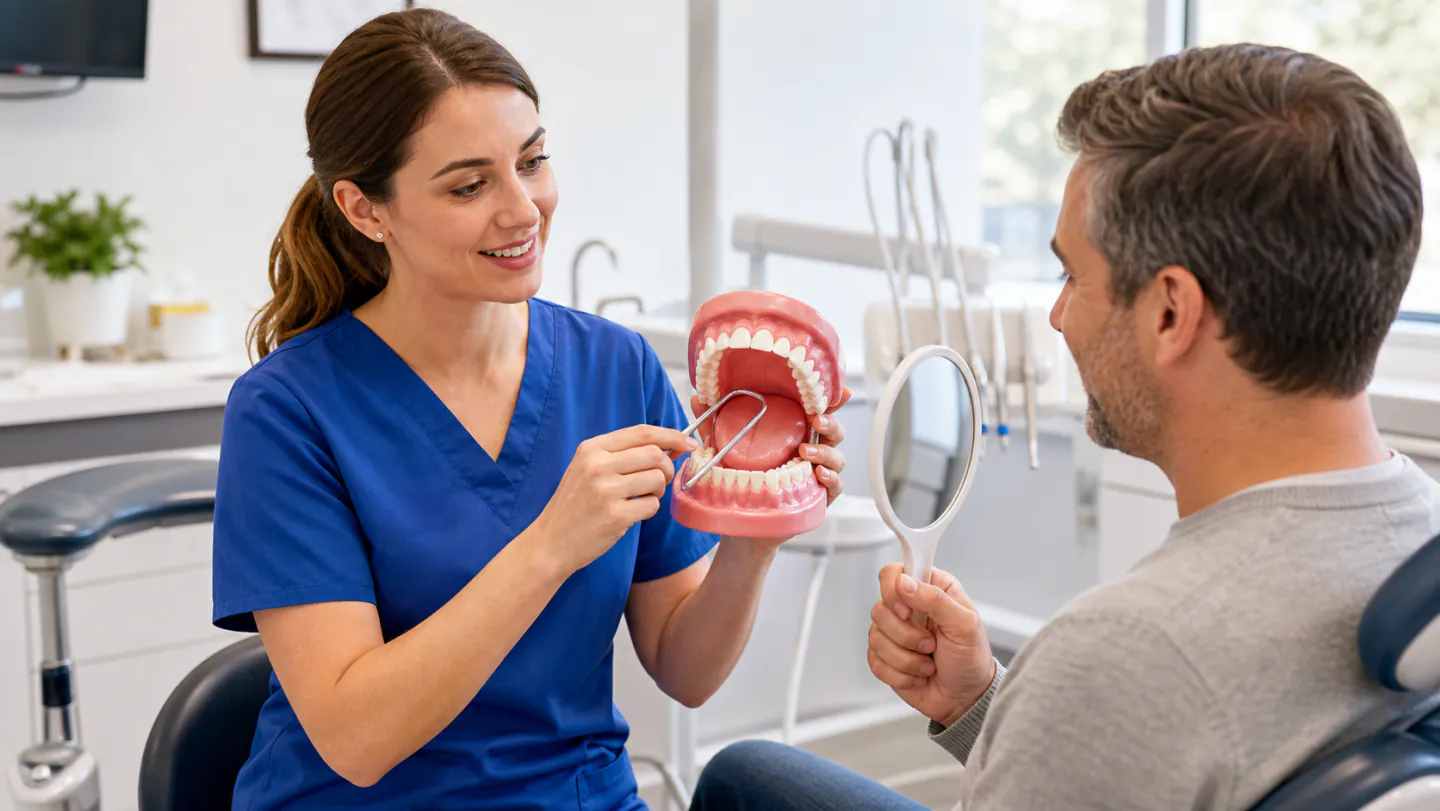
Bad breath is difficult to judge in your own mouth and uncomfortable to discuss with anyone else. A mint may hide it for the length of a meeting, but ongoing odour can affect confidence, conversations, and close relationships. It can also be a sign that something in the mouth needs attention.
Most bad breath begins in the mouth, often from bacteria on the tongue, plaque around teeth, gum inflammation, trapped food, or dry mouth. Sometimes the source is temporary and harmless. Sometimes it is connected to a cavity, infection, denture problem, tobacco use, or a health condition that needs a different type of care.
If you are looking for help with bad breath in Winnipeg, the first step is not buying the strongest mouthwash. It is working out when the problem occurs, how long it has lasted, and what is causing it. This guide provides a practical place to start.
Morning breath is common
Saliva flow naturally decreases during sleep. Saliva normally washes away loose food, moistens tissues, and helps balance acids. With less of it, odour-producing bacteria have more opportunity to build up. Mouth breathing and snoring can make dryness worse.
Morning breath that improves after drinking water, brushing, cleaning the tongue, and eating is usually not a reason for alarm. It becomes more concerning when the smell persists through the day despite good cleaning, or when it appears with bleeding gums, pain, swelling, loose teeth, or a bad taste from one area.
Pay attention to pattern. Breath that worsens only after garlic is different from odour that a family member notices every day. A short diary of timing, medications, dry mouth, foods, and symptoms can help a dentist identify likely causes.
Why it is hard to smell your own breath
Your nose adapts to familiar smells. Breathing into your cupped hands is not a reliable test, and licking your wrist tells you more about saliva on the front of the tongue than air from the whole mouth.
If you are concerned, ask someone you trust for honest feedback at different times of day. A dental professional can also look for signs that commonly contribute. There is no need to feel embarrassed; breath concerns are routine health questions.
Be cautious with gadgets and online “tests” that promise a precise diagnosis. Odour can change from hour to hour, and knowing a number does not identify whether plaque, gums, dry mouth, tonsils, diet, or another factor is responsible.
Bacteria on the tongue
The tongue has tiny grooves and projections that hold bacteria, food debris, and shed cells. The back of the tongue can be a major source of odour because it is difficult to clean and receives less friction from food.
Gently clean the tongue once a day with a tongue scraper or soft toothbrush. Start farther forward if you have a strong gag reflex, then gradually work back. One or two gentle passes are enough. Scrubbing until the tongue is sore does not make breath fresher.
A thick coating can increase during dry mouth, illness, smoking, or changes in eating. If a coating cannot be removed, is painful, or appears as a persistent white, red, or dark patch, have it examined rather than repeatedly scraping it.
Plaque, tartar, and gum disease
Plaque collects along the gumline and between teeth. If it is not removed, it can cause gum inflammation and harden into tartar. Deeper gum pockets can trap bacteria and debris that create persistent odour or an unpleasant taste.
Possible gum-disease signs include:
- Bleeding during brushing or flossing
- Puffy, tender, or receding gums
- Bad taste that returns quickly
- Teeth that appear longer
- Spaces developing between teeth
- Loose teeth
Mouthwash cannot remove tartar or clean a deep gum pocket. A professional examination and cleaning can show whether routine preventive care or more focused gum treatment is needed. Treating the source usually helps more than repeatedly covering the smell.
Food trapped between teeth or under dental work
An open contact between teeth, broken filling, cavity, poorly fitting crown, bridge, or denture can trap food. You may notice floss shredding, a recurring taste, tenderness, or odour that seems to come from one spot.
Clean between teeth daily with a tool that fits. Floss works in tight contacts. Interdental brushes may suit wider spaces, braces, or some gum conditions. Bridges need cleaning beneath the replacement tooth, and dentures must be removed and cleaned as directed.
If the same area traps food after every meal, do not simply force thicker floss into it. Ask a dentist to check the shape of the teeth and dental work. A damaged edge or cavity may need repair.
Dry mouth and bad breath
Saliva is one of the mouth’s natural defences. When there is not enough, odour compounds become more concentrated and bacteria grow in a drier environment. The mouth may feel sticky, saliva may look stringy, and speaking or swallowing dry food may become difficult.
Dry mouth can be related to medications, dehydration, mouth breathing, tobacco, cannabis, alcohol, some health conditions, and treatment involving the head or neck. Do not stop prescribed medication without medical advice. Your dentist, physician, or pharmacist may be able to suggest adjustments or supportive care.
Sip water regularly, limit alcohol-containing rinses if they worsen dryness, and ask whether sugar-free gum or a saliva-support product is suitable. Frequent sugary candies may briefly stimulate saliva but increase cavity risk.
Cavities and dental infections
A cavity can hold bacteria and food, particularly once the surface has broken down. A broken tooth or leaking restoration can do the same. Infection may create a bad taste, drainage, swelling, or pain, though some infected teeth cause little discomfort.
Breath products do not treat decay or infection. If you have tooth pain, facial or gum swelling, a pimple-like bump, fever, or difficulty swallowing, contact a dentist promptly. Rapidly spreading swelling or trouble breathing requires emergency medical care.
An examination and X-ray may be needed to find the source. Treatment could involve a filling, root canal, gum care, extraction, or another approach depending on the diagnosis.
Dentures, retainers, and mouth guards
Removable dental appliances collect plaque, saliva, and food. Wearing them without daily cleaning can create odour and irritate the tissues underneath.
Clean an appliance using the method recommended for its material. Toothpaste can scratch some dentures and clear retainers. Remove dentures at night unless your provider has given a specific reason not to, and clean the gums, tongue, and any remaining teeth.
An appliance that remains smelly after cleaning may have buildup or surface damage that needs professional attention. Loose dentures can trap food and create sores. Bring removable appliances to dental visits so their fit and condition can be checked.
Tobacco, vaping, cannabis, and alcohol
Smoke and vapour can leave their own odour and contribute to dry mouth, gum inflammation, staining, and tissue changes. Alcohol also dries the mouth, and some strong mouthwashes contain alcohol that may feel harsh for people who already have dryness.
Brushing cannot remove all health effects of smoking or vaping. If you want to quit, ask your dentist, physician, or pharmacist for support rather than relying only on willpower. Even if you are not ready to stop, be honest about use because it changes the way oral symptoms should be assessed.
Persistent breath changes in a tobacco user should not be automatically blamed on smoking. The mouth still needs to be checked for gum disease, infection, and unusual tissue changes.
Foods, drinks, fasting, and eating patterns
Garlic, onions, spices, coffee, and alcohol can temporarily affect breath. Some compounds enter the bloodstream after digestion and are released through the lungs, so brushing cannot immediately remove the effect.
Long periods without eating can reduce saliva flow and change breath. Very low-carbohydrate eating patterns may create a distinct smell because the body is using fat differently for fuel. Sugary drinks and frequent snacks can feed plaque bacteria and increase cavity risk.
Water, regular balanced meals, and cleaning after meals can help. Do not use constant mints or sweetened gum as a substitute for diagnosis. If gum is suitable for you, choose sugar-free and stop if chewing worsens jaw pain.
Could the stomach be causing bad breath?
People often assume bad breath comes from the stomach. Most persistent cases begin in the mouth, but reflux, digestive conditions, and other medical issues can contribute. Nose, sinus, throat, or tonsil concerns can also create odour.
A practical starting point is a dental examination because common oral causes can be seen and treated. If the mouth appears healthy or odour continues after dental care, a physician may evaluate reflux, infection, medication effects, diabetes, liver or kidney concerns, and other less common causes based on your symptoms.
Do not self-diagnose from the smell alone. Fruity, ammonia-like, or otherwise unusual breath paired with illness, excessive thirst, confusion, vomiting, or breathing changes can require prompt medical attention.
Does mouthwash cure bad breath?
Mouthwash can temporarily reduce odour and may support a broader care plan. It cannot replace brushing, cleaning between teeth, tongue cleaning, hydration, or professional treatment.
Some rinses are designed mainly for flavour. Others contain ingredients intended to reduce bacteria, support gum health, or help prevent cavities. The strongest burning sensation is not proof that a product works better.
Ask a dental professional which rinse fits your needs. A person with dry mouth may need a different product than someone with active gum inflammation. Use it for the recommended time and do not swallow it. Children should use rinses only when appropriate for their age and ability to spit.
A simple daily routine for fresher breath
Try this consistent routine for two weeks while arranging assessment if the problem is ongoing:
- Brush for two minutes in the morning and before bed with fluoride toothpaste.
- Clean between every tooth once a day.
- Gently clean the tongue, especially toward the back.
- Drink water regularly.
- Clean removable appliances every day.
- Limit tobacco, vaping, and frequent alcohol.
- Notice which foods and times of day make the concern worse.
If breath does not improve, that information is useful. It suggests that technique, tartar, gum pockets, dry mouth, dental disease, or a non-dental cause may need more attention.
When to book a dental visit
The Canadian Dental Association recommends seeing a dentist when bad breath does not go away with daily brushing and flossing. Book sooner if you also notice bleeding gums, loose teeth, pain, swelling, sores, or a persistent bad taste.
At the visit, share when the issue began, whether anyone else has noticed it, which medicines you take, whether your mouth feels dry, and what you have tried. The dentist or hygienist may assess plaque, tartar, gum pockets, cavities, dental work, tongue, saliva, and mouth tissues.
There is no single “bad breath treatment” because there is no single cause. A useful appointment identifies the most likely source and gives you specific next steps.
Bad-breath care in Winnipeg
Persistent breath concerns deserve a respectful health conversation, not embarrassment. In many cases, improving tongue cleaning, gum health, appliance care, or dry-mouth support makes a meaningful difference. When the cause is dental disease, early treatment can protect more than confidence.
Winnipeg North Dental provides check-ups and professional cleanings for patients with ongoing bad breath and other oral-health concerns. You can request an appointment to identify likely causes and build a practical care plan.