
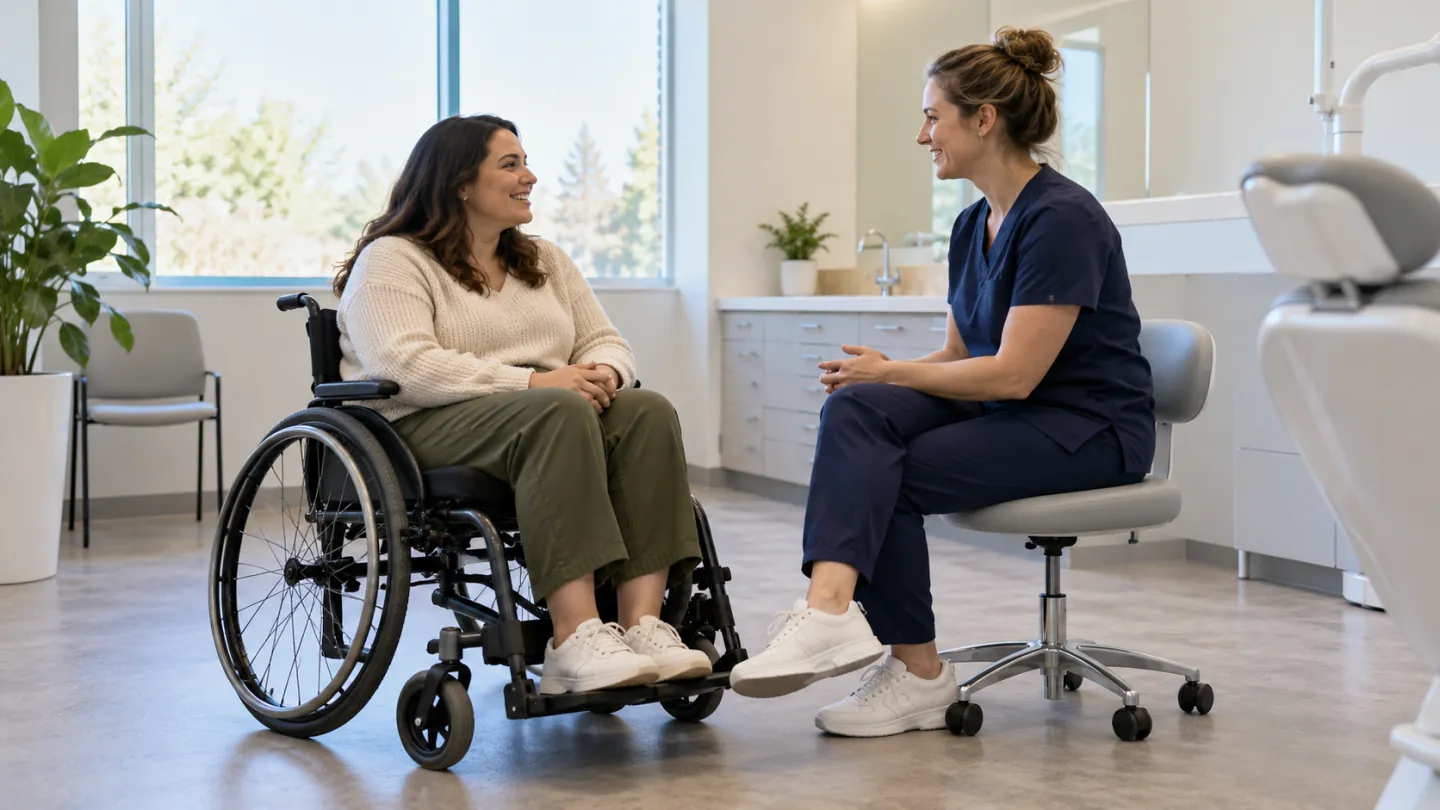
An accessible dental visit begins before anyone looks at your teeth. It includes making the booking, reaching the entrance, communicating with the team, moving into a suitable treatment position, and understanding the next steps. A barrier at any one of those points can make an otherwise routine appointment difficult.
Planning accessible dental visits in Winnipeg means discussing the details that matter to you rather than relying on a general description of a clinic as accessible. A step-free entrance does not answer a question about transfer equipment. A quiet room does not confirm that written instructions will be available in a format you can use.
The questions below are intended to help you have that conversation. They are not a list of facilities or accommodations confirmed at Winnipeg North Dental. Contact the office about your specific requirements before booking so the team can explain what can be arranged and whether another setting or referral is needed.
Describe the barrier in practical terms
You do not need to give your full life history to explain what would help. A specific statement can make the first conversation easier: “I use a power wheelchair and need to remain in it,” “I communicate using a tablet,” or “I need instructions in large print.”
Explain what has worked at previous appointments and what has not. If an adjustment was helpful elsewhere, describe it without assuming every office has the same equipment. Ask who will review the request and when you should expect a response. A receptionist may need to speak with the clinical team before confirming what is possible.
The Manitoba Accessibility Office’s customer-service information addresses communication needs, assistive devices, support people, and accessibility features. These are useful areas to discuss with any service provider. For a dental visit, the clinical team also needs enough information to plan treatment safely and explain any limitations in the available setting.
Check the whole route into the appointment
Ask about the entrance you should use, the route from parking or a drop-off point, door operation, elevators if relevant, and the distance to the reception and treatment areas. If a doorway width or turning space matters for your mobility device, request specific measurements or another reliable way to confirm the fit.
Also ask about the washroom if you may need it during a longer visit. A building can have an accessible entrance while other parts of the route remain difficult. It is better to identify that before arranging transport and taking time off.
In Winnipeg, consider the route under the conditions expected on the appointment day. If snow or ice affects your arrival, contact the office about the entrance and drop-off arrangements. Confirm what to do if an accessibility feature is temporarily unavailable. You should not have to discover an out-of-service elevator only after reaching the building with a scheduled ride home approaching.
Discuss positioning and transfers explicitly
If moving into a dental chair is difficult or unsafe, say so at the booking stage. Explain whether you normally transfer independently, use particular equipment, or require trained assistance. Do not assume that accompanying family members or dental staff can safely lift you.
Ask whether the proposed examination or treatment can be completed in your mobility device, whether the room allows the necessary access, and what equipment is available if a transfer is required. The answer depends on the procedure, your needs, the device, and the clinical setting.
NIDCR’s information on disability and oral health recognizes that access to the treatment area and chair may require specific arrangements and additional time. Although that resource addresses developmental disabilities, its planning point is relevant to many mobility needs: arrangements should be discussed before the appointment. If the office cannot provide a safe setup, ask what referral or alternative setting can meet the need.
Make communication work in both directions
Tell the team how you prefer to receive information and how you communicate questions or discomfort. You may use speech, writing, a communication device, an interpreter, or a combination. The important point is that the method works while you are in the chair, not only at reception.
For someone who relies on lip reading, masks and the clinician’s position can affect understanding. Ask how explanations will be provided before instruments are used and when masks need to remain in place. For someone using a device, agree where it will stay so it remains accessible during pauses.
Request one question at a time if that helps. Ask for additional response time without having someone answer for you prematurely. A support person can assist when you want that help, but the dental team should still direct communication to you. Before treatment begins, confirm a signal that means stop so your ability to communicate does not depend on speaking with instruments in your mouth.
Plan for sensory needs and predictability
Bright lights, unfamiliar sounds, vibration, tastes, and unexpected touch can all affect how manageable a dental visit feels. Identify the parts that matter most to you. A request for an explanation before each step is different from a request for reduced background noise or a break after a specific task.
Ask which adjustments are feasible for the planned procedure. Headphones, sunglasses, a familiar comfort item, or a quieter appointment time may help some people, but they need to fit communication and clinical safety. Avoid assuming a particular option is available until the office confirms it.
If unfamiliarity is the main difficulty, ask whether an introductory visit or a description of the appointment sequence can be arranged. NIDCR discusses a get-acquainted visit as one possible way to build familiarity. For urgent symptoms, explain the urgency at the same time so planning for comfort does not unintentionally delay necessary assessment.
Decide how a support person will participate
Before the visit, talk with the person accompanying you about the role you want them to have. They might help with transport, remember details, support communication, or assist with personal care. Those roles do not automatically mean they should make decisions or answer every question.
Tell the office whether you want the support person present during discussion, examination, or treatment, and ask about room or procedure-specific arrangements. If you prefer part of the conversation privately, say so. If there are formal decision-making documents relevant to your care, ask what the team needs to review in advance.
For a caregiver arranging an appointment, describe the patient’s preferences and communication method rather than speaking only about the diagnosis. Bring information that helps the team engage directly with the person. A useful appointment plan can include both necessary assistance and clear opportunities for the patient to express choices independently.
Check forms, reminders, and written instructions
A form that cannot be used with your assistive technology is a practical barrier, even if the appointment itself has been thoughtfully arranged. Ask for an alternative way to provide the information, such as an accessible document, a supported telephone conversation, or time to complete it with assistance.
Specify the format you need rather than asking only for “accessible information.” Large print, plain language, a digital file compatible with a screen reader, and a verbal explanation are different requests. Ask how consent discussions, estimates, and aftercare instructions will be handled too.
Confirm your preferred reminder method and which contact details may be used. If another person receives reminders on your behalf, clarify that arrangement with the office. After treatment, ask the team to explain the key next steps and give you an opportunity to repeat them in your own words or preferred communication method. This can reveal misunderstandings before you leave.
Match the appointment length to your needs
Longer is not always better. Some people need extra time for communication or transfers, while others manage best with shorter visits because of fatigue, pain, or limited tolerance for a treatment position. Explain which factor affects you and ask how the work could be organized.
Discuss breaks and any limits on lying back before the chair moves. Mention medical equipment, breathing concerns, swallowing difficulties, involuntary movements, or a prescribed care plan that may affect treatment. The clinician may need to coordinate with another healthcare provider rather than making an adjustment based on a brief description alone.
If several procedures are proposed, ask whether they can be prioritized across visits and what the implications would be. A plan that looks efficient on paper may be exhausting in practice. Equally, repeated travel may be the greater burden for another person. Sharing that information helps the team explain reasonable options for your situation.
Coordinate transport with the confirmed plan
Before arranging a ride, confirm the expected arrival time, appointment duration, and whether there may be additional discussion afterward. If you use a transport service with a fixed pickup window, tell the office. Ask what happens if the visit takes longer or a planned procedure cannot be completed.
If sedation is being considered, ask separately about escort and transport requirements. An ordinary ride arrangement may not meet the clinical instructions for that treatment. Do not assume you can travel alone because that is how you usually attend appointments.
Prepare a small appointment folder or digital note containing the office contact, relevant medication list, agreed accommodations, and questions. Keep it in a format you can access easily. For a winter visit or a trip across Winnipeg, allow enough time that an unexpected delay does not force you to rush through the communication arrangements you carefully requested.
Keep the plan useful for the next visit
After the appointment, tell the team which adjustments helped and which barriers remained. Ask whether your preferences can be documented so you do not need to explain everything from the beginning next time. Review that information when your needs, equipment, or health change.
If the office could not meet a particular requirement, ask for a clear explanation and a practical next step. That might involve a different appointment arrangement, coordination with another clinician, or referral. The objective is to reach an appropriate setting for care while preserving your ability to understand and participate in decisions.
To discuss an appointment at Winnipeg North Dental, contact the clinic through the booking page and describe the access or communication arrangements you need. Ask for confirmation before finalizing travel. Clear planning gives both you and the dental team a better foundation for a visit that respects your needs and addresses your oral health.